Best items to flip for profit: sell-through wins
Best items to flip for profit are fast sellers, not pricey trophies. Compare sneakers, cards, electronics, LEGO, and toys with fee math.
Turn this into live alerts.
Use the Divine Pro free trial to see sneaker, retail, card, price-error, and autocheckout alerts before you pay.
Start Divine Pro free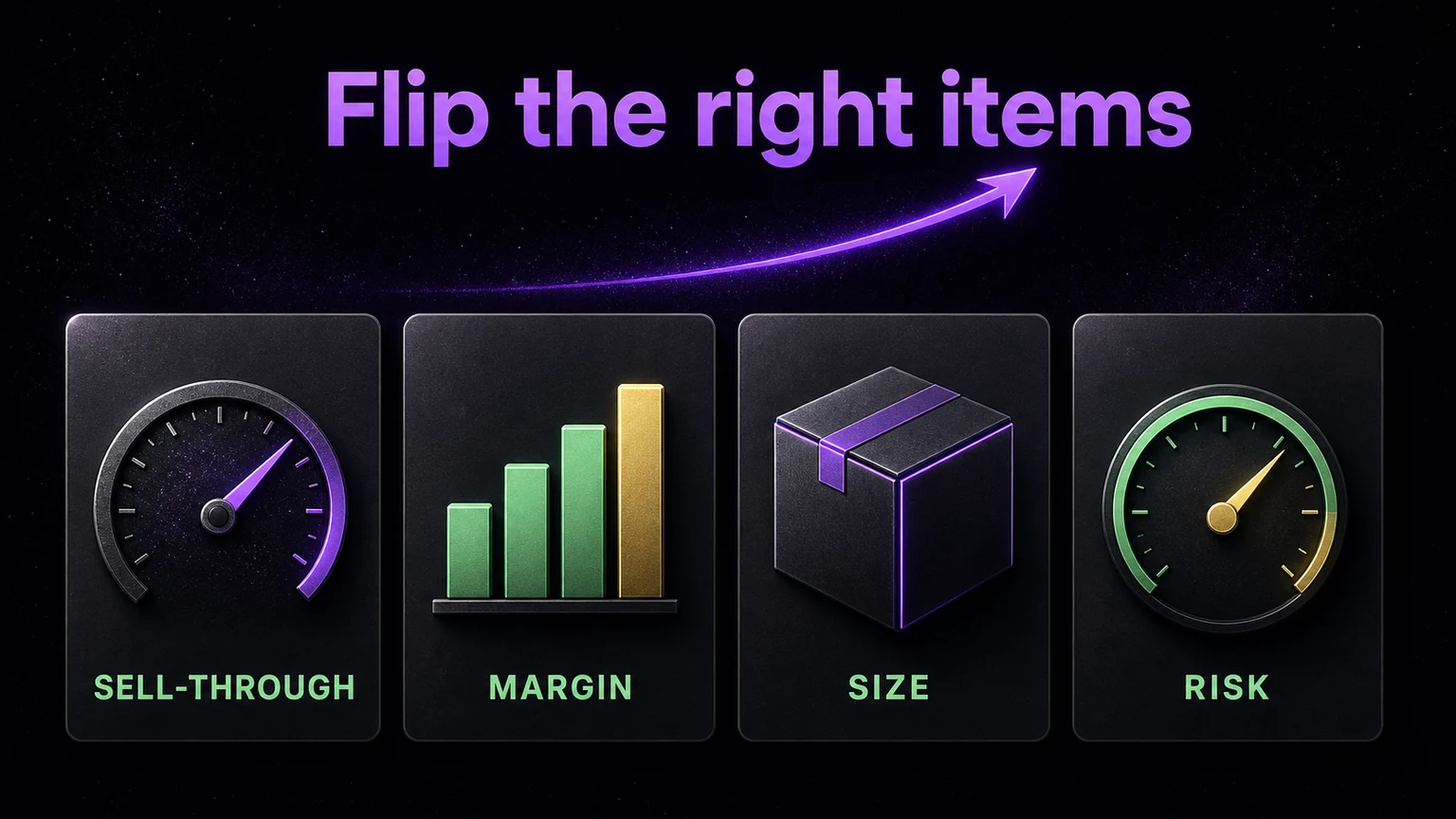
You found the deal. A $340 item marked down to $190. You bought two, felt like a genius, listed them, and waited. And waited. Ninety days later they are still sitting in your closet, your cash is frozen inside them, and the one buyer who messaged you wanted to "trade." Meanwhile the guy who bought boring $18 items that same weekend already flipped them, got paid, and rolled the money into the next batch. Twice.
That is the whole game in one scene. The expensive item felt like the smart flip. It was the slow one.
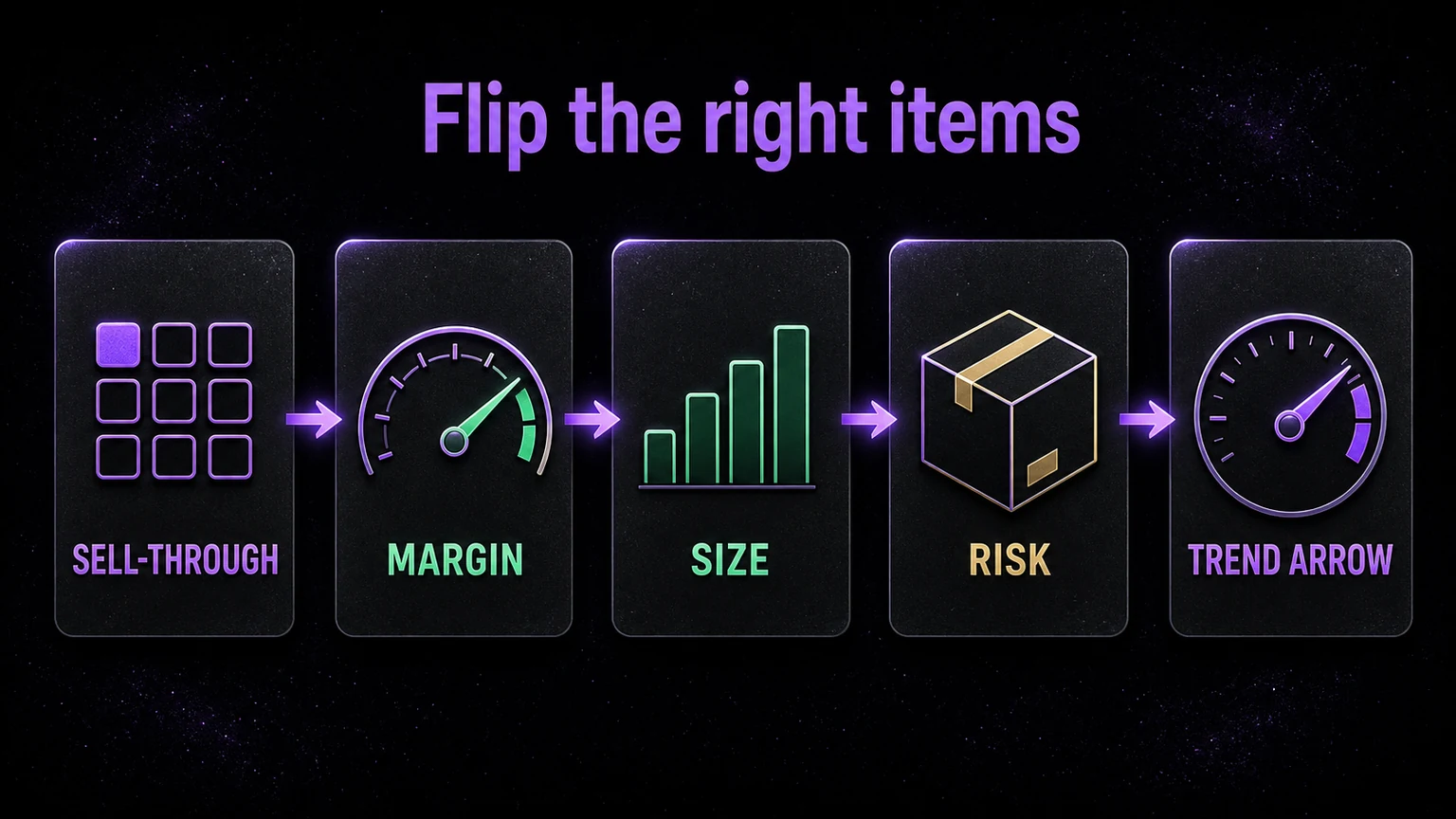
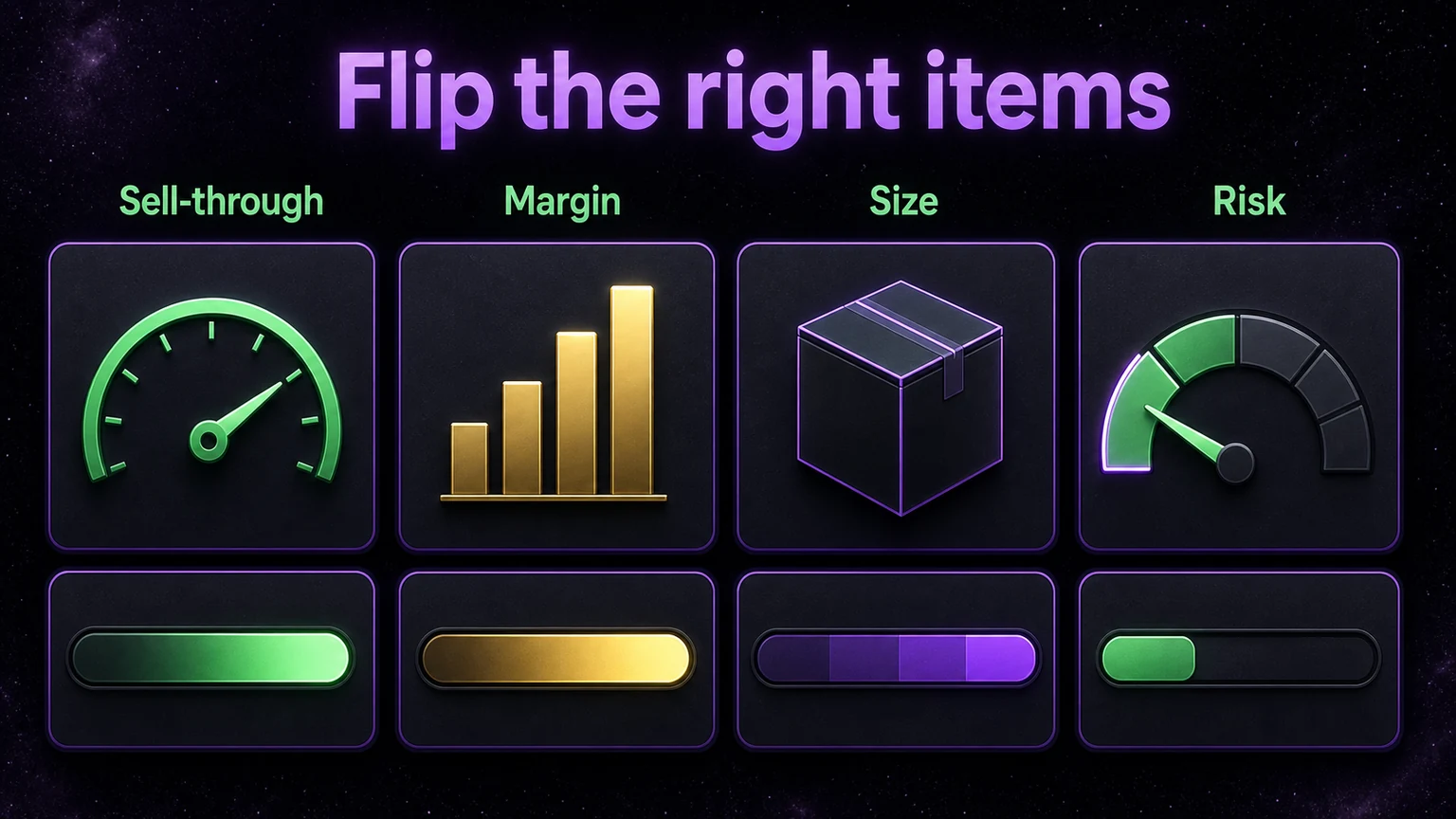
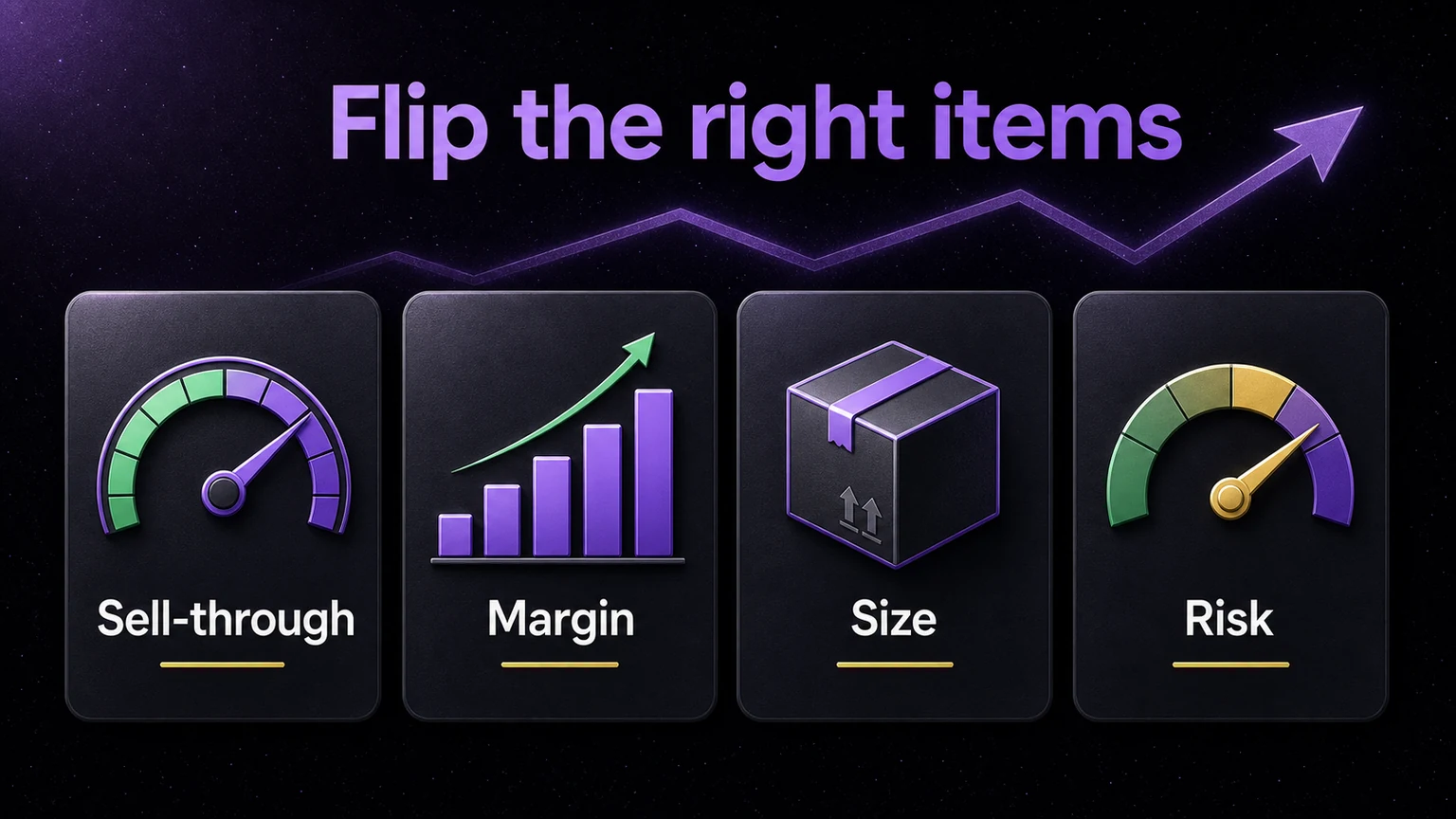
Here is the lie this post exists to kill: you can flip anything, so just find something cheap and mark it up. No. The best items to flip for profit are the ones that combine three things at once, and a high sticker price is not one of them. The three are sell-through (how reliably and how fast the thing actually sells), margin (what you keep after fees, shipping, and taxes), and risk (how likely the price is to crash or the item is to sit). Miss any one and the flip that looked great on paper quietly eats your money.
Get those three right and the category almost stops mattering. Get them wrong and even a "rare" $600 grail becomes a coffin for your capital.
The three levers that decide every flip
Before you touch a single category, learn the three numbers. Every good sourcing decision is these three, weighed against each other.
Sell-through rate: will it actually sell
Sell-through rate is the single most underrated number in reselling. The math is simple. Take how many of an item sold in a window, divide by how many were listed in that same window, express it as a percent.
Say 40 of an item sold in the last 30 days and 100 were listed. That is a 40% sell-through rate. It means roughly four in ten active listings found a buyer in a month. On most platforms, a sell-through above 30% is workable and above 50% is strong. Below 20% you are gambling that yours is the listing that moves while dozens sit.
Front-load this number, because sell-through is really a speed number in disguise. High sell-through means your cash comes back fast and rolls into the next flip. That is the compounding engine of the whole business. A 20% net margin that turns over every week beats a 60% margin that turns over once a year, and it is not close.
You can check sell-through yourself. Search the item on your marketplace, filter to sold or completed listings, count the sold ones, then count the active ones. Or you let alerts and monitors surface items that already have proven demand, which is most of what a good reselling community does for you.
Margin: what you actually keep
Sale price is not profit. This trips up every beginner. Your real margin is what survives after the platform takes its cut, after you pay to ship, after you account for the item cost, and eventually after tax.
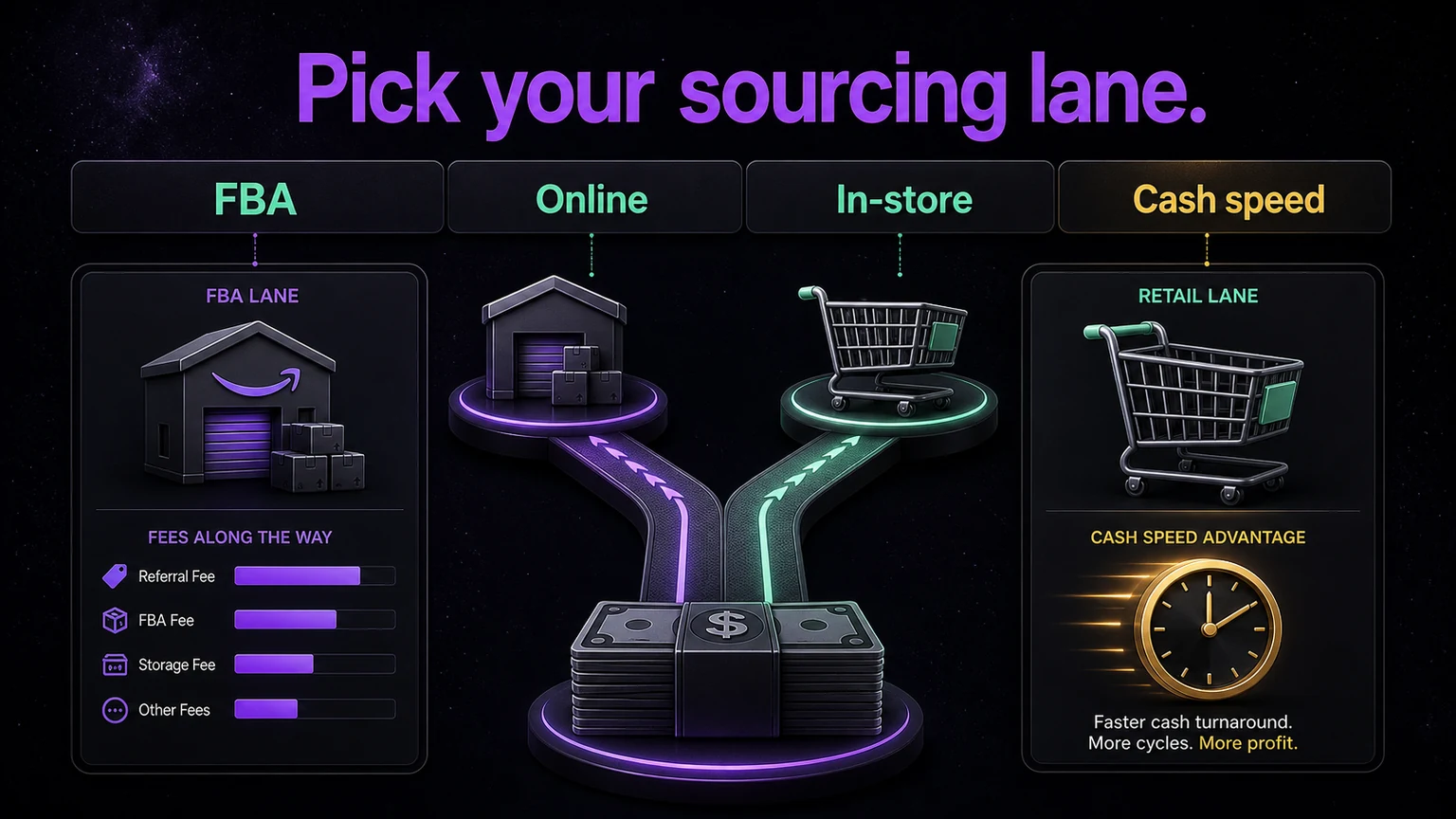
Round numbers to memorize. eBay final value fees run roughly 13.25% plus $0.30 in many categories. StockX charges sellers roughly 9% at the entry level plus a 3% payment fee, so budget around 12% to 13% all in before shipping. Shipping a pair of shoes or a boxed toy can run $8 to $20 depending on weight and speed. None of that is optional, and all of it comes out of the number you were bragging about.
So when you say "I'll buy at $110 and sell at $200," the honest version is closer to: sell at $200, lose about $27 to fees, lose $12 to shipping, and you are left with roughly $161 in, minus your $110 cost, for about $51 net. Real, but half of what the sticker gap implied. Margin math is covered in depth in reselling profit margins explained, and the tax side in flipping taxes and fees. Read those before you scale.
Risk: what can go wrong before you get paid
Risk is the lever beginners ignore entirely, and it is the one that wipes people out. Three kinds matter.
Price crash risk. Hype items can drop 40% in a week when the hype moves on. A card that was $80 at the peak can be $30 by the time you list it.
Inventory risk. Every item you hold ties up cash and closet space. If it does not sell, that money is not dead exactly, but it is asleep, and you cannot use sleeping money to catch the next deal.
Authentication and condition risk. Fakes, returns, and "not as described" claims are real costs. Categories with buyer protection and platform authentication (sneakers, cards) lower this. Loose, opened, high-fragility items raise it.
Now let us put real categories through those three levers.
Sell-through vs margin across the top categories
Here is the table this whole post is built around. These are general, checkable ranges from public marketplace data and category studies, not promises about any specific item. Sell-through and margin both swing with season, condition, and how sharp your sourcing is. Treat this as a map, not a guarantee.
| Category | Typical sell-through | Typical net margin after fees | Cash turnover | Main risk | Beginner verdict |
|---|---|---|---|---|---|
| Sneakers (limited/hyped) | High for the right pair, 1 to 7 days to sell | ~10% to 25% per pair, higher on top collabs | Fast | ~53% of 2024 releases sold at or below retail; picking the wrong pair | Good if you have speed and comps |
| Trading cards (sealed) | Moderate, high total volume | Varies widely; sealed holds better than singles | Medium | Hype crashes; most singles near worthless | Good with sealed product and patience |
| Electronics (in demand models) | High, buyers search exact model, 1 to 7 days | Thin, often 10% to 20% | Fast | Returns, defects, fast price decay | Good for turnover, watch condition |
| LEGO (retired sets) | ~50% on eBay for the right sets | Builds over years, documented ~11% average annual return post retirement | Slow | Re-releases; saturation on common sets | Good as a patient hold, not a quick flip |
| Generic toys / clearance | Mixed, seasonal spikes | Often thin | Medium | Saturation, seasonal dead time | Only with a real sourcing edge |
Read the table as a whole and one thing jumps out. No single category wins on every lever. Sneakers and electronics win on speed. LEGO wins on documented long-term appreciation but loses on speed. Cards split hard between sealed (steady) and singles (mostly worthless). The best resellers do not pick one category and marry it. They pick the item that scores well on all three levers this week, then move on.
Sneakers: fast money, but the market got picky
Sneakers are among the fastest movers in all of reselling. The right pair sells in one to seven days because demand is constant and buyers search by exact model and size. Cash recycles quickly, which is exactly what you want.
But the honest part. In 2020, around 58% of new sneaker releases traded above retail on the secondary market. By 2024 that had fallen to roughly 47%. Flip that number and it means more than half of new releases now sell at or below retail. The days of a guaranteed 100% markup on anything with a swoosh are gone. Margins on most limited releases now sit around 10% to 25% per pair, with the big money reserved for genuine top collabs.
So sneakers are a great flip when you pick the right pair and move fast, and a slow bleed when you buy hype blind. The edge is knowing which release has real resale demand before it drops, and getting checkout fast enough to actually secure a pair at retail. That is the entire premise of how to flip sneakers for profit and why autocheckout tools exist.
Trading cards: sealed is the flip, singles are the trap
Cards are two completely different businesses wearing one label.
Sealed product (booster boxes, tins, elite trainer boxes) behaves like the LEGO of cards. Supply is fixed once a set stops printing, and prices tend to grind up over years. A named sealed set holds value far better than a loose single. Total card volume on marketplaces is enormous, so liquidity for the right sealed product is there.
Single cards are where beginners get hurt. Most singles are worth cents. The few chase cards that spike on hype can crash just as fast when the hype rotates. Buying a $70 raw single at the top and hoping to flip it in a week is closer to gambling than reselling.
The disciplined card play is sealed product with a known print story, plus selective grading only above a value threshold where a PSA 10 premium actually clears the grading cost. We break both down in Pokemon card investing guide, sports card investing guide, and card grading and PSA explained. If cards are your lane, the Divine Cards Pass exists to help spot the winners early instead of buying the top.
Electronics: high sell-through, thin margins, watch condition
Electronics quietly rank among the highest sell-through categories anywhere. The reason is buyer behavior. People search a specific model number, they know exactly what they want, and they buy fast when the price is right. In demand models often sell within one to seven days.
The catch is margin and condition. Electronics prices decay fast, so an item you overpay for today can be underwater in a month. Returns and defect claims are more common here than in sealed collectibles. Margins are usually thin, often 10% to 20%, so this category rewards volume and tight condition checking over big per item wins. Great for keeping cash moving. Not the place to hunt for a home run.
LEGO: the patient category with real receipts
LEGO is the one category with a documented long-term appreciation record. A 2021 study out of the Higher School of Economics analyzed 2,322 LEGO sets sold between 1987 and 2015 and found retired sets returned about 11% per year on average on the secondary market, beating stocks, bonds, and gold over that window. Independent BrickLink sales analysis has landed near the same 11% to 12% figure.
Two honest asterisks. First, that is an average across thousands of sets, and individual sets ranged from losing half their value to multiplying several times over. The winners cluster in specific themes (large modular buildings, UCS Star Wars, Ideas sets), not random discounted sets. Second, this is a slow flip. The mechanism is planned retirement plus sealed supply shrinking as buyers open sets, and it plays out over years, not weeks. LEGO on eBay clears at roughly 50% sell-through for the right sets, which is strong, but the appreciation itself needs patience.
Watch two risks: LEGO occasionally re-releases a popular set, which can gut the original's value, and common mass-produced sets that get discounted constantly rarely appreciate at all. This is not investment advice. It is a category with unusually good receipts, held the right way.
Generic toys and clearance: only with an edge
Broad toy and clearance flipping can work around seasonal spikes, but it is the most saturated and the thinnest of the group without a real sourcing advantage. If you are buying the same clearance endcap a thousand other resellers can see, your margin gets competed to nothing. This lane pays only when you have speed, a monitor catching restocks and price errors before the crowd, or genuine local sourcing others cannot reach.
Worked example: the expensive flip vs the boring flip
Numbers settle arguments. Let us run the exact scene from the top of this post with real fee math. All figures illustrative.
Flip A: the expensive "smart" one. You buy a hyped item for $190. Comps say it resells around $260. Feels like a $70 win.
- Sale price: $260
- eBay fee at ~13.25% plus $0.30: about $34.75
- Shipping: about $14
- Net received: about $211.25
- Minus cost of $190
- Net profit: about $21.25
Now the risk. Sell-through on this item is around 15%, so most listings sit. It takes you 75 days to find your buyer, and during those 75 days that $190 is frozen. Your return on that flip is about 11% on cost, earned over two and a half months. Annualized, if you could even repeat it, that is roughly 40% to 50%, but you cannot repeat it because the cash was stuck the whole time.
Flip B: the boring fast one. You buy an in demand item for $40. Comps say it resells around $62. Feels like a nothing win.
- Sale price: $62
- eBay fee at ~13.25% plus $0.30: about $8.52
- Shipping: about $6
- Net received: about $47.48
- Minus cost of $40
- Net profit: about $7.48
Tiny, right? But sell-through here is around 55%, so it sells in about 7 days. That $40 comes back in a week and you do it again. Run that same $40 through ten cycles in the 75 days Flip A took to sell once, and even if only seven of the ten cycles land, that is roughly $52 in profit off the same starting cash, versus $21.25 from the expensive flip. Same money. More than double the return. And you were never exposed to a single item crashing 40% overnight.
That is the entire thesis. High sticker price flatters your ego. Sell-through pays your rent. The best items to flip for profit are the ones you can buy right, sell fast, and repeat, at a margin that survives the fees.
How the pros actually pick items
Strip away the noise and item selection comes down to a short, repeatable checklist. Run every prospective flip through it before you spend.
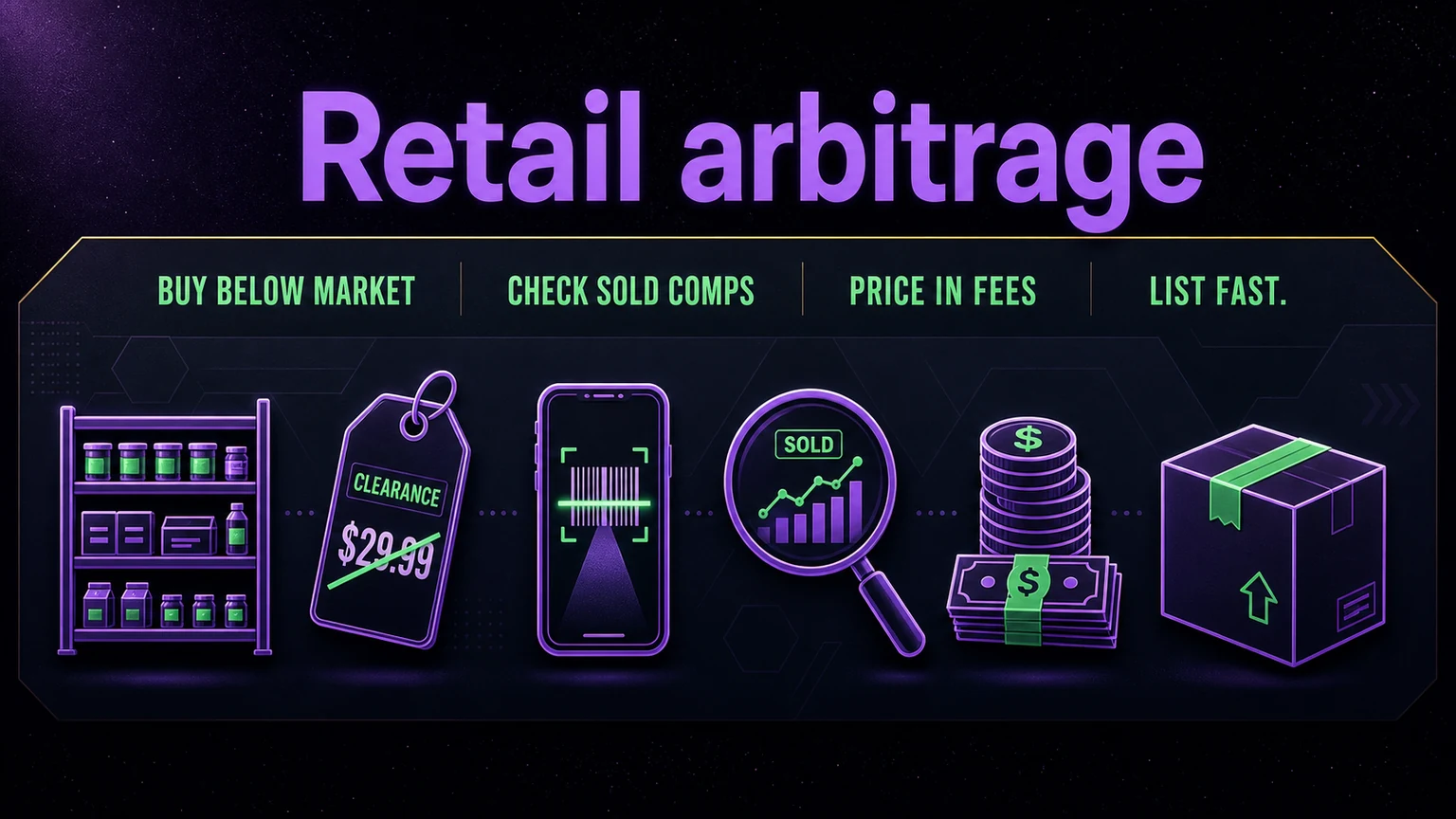
- Check the comps first, always. Look at sold listings, not asking prices. Asking prices are fiction. Sold prices are truth.
- Calculate net, not gross. Subtract the ~13% marketplace fee, shipping, and your cost before you get excited. If net margin is under about 15% to 20%, the risk usually is not worth it.
- Read the sell-through. Sold count divided by listed count. Under 30% and you need a very good reason to buy.
- Score the risk. Is this hype that could crash? Is it fragile or return prone? Does buyer protection cover you? Downgrade anything that fails.
- Prefer speed when unsure. A faster, smaller, safer flip beats a slow, bigger, riskier one for anyone still building capital.
- Buy the deal, not the story. A price error, a clearance mistake, a mispriced retail item, those are edges. "This might blow up someday" is not.
Doing all of this by hand, for every item, across every platform, is a full time job. It is exactly the grind that alerts, monitors, and a network of experienced resellers exist to collapse. Instead of you refreshing pages and eyeballing comps, the tools surface items that already clear the sell-through and margin bar. That is the honest pitch for joining Divine on Whop: it front-loads the sourcing and the comps so you spend your time on decisions, not scanning. There is a 5-day free trial, so you can audit whether the alerts actually pay before you commit.
Who should skip this
Reselling is a real business with real downside, and some people genuinely should not start here.
- If you cannot afford to have cash frozen for weeks, skip it. Even fast categories tie up money, and slow ones tie it up for months. This is not spare-cash-in-a-day income.
- If you will not check comps, skip it. Buying blind on a hunch is how closets fill with unsellable inventory. The comp check is the job. If you resent doing it, this is not your business.
- If you want guaranteed returns, skip it. There are none. Fees eat margin, hype crashes, drops sell out in seconds, and some inventory just does not sell. Anyone promising guaranteed profit is selling you a dream, not a method.
- If you only want the big, expensive, exciting flips, slow down. That appetite is exactly what this post is warning you about. Learn on boring, high sell-through items first.
None of that is meant to scare you off. It is meant to make sure that when you do start, you start with clear eyes, because the people who quit are almost always the ones who expected easy money and hit the first real cost.
FAQ
What is the single best item to flip for profit?
There is no single best item, and anyone naming one is oversimplifying. The best flip is whichever item scores well on all three levers right now: high sell-through, healthy net margin after fees, and low crash or inventory risk. That item changes week to week and season to season. Learn the levers, not a magic product.
Are expensive items better to flip than cheap ones?
Usually not, especially when you are starting out. A high sticker price often means slower sell-through, more cash frozen per unit, and bigger loss if the price drops. Cheaper, faster-moving items recycle your capital more times per year, which frequently produces a better real return. Sticker price is not the same as profit.
What sell-through rate should I look for before buying?
As a rough benchmark, above 30% is workable and above 50% is strong on most marketplaces. Below 20%, you are betting your listing sells while many others sit, so you need an unusually good margin or price to justify it. Always calculate it from sold versus active listings, not from gut feel.
How much do marketplace fees actually take?
Budget around 13% as a working number. eBay final value fees run roughly 13.25% plus $0.30 in many categories, and StockX runs roughly 12% to 13% all in for entry-level sellers before shipping. Then add shipping and eventual tax. Always subtract fees before you decide a flip is worth it. Full breakdowns live in reselling profit margins explained.
Is LEGO really a good thing to flip?
Retired LEGO sets have a documented average return of about 11% per year on the secondary market, based on a study of over 2,300 sets. But that is a multi-year hold, not a quick flip, the winners concentrate in specific themes, and re-releases can crush a set's value. It is a patient category with real receipts, not fast cash.
Do I need a paid community to pick good items?
No, you can do it solo with free tools and disciplined comp checking, and plenty of people do. What a good community buys you is speed and coverage: alerts and monitors surface items that already clear the sell-through and margin bar, so you spend time deciding instead of scanning. Whether that is worth the fee depends on how much your time is worth and how fast the deals you want move. Audit it honestly, ideally on a free trial, before you pay. We cover how in are reselling communities worth it.
Verdict and next step
The best items to flip for profit are not the ones with the biggest price tag or the loudest hype. They are the ones that clear on all three levers at once: they sell reliably and fast (sell-through), they keep real money after fees and shipping (margin), and they will not crash or rot in your closet (risk). Sneakers and electronics win on speed. LEGO wins on patience. Sealed cards win on scarcity. Nobody wins by "flipping anything."
If you want the sourcing, the comps, and the alerts handled so you can focus on picking items that actually clear the bar, the fastest next step is to start a Divine trial on Whop and see whether the deals it surfaces pay for themselves before the trial ends.
Realistic expectations: reselling is a real business with real costs, including marketplace fees, shipping, taxes, unsold inventory, and your time. Profits are not guaranteed, prices can fall, and some items will not sell. Always run your own comps and never risk money you cannot afford to have tied up. Nothing here is financial advice.
Get to the deal first
Divine is the alert network, monitors, and autocheckout built on this exact process. Try Divine Pro free for 5 days.
Reselling is a real business with real costs: marketplace fees, shipping, taxes, and unsold inventory. Profits are never guaranteed. Always check the comps before you buy.