How to spot price errors before they get patched
Price errors are not a myth. Learn how retail pricing mistakes happen, how to catch them fast with alerts, and how to flip a glitch deal after fees.
Turn this into live alerts.
Use the Divine Pro free trial to see sneaker, retail, card, price-error, and autocheckout alerts before you pay.
Start Divine Pro free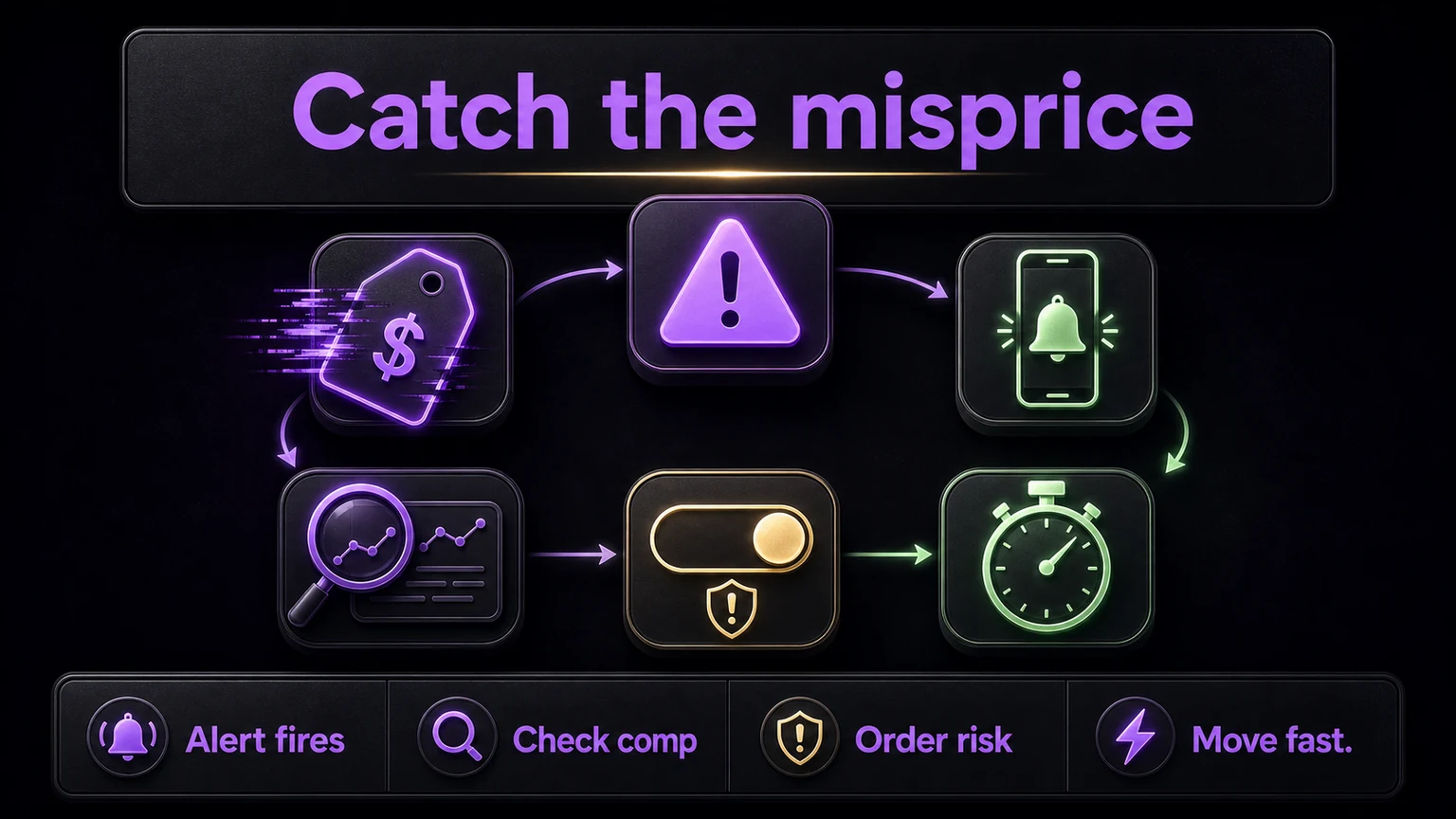
A $349 espresso machine rings up at $99. A sealed collector set drops to a third of retail at 3 a.m. A pair of $280 headphones shows $69 for eleven minutes, then snaps back like it never happened.
You saw the screenshot in a group chat. By the time you opened the link, the price was gone. Sold out, or fixed, or both. And someone, somewhere, checked out three of them before the retailer even noticed.
That sting has a name. It is the cost of being slow to a price error. And the lie that keeps most people slow is the one that says price errors are a myth, a rumor, a thing that happens to other people. So they never set up to catch one. They shop at retail, pay full sticker, and scroll past the one deal that would have paid for a month of groceries.
Here is the truth this post installs: pricing mistakes happen constantly at retail scale, they are boring and mechanical, and the only thing standing between you and them is speed. Alerts give you the speed. This is how the whole thing actually works.
Price errors are not a myth, they are a math problem
Think about the machine behind a modern retailer. One company might list hundreds of thousands of products. Prices are not typed by a calm human staring lovingly at each item. They are pushed by feeds, rules, spreadsheets, promo engines, and third party sellers who sync their own numbers into the marketplace.
Now run that at scale. Millions of price updates a day. Coupon logic stacking on top of clearance logic stacking on top of a manufacturer promo. A decimal in the wrong place. A currency field that did not convert. A "20% off" that got applied twice because two teams shipped two rules that did not know about each other.
At that volume, mistakes are not a maybe. They are a rate. Ten thousand actions with a small error rate still produce errors every single day. The only question is who is watching when one goes live.
That reframes the whole thing. A price error is not luck. It is the predictable exhaust of a huge automated system. You cannot know which product will glitch. You can know that something will, somewhere, today, and you can be positioned to catch it.
The villain here is not the retailer and it is definitely not you. The villain is the belief that you have to accept the shelf price as a fixed fact. You do not. The shelf price is an output of software, and software breaks.
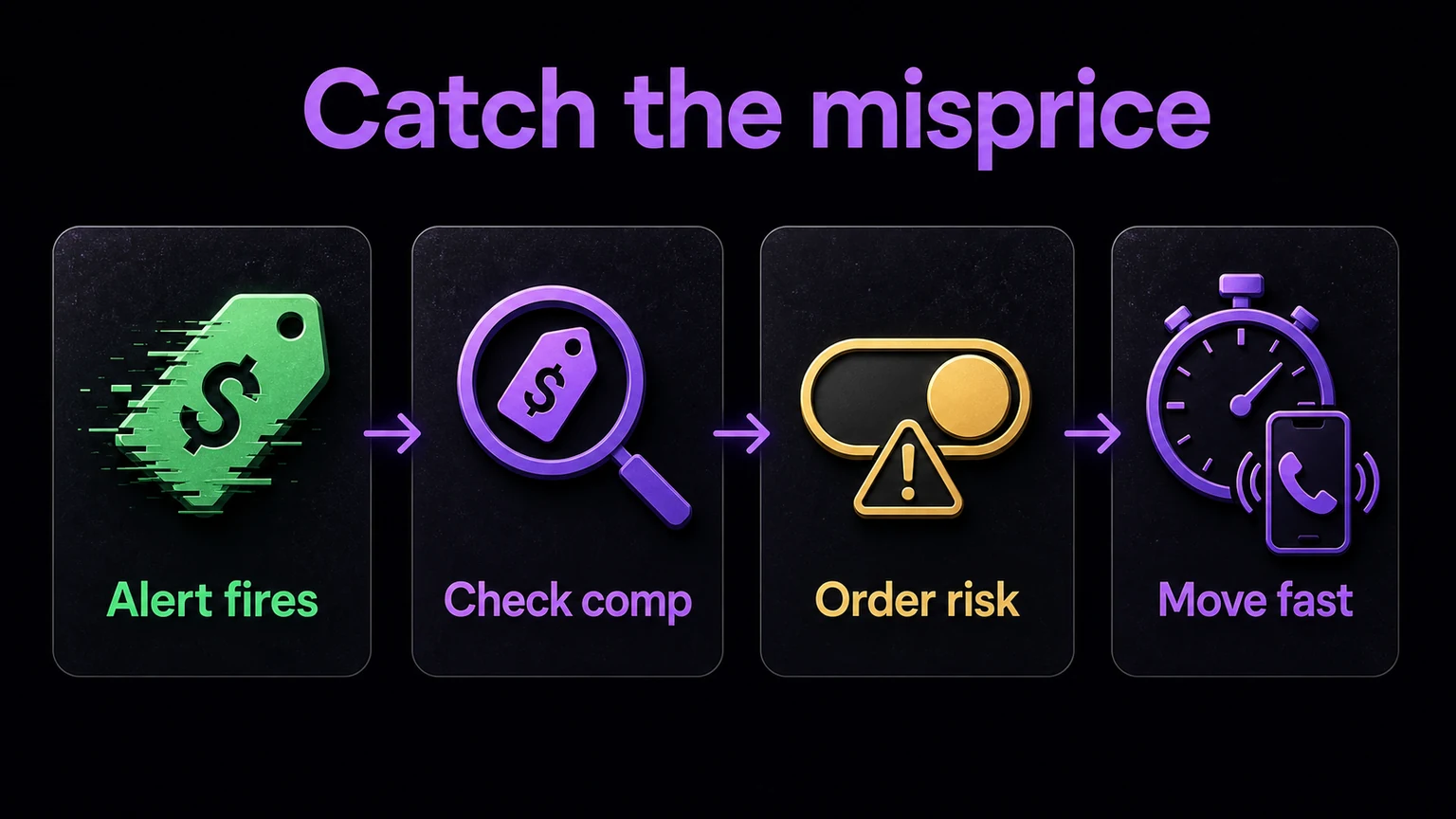
Where price errors actually come from
If you understand the causes, you stop waiting for magic and start watching the right places. Real pricing mistakes cluster around a handful of mechanical failures.
- Human entry error. Someone types 9.99 instead of 99.99, or moves a decimal, or fat fingers a clearance markdown. Classic, common, and usually caught fast.
- Software and feed bugs. A price feed pushes bad data during a site update. Retailers have uploaded the wrong data mid update and briefly listed high value products at a fraction of cost.
- Coupon and promo stacking. Two discounts that were never meant to combine both fire on the same cart. A "spend 50 get 30" collides with a category sale and the item goes near free.
- Third party seller sync. On big marketplaces, outside sellers push their own prices. When their inventory system and their pricing system fall out of step, a product can list far below what they meant.
- Clearance and inventory churn. Stores clearing stock, updating tags, or resetting a season sometimes leave an item priced for a purge it was not supposed to get.
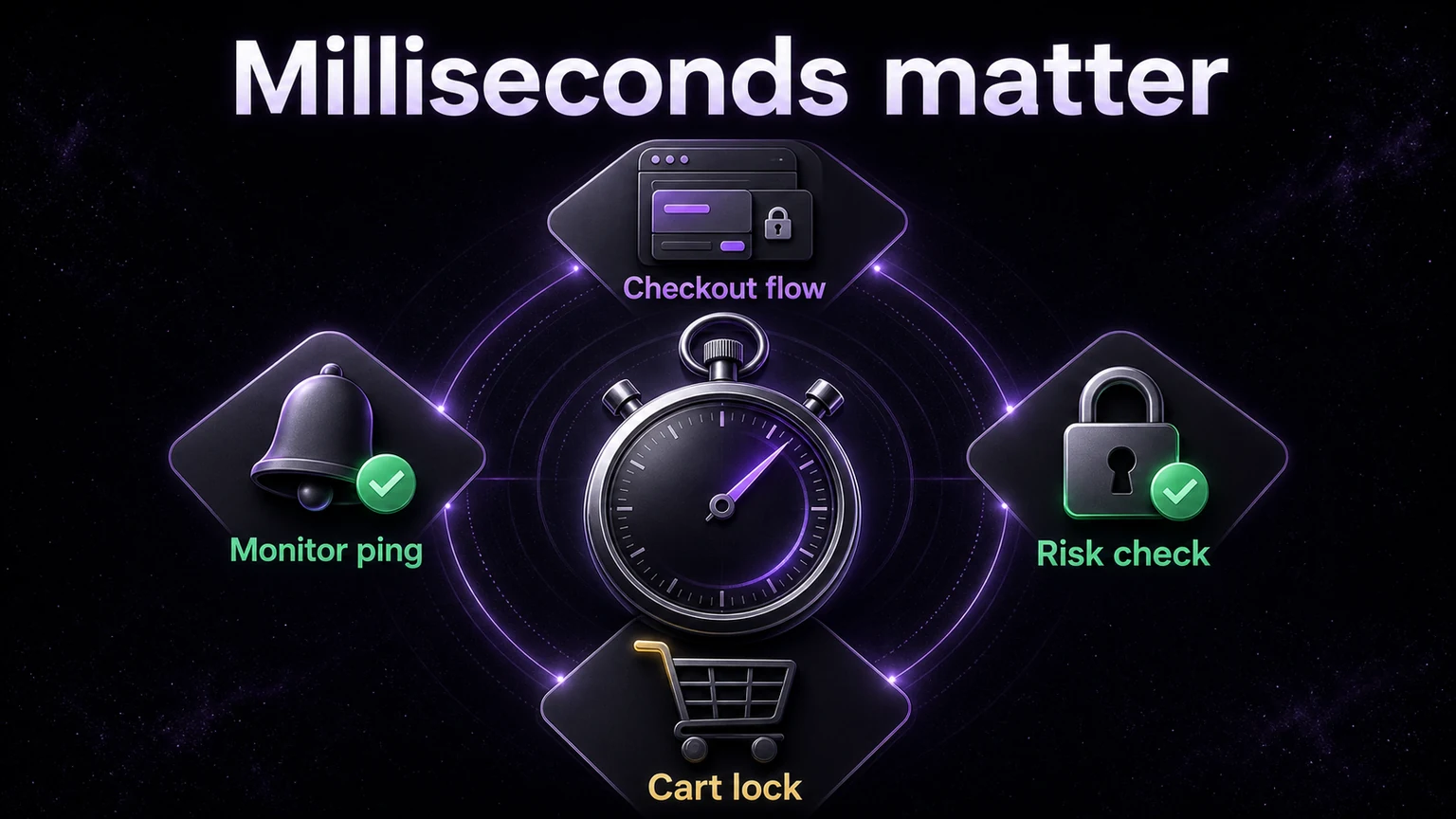
Two patterns fall out of this. First, errors spike during high stress moments: big sale events, site migrations, and heavy traffic days when more transactions and more overlapping promos mean more chances for something to break. Second, errors get fixed fast, often within minutes to a few hours, because the retailer's own monitoring catches the bleed. That short window is the entire game.
Speed is the edge, and refresh is not speed
Here is where most people lose before they start. They decide they will find price errors by browsing. They will check the clearance page. They will refresh a few product URLs. They will "keep an eye out."
You cannot out refresh a system that fixes its own mistakes in eleven minutes. By the time a human notices a glitch, screenshots it, and posts it publicly, the clock is already half gone. Manual browsing is a lottery ticket you have to buy a thousand times a day, and you still miss the drop that fires at 4 a.m.
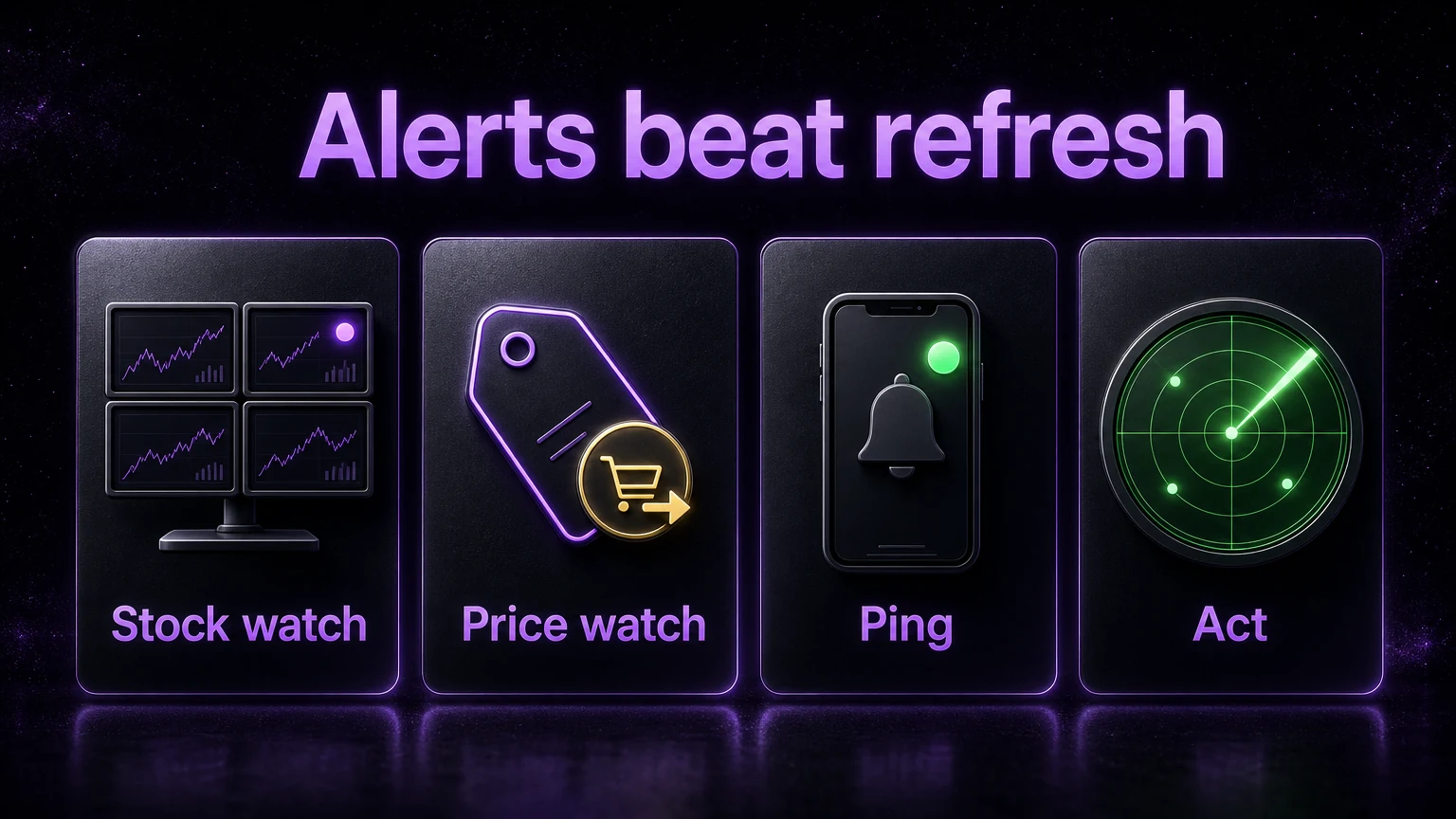
The fix is monitoring. Software watches thousands of product pages and price fields around the clock and pings you the instant a number moves outside its normal range. No sleep, no lunch break, no "I stepped away for a second." The moment a price breaks, a notification hits your phone with the exact link. You are not hunting anymore. You are responding to a trigger.
This is the same mechanism behind sneaker restock alerts and stock monitors, and it is worth understanding on its own. We break the tooling down in how monitors and alerts work and in what are autocheckout bots. For price errors specifically, the alert is the whole product. Everything else is checkout discipline.
A dedicated community earns its keep here because the coverage is shared. One person cannot watch Target, a big box electronics retailer, a toy giant, and forty marketplace sellers at once. A network with monitors across all of them, plus experienced people who know which glitches tend to actually ship, turns a solo lottery into a repeatable feed. That is the honest pitch for something like Divine on Whop: you are renting speed and coverage you could not build alone.
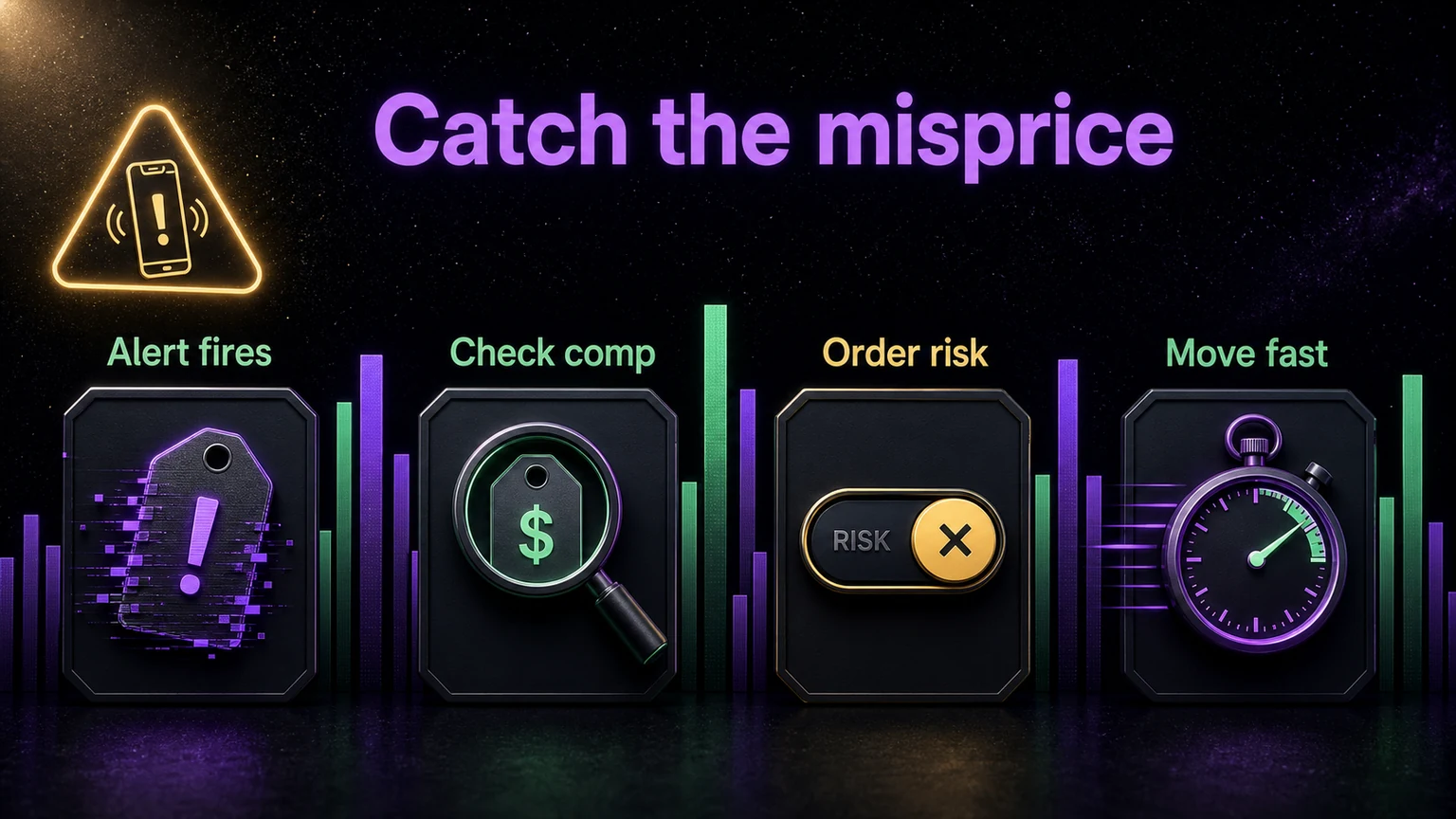
The catch nobody puts on the flyer: orders get canceled
Now the caveat that has to come before the profit math, because skipping it is how people get burned.
Retailers frequently do not honor price errors. Most large sites include a line in their terms reserving the right to cancel orders based on pricing mistakes. That is not a scam on you, it is standard policy, and it is legal.
Real examples make it concrete. A major retailer once had a glitch that put items at more than 90% off, resolved it the same day, and did not honor the mistaken price. A shopper bought a 75 inch 4K TV for $399.99 and got a cancellation email the next day. Outcomes vary by retailer and even by country: in some regions a store has been forced to honor a posted error, but you cannot count on that where you shop.
So build your expectations around this rule: any single glitch order might not ship. Treat a confirmed, shipped, in hand glitch item as the win. Treat the order confirmation email as a maybe. The people who blow up are the ones who mentally spend the profit the second they click buy, then order too many, or worse, presell inventory they do not physically have yet.
Practical defenses:
- Do not presell what has not arrived. List it after it is in your hands, tracked and delivered.
- Keep order sizes sane. Ordering forty units of an obvious error is the fastest way to a blanket cancellation and sometimes an account flag.
- Use one clean account, real details. Multiple accounts and sketchy tricks can violate terms of service and get everything canceled anyway. We cover the risk side in how to avoid reselling scams.
- Assume a hit rate, not a guarantee. If roughly half your glitch orders actually ship over time, your planning has to survive that. Bake it in.
The caveat is the sell. A group that tells you "these get canceled all the time, here is how to pick the ones that ship" is more valuable than one screaming GUARANTEED PROFIT, because the second one is lying to you.
A worked price-error flip, fees and all
Let us land a real number. This is illustrative, with round figures, not a promise, and every input is a checkable retail fact you can plug your own comps into.
Say a monitor pings you: a semi automatic espresso machine that normally sells for $349 just listed at $99.99. You have thirty seconds of belief and a checkout page. You buy one. It ships. It arrives. Now you flip it.
You pull comps first, before you ever list, because comps are the whole game. Recent sold listings for the same model in the same condition sit around $290. You list at market.
Here is the full stack, nothing hidden:
| Line item | Amount | Notes |
|---|---|---|
| Buy price (error) | $99.99 | The glitch price you paid |
| Sales tax on purchase | $8.25 | Roughly 8.25%, varies by state |
| Total cost in | $108.24 | What it truly cost you |
| Resale price (comp) | $290.00 | Recent sold, same model and condition |
| eBay final value fee | -$39.85 | About 13.6% of sale plus $0.40 per order |
| Shipping label | -$22.00 | Heavy item, boxed, insured |
| Packaging and supplies | -$4.00 | Box, foam, tape |
| Net proceeds | $224.15 | After all selling costs |
| Net profit | $115.91 | Net proceeds minus total cost in |
| Return on cost | ~107% | Profit divided by $108.24 |
So the flip nets about $116 on roughly $108 in, a little over 100% return on that unit. That is a strong flip. It is also not the number to brag about, because you have to weight it by reality.
Weight it for cancellation risk. If one in two of these glitch orders actually ships and clears, then across two attempts you expect roughly one $116 win and one dead order that cost you nothing but time. Your expected profit per attempt is closer to $58, not $116. Still good. Just honest.
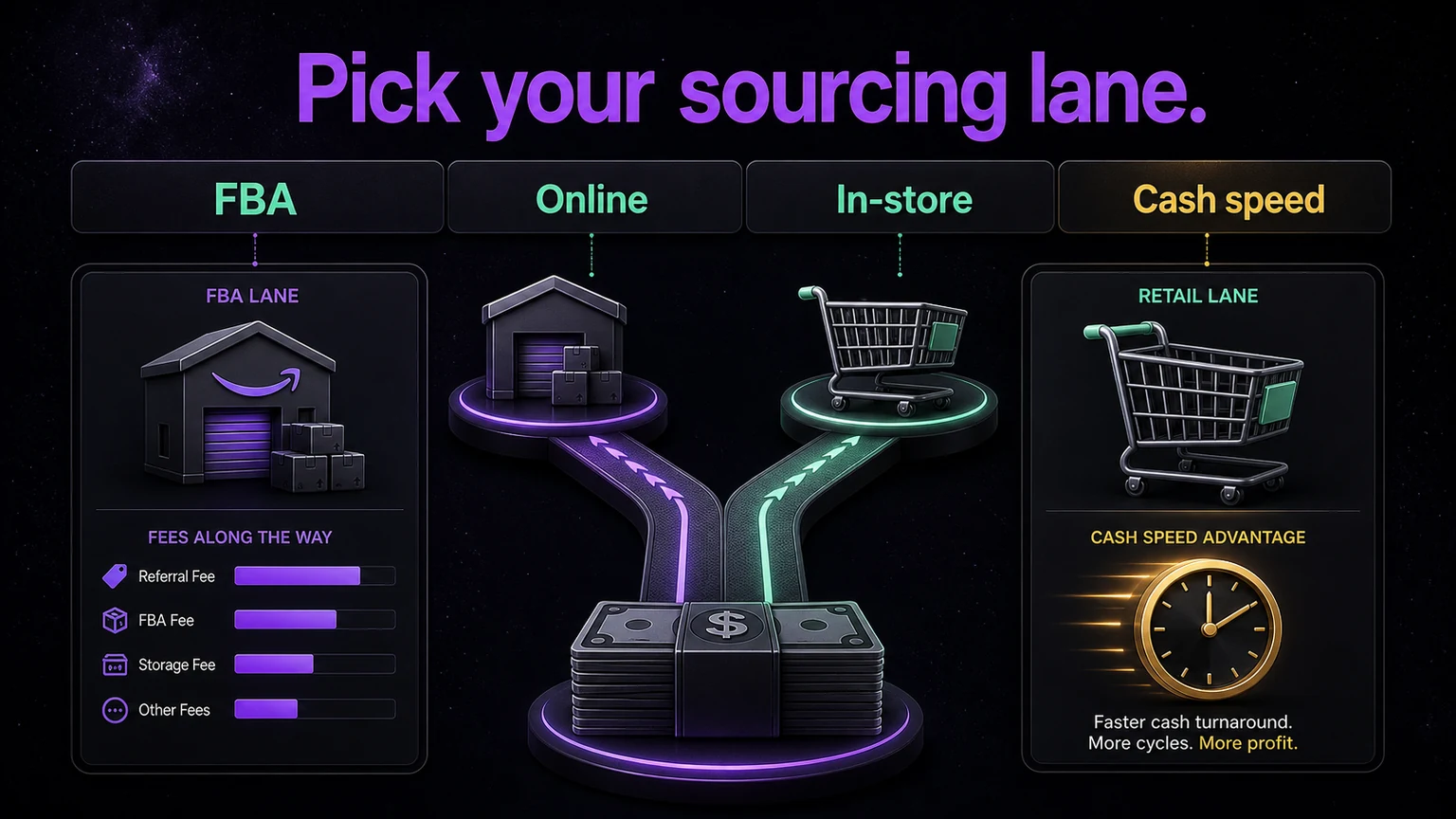
And note what quietly ate the margin even on the winner: fees and shipping took about $66 off a $290 sale before you saw a cent. That is the reselling tax on every flip, glitch or not, and it is exactly why sale price is not profit. We go deep on that in reselling profit margins explained and on the tax side in flipping taxes and fees. Resale income is taxable, and marketplaces report it, so the real take home is lower again.
Front-load the discipline and the math holds: buy at the error, know the comp before you buy, sell at market, subtract everything, and only count the units that actually ship.
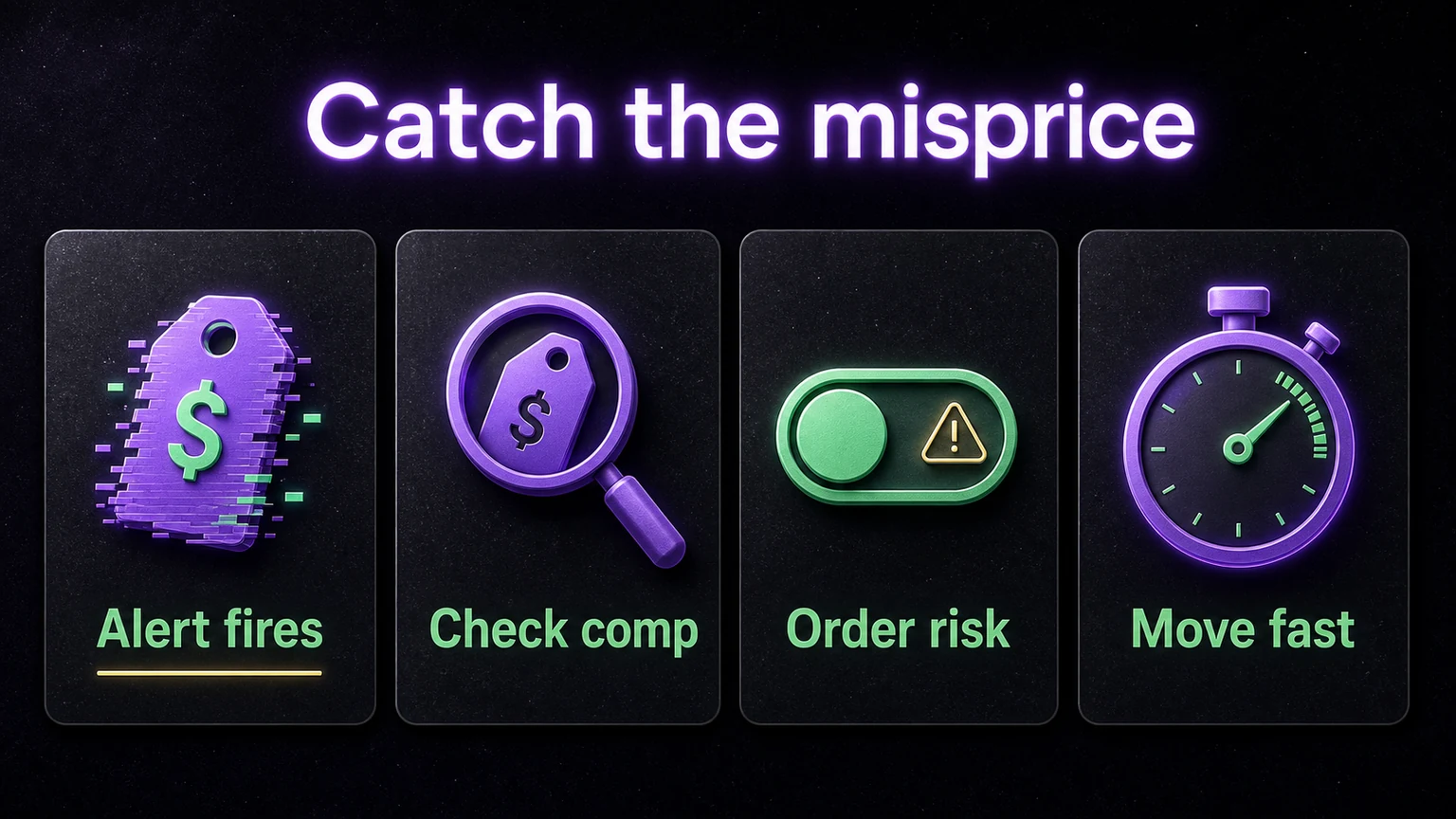
A repeatable checklist for catching and flipping errors
Turn all of that into a routine. When an alert fires, you should be able to run this in under a minute, because a minute is often all you have.
| Step | What to do | Why it matters |
|---|---|---|
| 1. Verify the price is real | Open the link, confirm the number in cart, not just the tile | Cached and stale tiles lie; the cart is truth |
| 2. Check the comp fast | Glance at recent sold prices for the exact model | No comp, no confidence, no buy |
| 3. Estimate net, not gross | Subtract ~13% to 15% fees, shipping, tax in your head | A "half price" deal can still be thin after fees |
| 4. Buy a sane quantity | One to a few, not forty | Big orders trigger cancellations and flags |
| 5. Use clean, real details | One account, accurate info, normal payment | Terms violations get everything canceled |
| 6. Screenshot everything | Order confirmation, price, listing | Proof if the retailer wobbles |
| 7. Wait for it in hand | Do not list or presell until delivered | Orders get canceled after confirmation |
| 8. List at market and ship fast | Good photos, honest condition, quick dispatch | Speed and accuracy protect your ratings |
Print that. It is the difference between "I saw a glitch once" and a process you can run every week.
Who should skip chasing price errors
Straight talk, because not everyone should do this.
Skip it if you need reliable income this month. Price errors are opportunistic, not scheduled. Some weeks are dry. If you cannot handle a flip getting canceled without it wrecking your budget, this is not your lane.
Skip it if you will not do comps. Buying a "deal" you cannot resell for more than your all in cost is not a flip, it is shopping. If checking recent sold prices sounds like a chore, the math will punish you.
Skip it if you cannot stomach dead orders. Cancellations are part of the game. If a canceled order is going to send you into a spiral, the emotional cost is not worth the upside.
Skip it if you were promised easy money. Nobody honest is promising that. This is a small margin, speed dependent, fee heavy, tax reportable activity with real duds mixed in. The people selling you a dream of guaranteed passive income from glitches are the exact villains this whole niche should be aimed at.
For the right person though, someone patient, quick, and disciplined about comps and fees, a good alert feed turns a myth into a monthly habit.
How a community changes the odds
Solo, you are limited by your own attention. You watch a handful of pages, you sleep eight hours, and you miss most of what fires. A free browser alert or a public subreddit helps, but by the time a deal is public it is usually half dead.
The real lever is coverage plus curation. A monitoring network watches far more sources than you can, across sneakers, cards, electronics, toys, and marketplace sellers, and pushes the error the instant it appears. Layer experienced resellers on top who can say "this retailer honors these, that one always cancels, this comp is soft right now," and your hit rate and your net both climb.
That is the honest case for a paid community like Divine on Whop. Divine Pro runs price error and glitch and clearance alerts alongside sneaker release monitors, card pricing, and free autocheckout software for limited drops, and it comes with a five day free trial so you can see the feed before you commit. If your interest is card specific flips instead, the Divine Cards Pass is the narrower door. Neither one is a money printer. Both are speed and coverage you would struggle to build yourself. Whether that is worth the monthly cost depends on how many flips you actually run, which we help you audit in are reselling communities worth it.
FAQ
Are price errors and glitch deals actually real?
Yes. They are a mechanical byproduct of pricing at scale: human entry mistakes, feed and software bugs, stacked coupons, and third party sync problems. They are not rare magic, they are a steady error rate hidden inside millions of daily price updates. The hard part is not whether they exist, it is being fast enough to catch one before it is patched, usually within minutes to a few hours.
Is it legal to buy something at a price error and resell it?
Buying an item listed at a mistaken price is generally legal, and reselling something you own is generally legal. The catch is that most large retailers reserve the right in their terms to cancel orders based on pricing errors, and they exercise it often. So it is legal, but it is not enforceable in your favor. Treat a shipped, in hand item as the real win, not the confirmation email.
Why do retailers cancel price error orders?
Because their terms let them, and because an honest mistake priced at 90% off would cost them a fortune if honored at scale. Big retailers have canceled mass glitch orders the same day and voided individual high value orders after the fact. Outcomes vary by retailer and country, so never assume yours will ship. Plan around a hit rate, not a guarantee.
How do I catch price errors before everyone else?
Stop refreshing pages and start using monitors. Software that watches thousands of products around the clock and pings you the instant a price breaks is the only realistic way to beat a window that closes in minutes. Solo, you miss the overnight drops. A shared alert network across many retailers, like the price error alerts inside a community such as Divine, widens your coverage far past what one person can watch.
How much can you actually make flipping a price error?
It depends entirely on the item, the comp, and whether the order ships. In a worked example, buying a $349 espresso machine at $99.99 and reselling around $290 nets roughly $116 after eBay fees, shipping, tax, and supplies, about a 100% return on that unit. But weight it for cancellations: if only half your glitch orders ship, your expected profit per attempt is closer to half that. Real numbers, real fees, real duds. No guarantees.
Do I have to pay tax on price error flips?
Yes. Resale profit is income, and marketplaces report seller payouts, so this is not tax free side cash. Your true take home is after marketplace fees, shipping, supplies, and tax. Track your cost basis, including what you paid at the error price, so you are taxed on profit and not on gross sales. See flipping taxes and fees for the details.
Verdict and next step
Price errors are not a myth. They are the predictable exhaust of pricing software running at massive scale, and the only reason most people never profit from them is that they are too slow to be there when one fires. The shelf price is an output of code, and code breaks. Your edge is not luck, it is speed, comps, and the discipline to only count the orders that actually ship.
If you want to stop reading about glitches after they are dead and start catching them live, the fastest path is a monitored alert feed with experienced people around it. Start the five day free trial at Divine on Whop, watch the price error alerts fire for a few days, and judge the feed with your own eyes before you pay a cent.
Realistic expectations: reselling is a real business with real costs, marketplace fees, shipping, taxes, unsold inventory, canceled orders, and your own time. Profits are not guaranteed and glitch orders often do not ship. Always pull your own comps before you buy, and never risk money you cannot afford to tie up.
Get to the deal first
Divine is the alert network, monitors, and autocheckout built on this exact process. Try Divine Pro free for 5 days.
Reselling is a real business with real costs: marketplace fees, shipping, taxes, and unsold inventory. Profits are never guaranteed. Always check the comps before you buy.