What are autocheckout bots? Plain-English guide
What are autocheckout bots, are they legal, and why does the edge come down to milliseconds? A plain guide to the speed tools resellers use on public drops.
Turn this into live alerts.
Use the Divine Pro free trial to see sneaker, retail, card, price-error, and autocheckout alerts before you pay.
Start Divine Pro free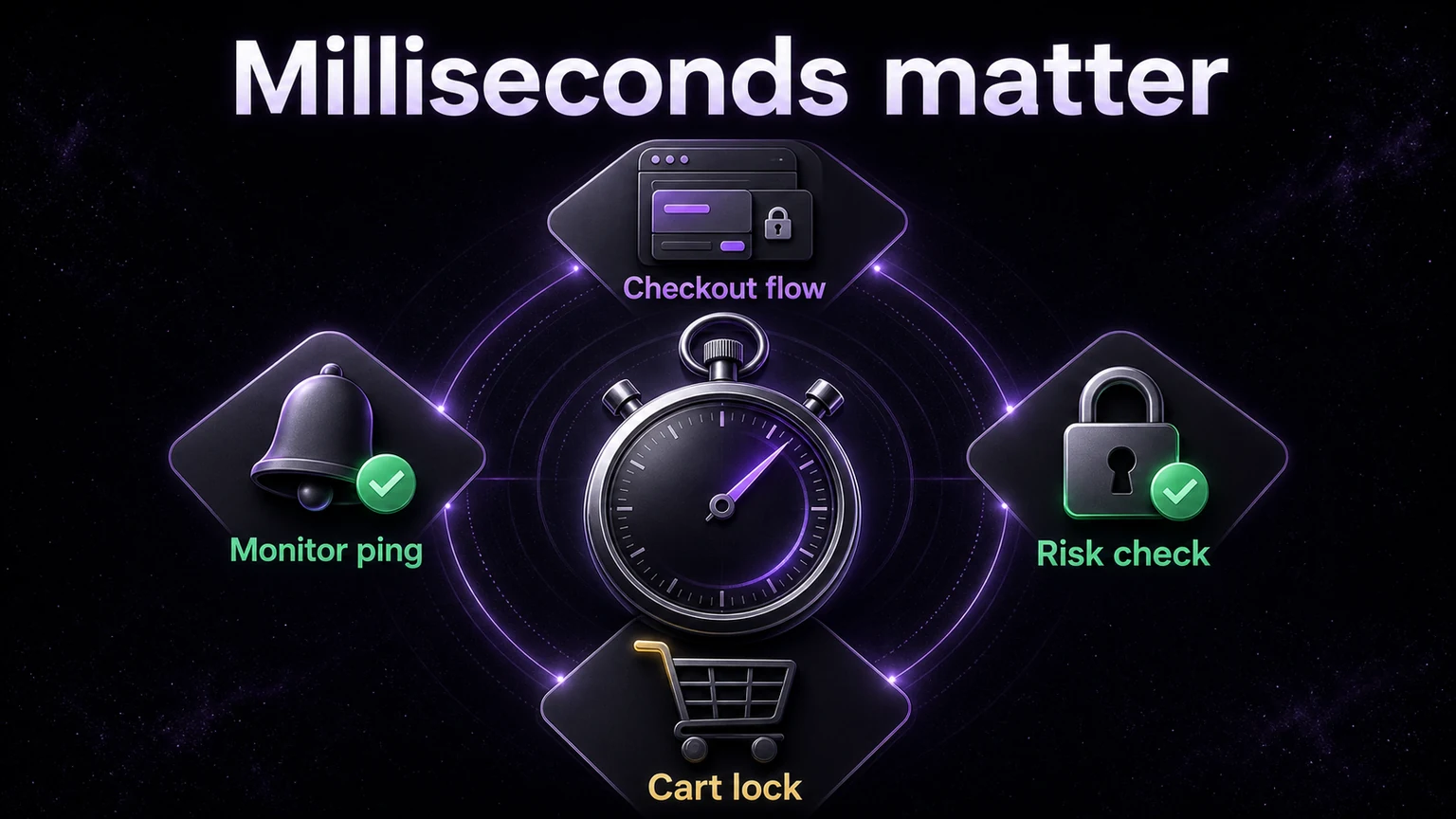
The drop goes live at 10:00:00. You have the tab open. You have your card saved. You hit add to cart at what feels like the same instant, and the page says sold out. Not "almost." Sold out. You refresh. Still sold out. It is 10:00:04, and a pair you would have flipped for a clean spread is already listed on the resale market by someone who was four seconds faster than you.
That is the moment that makes people rage-quit reselling. And most of them blame the wrong villain. They blame "the bots," decide the whole thing is rigged or illegal, and walk away from a real, legal spread they could have captured. The truth is quieter and more useful: on a public drop with real demand, the difference between winning and staring at a sold-out page is measured in milliseconds, and an autocheckout tool is how you stop giving those milliseconds away for free.
The lie that costs you drops: "bots are cheating or illegal"
Say it plainly, because the belief is expensive. A lot of would-be resellers think autocheckout software is a cheat code that will get them arrested, sued, or banned for life, so they refuse to touch it and lose every fast drop to people who did not share the fear.
Here is the honest correction, and we will back every piece of it below.
An autocheckout bot is not a hacking tool. It does not break into a store or steal inventory. It does the exact same steps you would do by hand, select the item, add to cart, fill the checkout form, submit the payment, except it does them in a fraction of a second instead of the several seconds it takes a human even with autofill. It is a speed tool. On a public drop where the whole point is first come first served, speed is the entire game.
And on the legal question: as of 2025, sneaker and retail checkout bots are not illegal under U.S. federal law, and no specific statute bans buying sneakers with automation. Multiple security and legal sources land in the same place. There is no law that says "you may not use software to check out fast." (See the legality section below for the important caveats, because "not illegal" is not the same as "no rules apply.")
So the villain in this story is not the tool, and it is definitely not you for wanting to compete. The villain is the sold-out page, the futility of manual refreshing against a drop that clears in under a minute, and the scalper mega-operations running thousands of fake accounts to hoover the whole stock. An honest single-pair autocheckout tool is how a normal person stops being road-kill on a public drop. That is the fix.
What an autocheckout bot actually is
Strip away the mystique and an autocheckout bot is a small piece of software, often a browser extension or a lightweight app, that watches for a product to go live and then completes the purchase flow automatically using the details you gave it in advance.
You set it up once. You tell it which product to watch, usually by pasting a product URL or a keyword and a size. You save your shipping address and payment info in the tool. Then you wait for the drop. When stock appears, the tool fires.
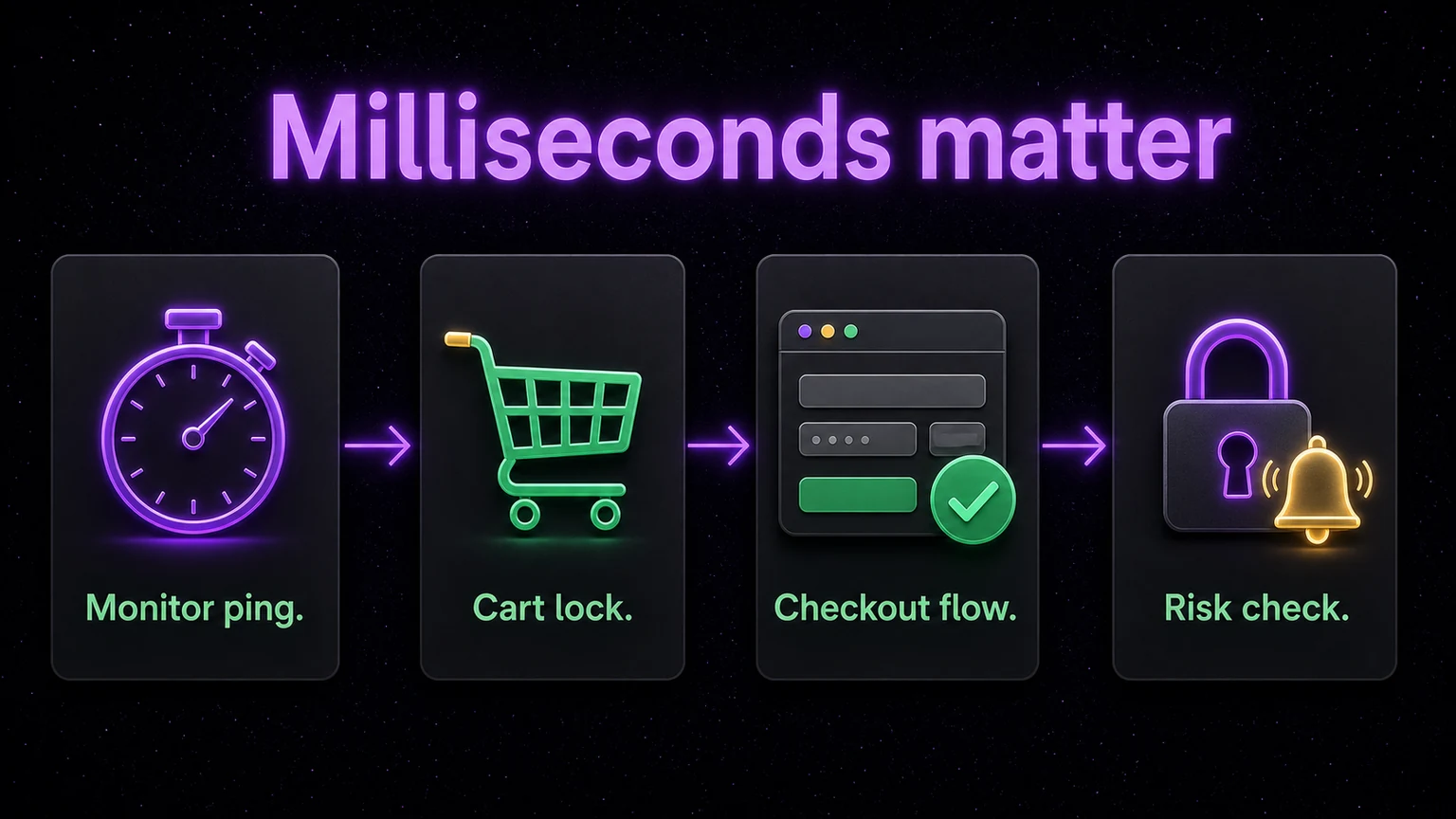
The three jobs it does
Every autocheckout tool, from a free single-user extension to an expensive all-in-one, is doing some combination of three jobs.
- Watch. It monitors the product page or the store's stock feed and detects the exact moment the item becomes buyable. Humans do this by refreshing. A tool does it continuously, so it reacts the instant stock flips live instead of on your next manual refresh. This overlaps with what a stock monitor or alert does, and many resellers run both.
- Cart. The moment the item is live, it selects your size and adds to cart faster than you can move a mouse. On limited drops the cart itself is the bottleneck, because inventory is decremented at add-to-cart or at payment, and the humans lose the race here.
- Check out. It autofills the entire checkout form, name, address, card, and submits. This is the step that matters most. One breakdown of how these tools work notes that the software instantly autofills all the checkout data you provided, which would take a human at least a few seconds even with browser autofill. Those few seconds are the whole ballgame.
That is it. No magic, no hacking, no stolen inventory. It is your own purchase, done at machine speed, on a store that is open to the public.
Are autocheckout bots illegal? The honest answer
This is where you need the nuance, not a slogan, because "not illegal" and "no consequences" are two different sentences.
The tool itself is legal. Security and legal write-ups are consistent: sneaker and checkout bots are not explicitly illegal under U.S. federal law or in most jurisdictions. There is no criminal statute that bans automating a checkout. Courts have also generally held that breaking a website's terms of service is not automatically a crime.
But retailers can still say no, and they do. The main issue is contractual, not criminal. Many stores, Nike's SNKRS platform being the classic example, explicitly ban automated purchasing in their terms of use. If a retailer detects bot-like behavior, it can cancel your order, suspend your account, and block you from future releases. That is not a court case. It is the store enforcing its own rules, and it is completely within their right. Cancelled orders and banned accounts are the real, common downside, not handcuffs.
It becomes actually illegal when it touches fraud. The line is clear. Using automation with stolen card data, or to gain unauthorized access to systems, can trigger laws like the Computer Fraud and Abuse Act. That is fraud, and fraud is illegal with or without a bot. Buying one public pair fast with your own card and your own money is a different universe from that.
The law could tighten later. There is legislative momentum. A federal proposal, the Stopping Grinch Bots style effort and the STARM Act introduced in 2023, would give the FTC power to fine bot operators who manipulate access to high-demand launches. The precedent is the BOTS Act, which restricts bots buying concert tickets purely to resell. Worth knowing, worth watching. Also worth noting: enforcement of the ticket BOTS Act has been famously weak, with the first action coming five years after it passed.
So the honest one-liner is this. Autocheckout is legal, the store may still ban you for it, real fraud is a separate crime, and none of this is legal advice. Read the terms of the store you are hitting, use your own payment details, and expect that some drops will cancel on you. That is the price of playing a fast, public game.
Why the edge is measured in milliseconds
Here is the number that makes the whole thing make sense. On a hyped public drop, the window is not minutes. It is seconds.
A widely reported example: when Kanye West dropped the Yeezy 450 in Cloud White, the shoe went live at 7:00 a.m. and was reported sold out by 7:01 a.m., at a $200 retail price, with resale sitting at roughly double that shortly after. One minute. That was not a fluke of one release. Industry write-ups describe hyped Nike, Adidas, and Jordan drops routinely clearing in seconds.
Now sit with what that means for a manual buyer. If the item lives for sixty seconds and thousands of people want it, your reaction time, your typing speed, and your one manual refresh cadence are all working against you. Even flawless human execution burns a few seconds on the checkout form alone. A tool burns milliseconds. That gap is not a small advantage. On a drop that clears in a minute, it is the difference between a confirmation email and a sold-out screen.
This is also why "just refresh faster" is a losing strategy, not a moral high ground. You can sit there hammering F5 and still get beaten by everyone who closed the speed gap. Refreshing harder does not fix a milliseconds problem. Matching speed with speed does.
Manual versus autocheckout: where the seconds go
| Step | Manual buyer (best case) | Autocheckout tool |
|---|---|---|
| Detect stock is live | On your next refresh, 0 to 5 sec late | Continuous, reacts instantly |
| Select size, add to cart | 1 to 3 sec | Milliseconds |
| Fill checkout form | 3 to 8 sec even with autofill | Milliseconds, pre-loaded |
| Submit payment | 1 to 2 sec | Milliseconds |
| Realistic total | 5 to 18 sec after live | Fractions of a second |
On a drop that survives ten to sixty seconds, those numbers decide who eats. The table is the argument. Manual buyers are not lazy or dumb. They are simply bringing hands to a machine fight, and the store's inventory does not wait.
One more sobering piece of context on how crowded that fight is. Nike has estimated that up to half of entries on high-demand launches are bots. A post-sale audit by the queue company Queue-it on one sneaker drop found 97% of the activity was inorganic: of 1.7 million visitors, fewer than 100,000 were playing without automation. Read that again. If you are refreshing by hand on a big drop, most of the "crowd" you are losing to is not even human. Bringing a fair, single-pair speed tool is not cheating the drop. It is showing up to it.
The math: what winning one extra drop is actually worth
Speed is abstract until you price it. So let us run a clean, illustrative flip and see what a single extra win pays, net of the fees that most beginners forget.
These numbers are made up for the example. Do your own comps before you buy anything, because the whole game lives or dies on real resale data, not hope. Learn the full margin math here.
Say a hyped release retails at $200. Post-drop resale comps are sitting around $360. You win one pair using autocheckout on the public drop and list it.
- Resale price (your comp): $360
- Marketplace fee (roughly 13.25% plus $0.30, common on eBay in many categories): about $48
- Shipping (you cover it, sneakers in a box): about $15
- Your cost (retail plus tax, say): $214
- Net profit: 360 minus 48 minus 15 minus 214 = $83
- Return on your $214 at risk: roughly 39%
Now zoom out. That $83 exists only because you got the pair. If you were four seconds too slow, your net is exactly $0, and your time is gone with nothing to show. The tool did not create the $160 spread. Scarcity and demand did. The tool decided who captured it.
And be honest about the losers, because they are real. Not every pair you win resells above cost. Hype fades, a general release restocks and craters the comp, or you get stuck holding a size nobody wants. Unsold inventory ties up your cash and can force a break-even or losing sale. Winning the drop is step one. Buying only what the comps and sell-through support is what keeps you profitable. The tool gets you the pair. Your discipline decides if the pair was worth getting.
If you are new to the sneaker side of this specifically, the mechanics of finding profitable releases are covered in how to flip sneakers for profit.
Autocheckout is not the same as an industrial bot farm
This distinction matters, because the word "bot" gets used for two very different things, and lumping them together is what scares honest resellers off a legitimate tool.
On one end you have the industrial scalper operation. This is the thing people picture and rightly resent. It runs on stacks of proxy servers to look like thousands of separate buyers, spins up fake accounts and emails by the hundred, runs raffle bots to flood limited releases, and exists to vacuum an entire drop and choke off supply. That is the operation retailers spend millions fighting, and it is the reason a manual buyer gets crushed. Aim your frustration there.
On the other end you have a single-user autocheckout tool. One person, their real details, one entry, trying to secure one pair fast on a public drop. It closes the speed gap. It does not multiply you into a fake crowd. Used this way, it is not the thing hoarding the stock. It is the thing that lets a normal person compete against the hoarders instead of being their easy prey.
A fair reseller community leans toward the second and away from the first. The goal is to get you into public drops at a competitive speed, follow the store's one-pair-per-person spirit, and pair the tool with real monitors and alerts so you know a drop is coming before it is gone. Speed to compete, not scale to hoard.
What autocheckout will not do for you
The tool is powerful in one narrow way and useless in every other. Sell yourself the truth.
- It will not beat anti-bot systems for you. Retailers run behavioral detection, machine learning, click-speed analysis, and browser fingerprinting. A crude tool can get you flagged, throttled, or cancelled. More speed can trip more alarms.
- It will not guarantee a win. On the biggest drops, demand outruns supply no matter how fast you are. Fast improves your odds. It does not promise a pair.
- It will not fix a bad pick. Autochecking out a shoe with no resale demand just gets you dead inventory faster. Comps first, speed second.
- It will not survive a cancelled order. If a store bans automation and detects it, you can lose the order and the account. Budget for some drops to void.
- It will not protect your data by default. Saving card details in any third-party tool is a security decision. Use a tool you trust, and understand where your payment info lives.
- It will not do your accounting. Every flip is potentially taxable income. Read flipping taxes and fees before you scale, because the tax bill is part of your real net.
None of that makes autocheckout a scam. It makes it a tool: sharp for one job, blunt for everything else.
Who should skip autocheckout
Honesty up front is the sell, so here is who should not bother.
- You only buy general releases you can get any day. If the shoe restocks forever, there is no drop to win and no speed edge to capture. Save your energy.
- You will not learn comps. Speed without pricing discipline just loses money faster. Master reading resale data first. Start with what is retail arbitrage.
- You are uncomfortable with cancelled orders or ToS gray zones. Some stores ban automation and enforce it. If a voided order or a banned account would ruin your week, this lane is not for you.
- You expect it to be passive income. It is not. It is competitive, time-boxed, and occasionally frustrating. There is no autopilot to wealth here.
If two or more of those are you, put the tool down and work on sourcing and comps instead. The tool is worthless without the fundamentals underneath it.
Where Divine fits
Here is the practical part. A good autocheckout tool costs money, takes setup, and only pays off if you also know which drops are coming and whether the comps justify buying. Piecing that together solo is slow and expensive.
Divine Pro bundles the pieces. It includes free autocheckout software for limited drops, so the speed tool itself is not another subscription on top. It pairs that with the two things a tool alone cannot give you: real-time release alerts so you know a drop is live the second it goes, and a network of experienced resellers who have already learned which drops are worth the fight and which are traps. Speed, timing, and comps in one place.
Divine Pro is $74.99 a month with a 5-day free trial, so you can see the alerts and the tool before you pay a cent. If your lane is sports and trading cards rather than sneakers, the Divine Cards Pass at $35 a month is built around card monitors and flip intel instead.
Wondering whether a paid community is even worth it? That is a fair question, and we answer it honestly in are reselling communities worth it. Kick the tires on the free trial and judge the alert speed for yourself.
If you want the speed tool plus the alerts that tell you when to use it, start the Divine Pro free trial and test it on the next drop.
FAQ
Are autocheckout bots illegal?
As of 2025, autocheckout and sneaker bots are not illegal under U.S. federal law, and no specific statute bans automating a checkout. The real risks are contractual, not criminal: many stores ban automation in their terms and can cancel orders or suspend accounts. It only crosses into actual crime when tied to fraud, like stolen payment data or unauthorized system access. This is not legal advice, so read the store's terms and use your own details.
Do I need proxies to use autocheckout?
For a single-user tool buying one pair on a public drop, usually no. Proxies are the hallmark of large scalper operations trying to look like many different buyers to grab whole drops. A regular reseller securing one item at competitive speed is a different use case. Adding proxies pushes you toward the industrial-farm territory that retailers fight hardest, so keep it simple unless you truly understand the tradeoffs.
Will an autocheckout bot guarantee I win the drop?
No, and be skeptical of anyone who says otherwise. On the most hyped drops, demand vastly outruns supply, retailers run aggressive anti-bot detection, and some orders get cancelled. Speed meaningfully raises your odds by closing the milliseconds gap against manual buyers. It does not promise a pair, and it never overrides scarcity.
What is the difference between an autocheckout bot and a monitor?
A monitor watches stock and price and alerts you the instant something goes live or restocks. An autocheckout tool takes the next step and completes the purchase automatically. They work best together: the monitor tells you a drop is happening, the tool secures it fast. More on the alert side in how monitors and alerts work.
How fast do hyped drops actually sell out?
Fast enough that manual buyers rarely win. One reported Yeezy 450 release sold out in about a minute, from 7:00 to 7:01 a.m. Industry write-ups describe hyped Nike, Adidas, and Jordan drops clearing in seconds. On a big launch, up to half the entries can be bots, and one audit found 97% of a drop's activity was non-human. That is why the edge is measured in milliseconds.
Is it worth using autocheckout if I only flip a few pairs a month?
It can be, if those pairs are limited releases that sell out fast and the comps support a real margin. If you mostly buy general releases available any day, there is no drop to win and no speed edge, so a tool adds nothing. Match the tool to the situation, not the other way around.
Verdict: it is a stopwatch, not a cheat code
Drop the fear and see it clearly. An autocheckout bot is a legal speed tool that does your own checkout at machine speed on a public drop. It is not hacking, it is not automatically illegal, and it is not the villain. The villain is the sold-out page, the futility of out-refreshing a drop that clears in a minute, and the industrial scalpers running fake crowds to hoard the stock. On a race decided in milliseconds, a fair single-pair tool is simply how you show up as a real competitor instead of easy prey.
But keep the order right. Comps before speed, discipline before tools, honest expectations before hype. The tool decides who captures a spread. It does not create the spread, and it cannot save a bad pick. If you want the speed plus the alerts and reseller intel that tell you when to spend it, Divine Pro's free trial is the low-risk way to test all three at once.
Realistic expectations: reselling is a business with real costs, marketplace fees, shipping, taxes, unsold inventory, and your time. Profits are not guaranteed, some drops will cancel or crash, and every example here is illustrative. Do your own comps, read each store's terms, treat this as general information and not legal advice, and only risk money you can afford to tie up.
Get to the deal first
Divine is the alert network, monitors, and autocheckout built on this exact process. Try Divine Pro free for 5 days.
Reselling is a real business with real costs: marketplace fees, shipping, taxes, and unsold inventory. Profits are never guaranteed. Always check the comps before you buy.