Are reselling Discords worth it?
Are reselling Discord communities worth it? Audit alert speed, monitor coverage, and documented wins, then run the break-even math before you pay a cent.
Turn this into live alerts.
Use the Divine Pro free trial to see sneaker, retail, card, price-error, and autocheckout alerts before you pay.
Start Divine Pro free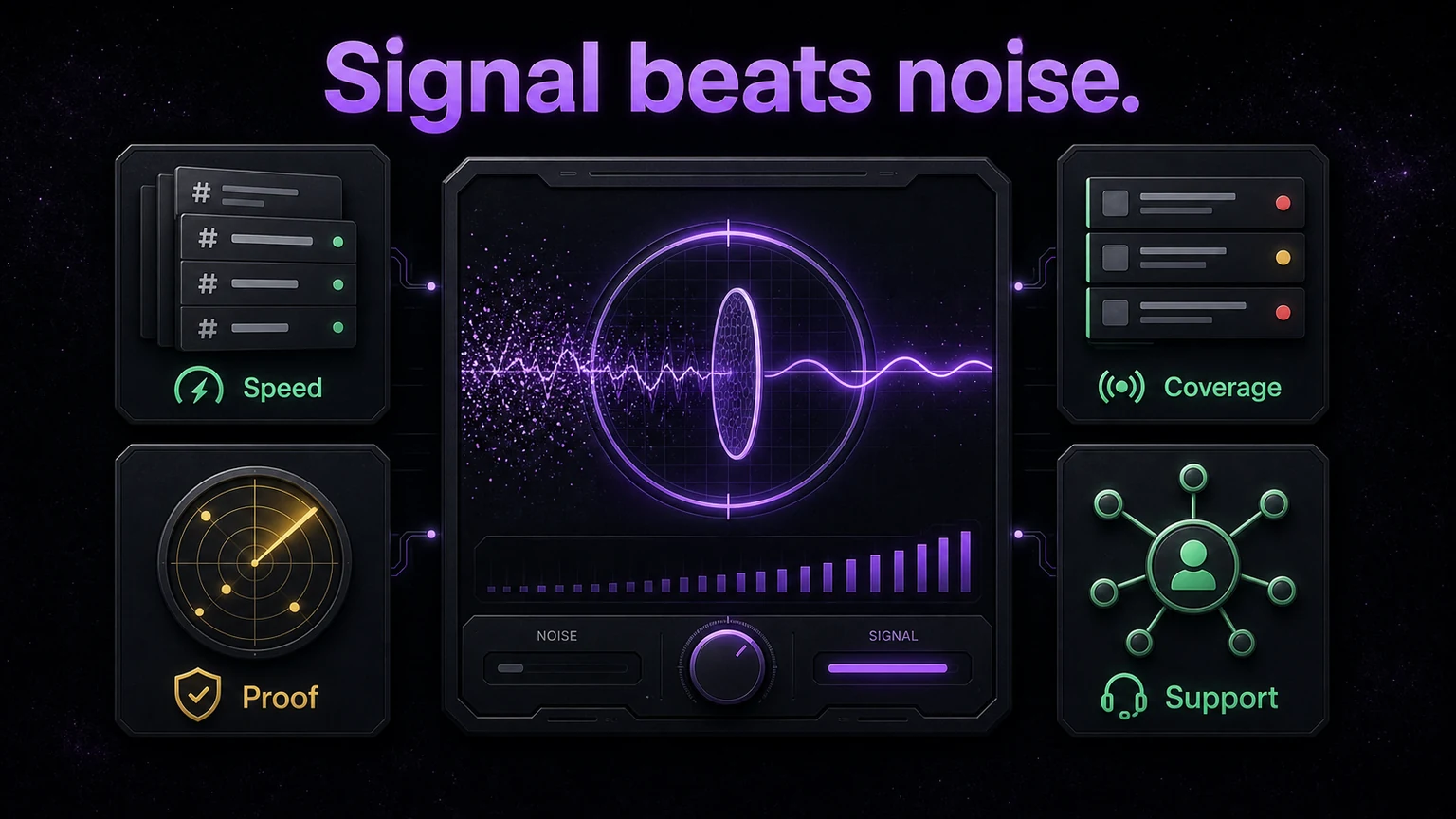
You joined a Discord that promised the world. Twenty thousand members. Green checkmarks scrolling past. A logo that looks like a bank. And then you sat there for three weeks and made nothing, because every alert that mattered landed after the product was already gone, and the "wins" pinned in the showcase channel were screenshots you could not verify from people you will never meet.
Here is the lie that cost you: a busy Discord is a good Discord. It is not. Noise is not coverage. A wall of messages is not speed. Ten thousand people fighting over the same slow ping is not an edge, it is a stampede, and you are at the back of it. The real question is not "how active is this server," it is "does this server put me in front of a profitable deal before it sells out, often enough to clear what it costs me." That is a math question, and math has an answer.
This is the honest breakdown. What a reselling community actually sells you, what to audit before you pay, and the break-even you can run on a napkin. No hype. No dream. Just the levers and the numbers.
What you are actually paying for
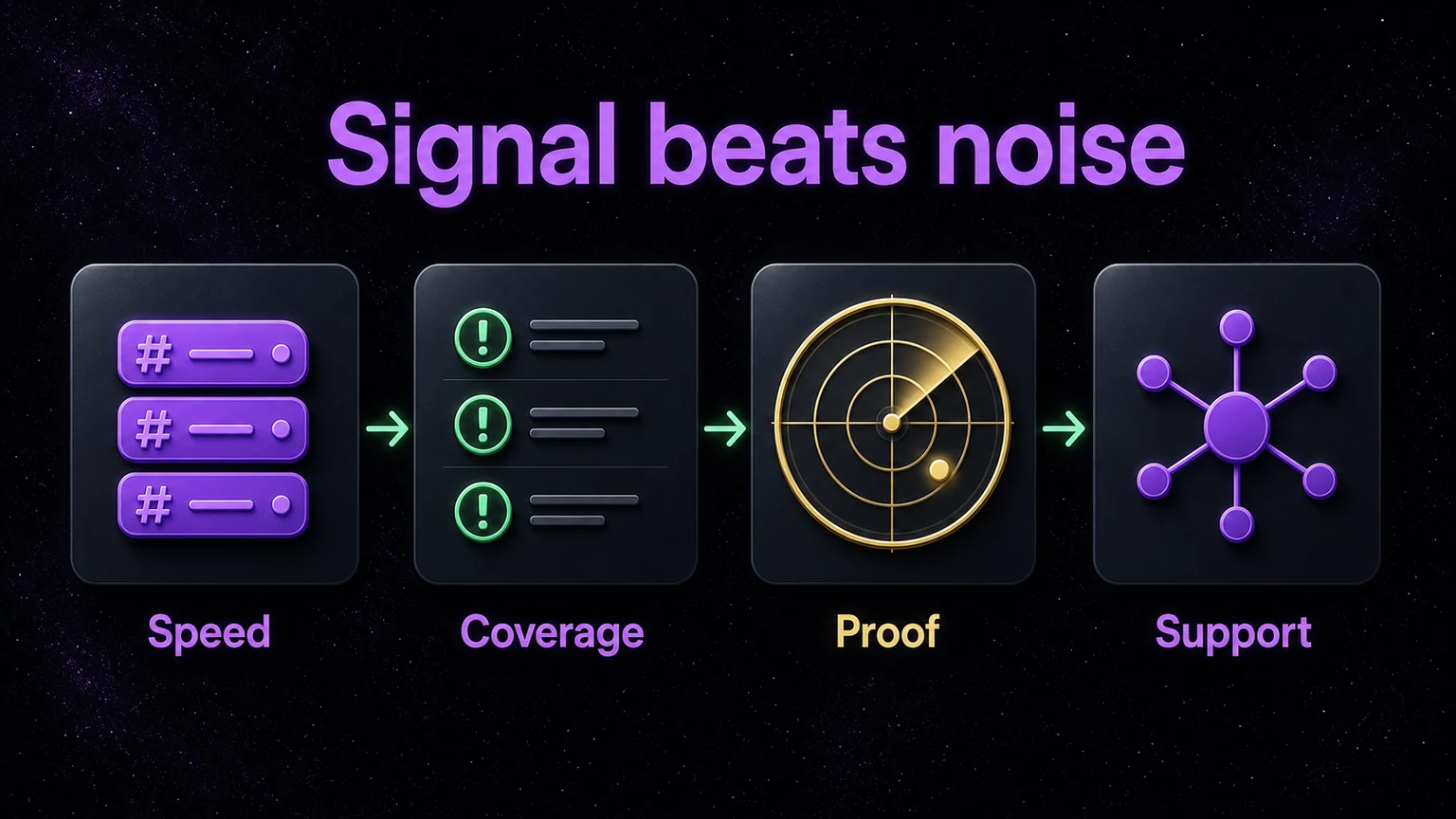
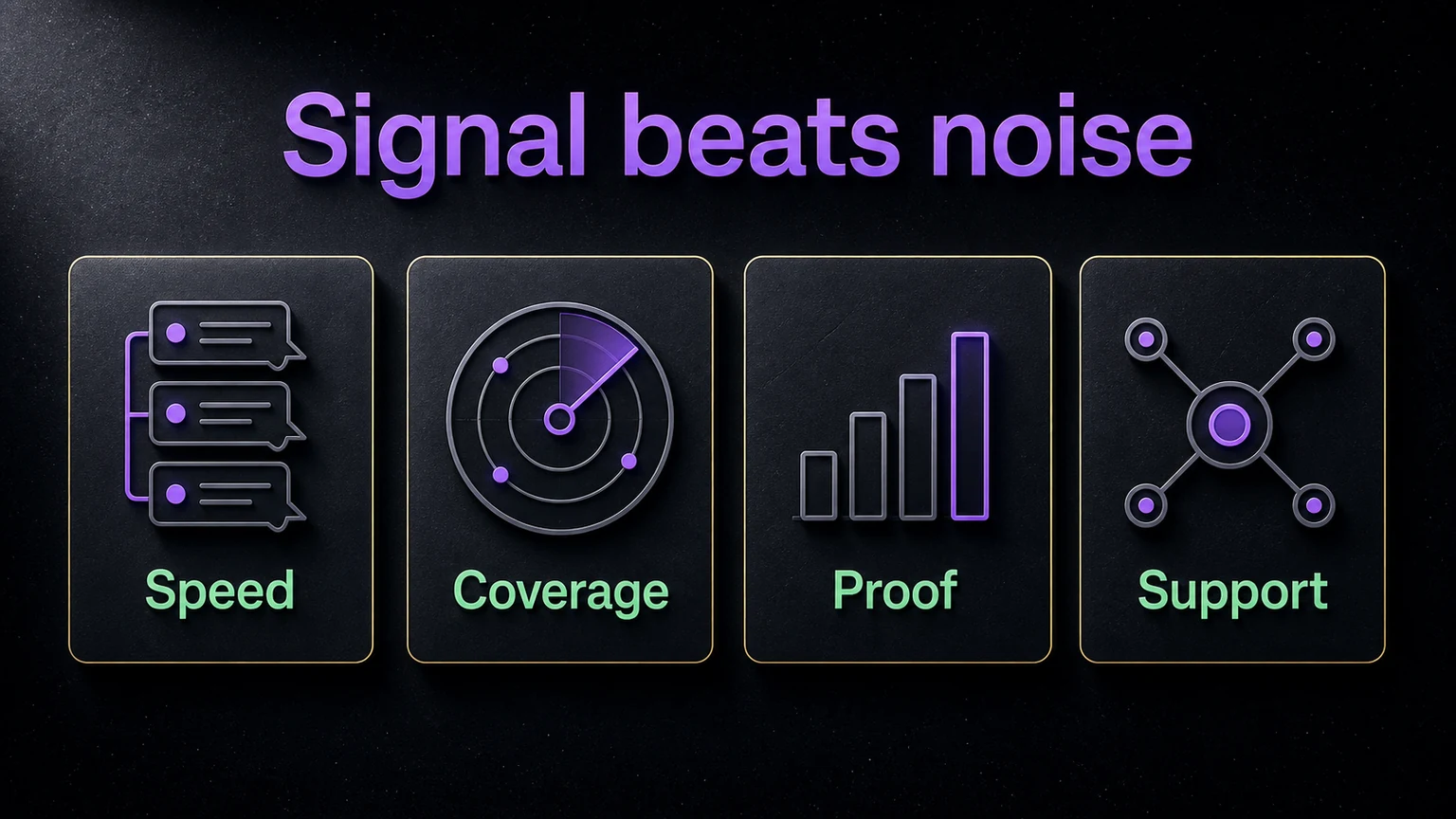
Strip the branding away and a reselling Discord sells four things. Speed, coverage, curation, and people. That is the whole product.
Speed is how fast an alert reaches your phone after a product drops, restocks, or misprices. On limited releases, stock can vanish in seconds, so the gap between a monitor that pings in one second and one that pings in sixty is the gap between a cart and a "sold out" page.
Coverage is how many retailers, SKUs, and drop types the monitors watch. A group that only watches Nike is useless the week the money is in a Pokemon Center restock or a Target price error. Broad, relevant coverage means you are not blind on the day the deal is somewhere you were not looking.
Curation is a human filtering the firehose. A raw monitor pings everything. A good community tags the ping with the SKU, the resale comp, the sizes that actually profit, and a "this one is real, skip that one" from someone who has done it a hundred times.
People are the resellers who answer at 3am when a checkout breaks, who tell you which release is dead this season, and who post their losses as well as their wins. That network is the part a free tool cannot replace.
Notice what is not on that list. Member count. Emoji reactions. A hype video. Those are marketing. They move nothing in your bank account. The monitors and alerts that actually do the work are the product, and most of what a flashy server shows you is packaging around them.
The busy-Discord trap, and who profits from it
Aim your suspicion at the right target. Not at yourself for joining, and not at every group that charges money. The villain is the room built to look valuable instead of be valuable.
A saturated free server is the clearest example. When 20,000 people get the identical restock ping at the same instant, the retailer's site buckles and almost nobody checks out. The ping was real. The edge was zero, because it was shared with a stadium. Busy did not mean good. Busy meant crowded.
The paid version of the trap is subtler. A group buys the same third-party monitor feed that ten other groups use, wraps it in a premium logo, charges you for it, and fills the chat with reaction spam so it feels alive. You are paying a markup for a signal that is not exclusive and not fast. The activity is theater. The flipping guru selling a dream runs the same play with a rented Lamborghini in the banner.
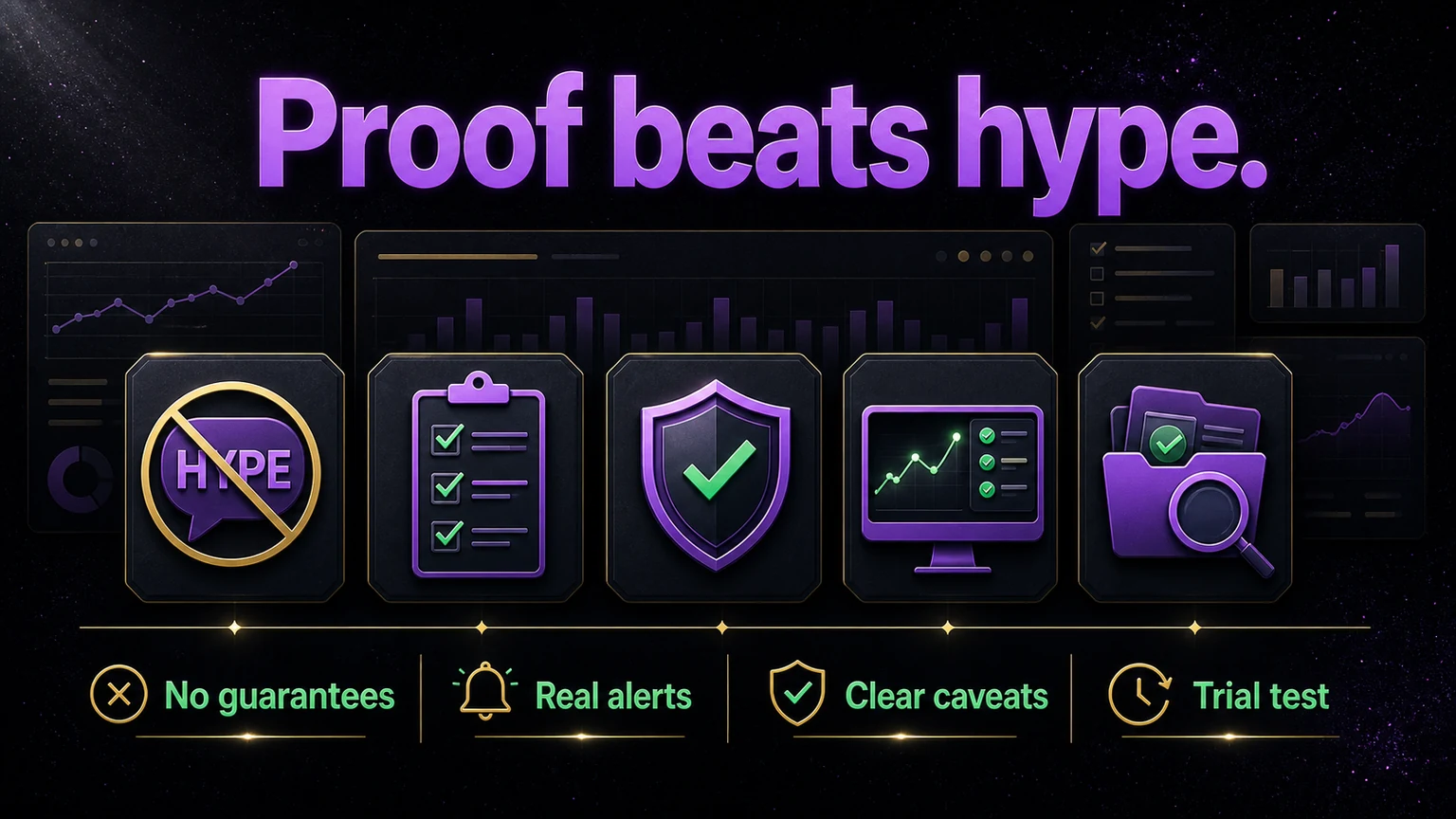
So the enemy is hype rooms, shared-feed markups, and unverifiable win-walls. Not the reader who got fooled by them. The fix is boring and it works: audit the four levers before you pay, and treat "it is busy" as a red flag until proven otherwise.
What to audit before you pay a cent
Almost every serious community offers a free trial. Divine Pro includes a 5-day free trial, which is exactly the window you use to run this audit instead of scrolling. Do not evaluate a server by vibes. Evaluate it against a checklist, on real drop days, with a stopwatch.
| What to audit | The lie it exposes | How to test it in a trial | Green flag |
|---|---|---|---|
| Alert speed | "It felt fast" | Time a live drop: alert timestamp vs the retailer showing sold out | Alert lands with seconds to spare, not after |
| Monitor coverage | "They watch everything" | List the retailers and drop types you care about, check each is covered | Your niches are covered, not just the famous one |
| Alert quality | "A ping is a ping" | Does each alert carry SKU, sizes, and a resale comp, or just a bare link | Actionable context attached, not raw noise |
| Exclusivity | "Custom monitors" | Ask which feeds are in-house vs shared third party | Owned monitors, not a reskinned shared feed |
| Documented wins | "Look at the showcase" | Are wins dated, sourced, and repeatable, or anonymous screenshots | Verifiable, recent, with the deal named |
| Community answer time | "Great support" | Ask a real checkout question at an odd hour, time the reply | Experienced humans reply, fast |
| Region and niche fit | "Works for everyone" | Confirm the group targets your country and your products | Matches where and what you actually buy |
| Real cost of exit | "Cancel anytime" | Read the billing terms before the trial ends | Clear cancel path, no dark patterns |
Run every row. A group that passes speed and coverage but fails exclusivity and documented wins is a shared feed with good marketing. A group that passes all eight is worth your money, and you will feel the difference on the first real drop, not in the sales page.
One more rule. Test during actual releases, not a quiet Tuesday. The gap between a good group and a mediocre one only shows up on drop day, when a shock restock hits and the fast monitors get pairs while everyone else gets cart errors. Schedule your trial around a known drop if you can.
The break-even math nobody shows you
Here is the number the brief promised, and it is the only one that decides "worth it." A membership is worth it when the profit it enables clears its cost. So compute how many flips it takes to pay for itself, then judge whether that is realistic for you.
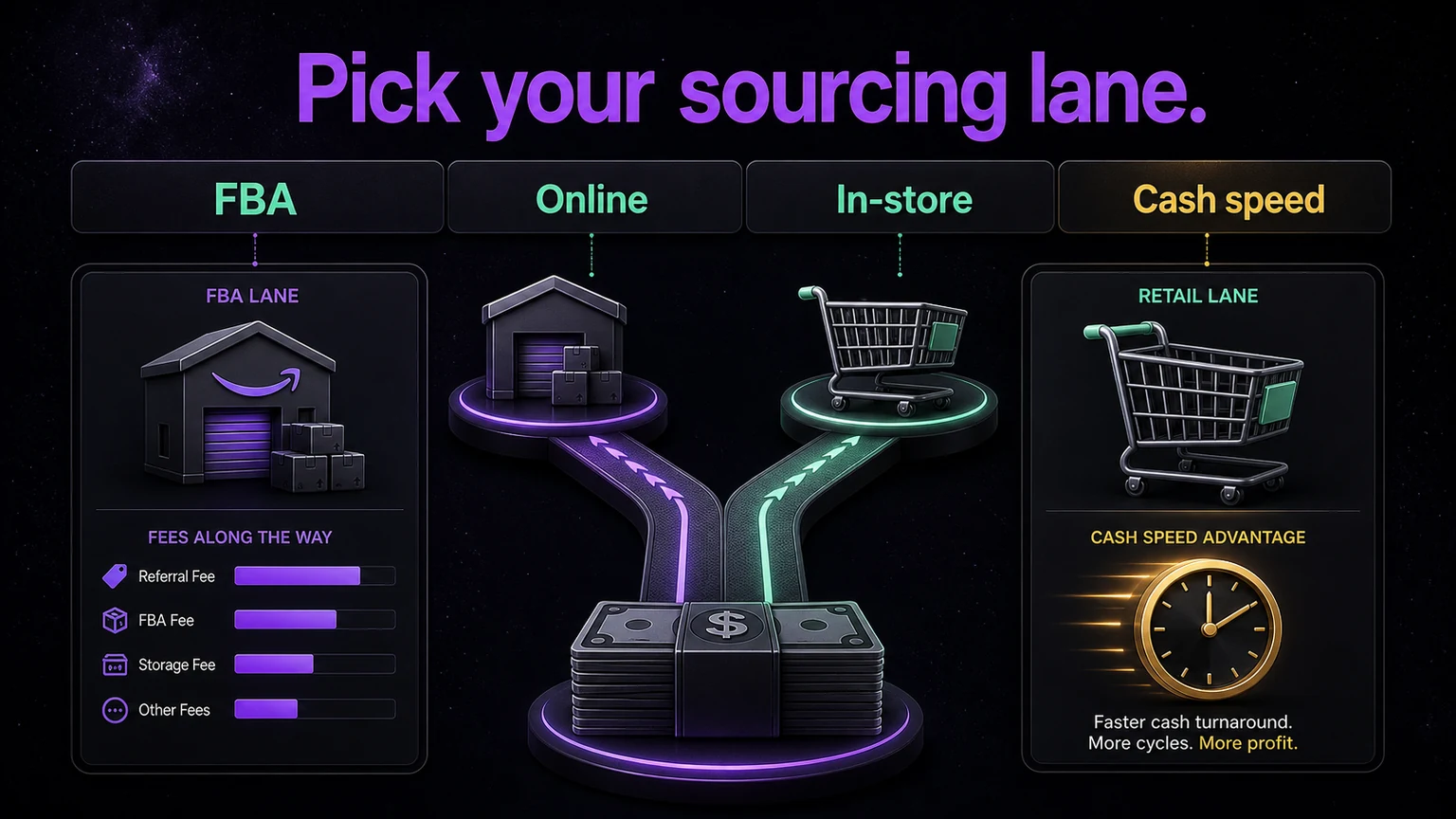
First, understand a flip's real profit, because sale price is not profit. Fees, shipping, and your time all come out. On eBay in 2026, the standard final value fee runs about 13.6% of the total order including shipping and tax, plus a per-order fee of roughly $0.30 to $0.40. Trading cards sit near 13.25%, and authenticated sneakers priced $150 and up get a reduced rate around 8% with the per-order fee waived. Those are checkable, general marketplace facts, not Divine claims. The full margin and ROI breakdown lives here, but let us work two clean examples.
Worked example 1: one sneaker flip.
- Buy a limited release at retail: $120
- Resell comp on eBay: $230
- Final value fee at the authenticated sneaker rate, roughly 8% of $230: about $18.40
- Shipping you cover: $15
- Net profit: $230 minus $120 minus $18.40 minus $15 = $76.60
That single flip, if you actually land it, covers a $74.99 monthly membership with $1.61 to spare.
Worked example 2: one card flip.
- Buy a sealed item flagged by a card monitor: $100
- Resell comp: $160
- Final value fee near 13.25% of $160: about $21.20
- Shipping: $6
- Net profit: $160 minus $100 minus $21.20 minus $6 = $32.80
Now the break-even, stated plainly.
| Membership | Monthly cost | Net profit per illustrative flip | Flips per month to break even |
|---|---|---|---|
| Divine Pro | $74.99 | $76.60 (sneaker example) | About 1 |
| Divine Pro | $74.99 | $32.80 (card example) | 3 |
| Divine Cards Pass | $35.00 | $32.80 (card example) | 2 |
Read that carefully. To justify Divine Pro at $74.99 a month, you need roughly one solid sneaker flip, or about three modest card flips, per month. Divine Cards Pass at $35 a month clears on two card flips. Those are illustrative flips at the margins above, not a promise that you will land them. The membership does not make the flip happen. You still have to be at your phone when the alert fires, check out fast, and have picked a product with a real resale spread and healthy sell-through.
That last point matters more than the subscription price. A membership that costs $74.99 is cheap if it puts one clean sneaker flip in front of you a month. The same membership is expensive at $9.99 if the alerts are slow and you never cop. Cost is not the sticker. Cost is price divided by the deals you actually convert, and that is why you audit before you pay.
The costs and risks the sales page hides
The break-even above assumes flips go clean. They do not always, and an honest breakdown says so. Build these into your expectation before you subscribe.
- Fees eat margin, every time. Roughly 13% off the top on most marketplaces is not optional. A "$200 sale" is closer to $174 after the final value fee, before shipping. Comp the net, not the sticker.
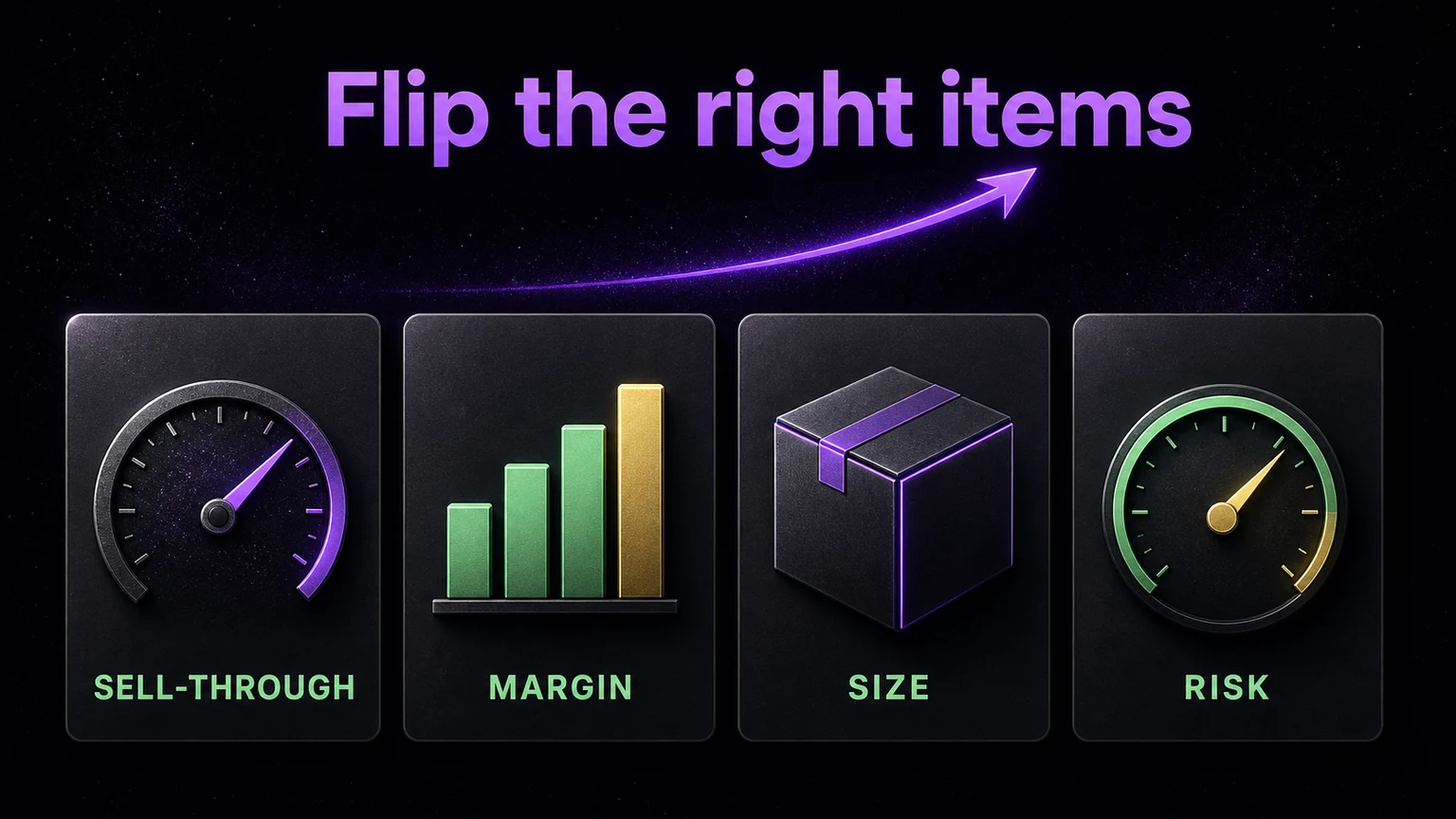
- Inventory can sit. If a release cools, your cash is trapped in a box on a shelf. Sell-through, the odds an item actually sells at your price in a reasonable window, is as important as margin. High margin on something nobody buys is a loss.
- Hype crashes. A card or a shoe that everyone is chasing this month can drop 40% when the buzz fades. Buying blind at the top is how flippers lose money, membership or not.
- Drops sell out in seconds. Even with a fast alert, your internet, your checkout habits, and plain luck decide whether you cart. The community removes the "I never saw it" excuse. It does not remove the race.
- Your time is a cost. Sourcing, listing, packing, and shipping take hours. Price your labor in, or you are working for less than you think.
None of this means communities are a scam. It means the membership is a tool that raises your hit rate, not a button that prints money. The caveats are the honest part of the sell.
Who should skip a paid reselling community
Save your money if any of these is you, at least for now.
- You cannot act on alerts. If your schedule, your connection, or your patience will not let you check out in the first minute of a drop, the fastest monitor on earth cannot help you. Fix that first.
- You have no starting capital. Flipping ties up cash between buying and selling. If a $120 buy would hurt, build a small float before you pay for alerts.
- You want passive income. This is not that. Reselling is an active business with real work and real risk. Passive scrolling pays nothing.
- You will not do comps. If you will not check what an item actually resells for before buying, a community cannot save you from overpaying. Learn the retail arbitrage basics first.
- You will not use the free trial to audit. If you would subscribe on vibes and forget to test alert speed on a real drop, you are the customer the hype rooms are built for.
If you cleared that list, and you can be at your phone on drop day, a community that passes the audit is one of the highest-leverage tools a reseller can buy. Speed and coverage are hard to build alone. That is precisely what you are renting.
Where Divine fits, honestly
Divine is a reselling and collectibles community on Whop, and it is built around the four levers this article graded, not around member-count theater. Two products, priced for two jobs.
Divine Pro is $74.99 a month with a 5-day free trial. It covers retail arbitrage broadly: sneaker release alerts, Pokemon and trading card pricing, price-error and clearance alerts, free autocheckout software for limited drops, and a network of experienced resellers. The free trial is not a gimmick to us. It is the exact window you should use to run the audit table above, on real drops, before you decide. If it does not put deals in front of you, cancel. That is the honest deal.
Start the Divine Pro free trial and audit it yourself.
Divine Cards Pass is $35 a month if sports and trading cards are your lane specifically. It focuses on card alert monitors, insider tips, and help spotting winning cards to flip early. On the card break-even above, two modest flips clear the month. If you never touch sneakers, this is the cheaper door.
We are not going to invent a profit number for you, because inventing one would be the exact hype we told you to run from. What we will say is what is true of the whole category: a community earns its fee by shortening your time to the deal and widening what you can see, and you prove that with the trial, on your own flips, with a stopwatch.
FAQ
Are reselling Discord communities worth it in 2026?
They can be, and the honest answer is conditional. A community is worth it when it delivers fast, exclusive alerts across the retailers and products you actually flip, and when you are set up to act on those alerts in the first minute of a drop. Run the break-even: if roughly one to three flips a month clears the fee, and the trial proves the alerts are real, it pays. If the alerts are slow or shared, or you cannot check out fast, it does not, regardless of how busy the server looks.
How many flips does it take to pay for a $74.99 monthly membership?
On the illustrative margins in this article, about one solid sneaker flip nets roughly $76.60 after fees and shipping, which clears $74.99 on its own. Modest card flips at around $32.80 net would take about three. Those are examples, not guarantees. Your real number depends on your buy cost, your resale comps, the marketplace fee for that category, and your sell-through. Do the math on your own recent flips.
Is a bigger, busier Discord a better one?
No, and assuming so is the expensive mistake. A large free server means every alert is shared with tens of thousands of people, so popular drops sell out before most members can cart, and the site often crashes under the load. Judge a community on alert speed, monitor coverage, alert quality, and verifiable wins, not on member count or how fast the chat scrolls. Busy is often a warning sign, not a feature.
What should I test during a free trial?
Test the four levers on real drop days, not a quiet afternoon. Time an actual alert against how quickly the retailer shows sold out. Confirm the monitors cover your specific retailers and product types. Check whether alerts carry usable context like SKU, sizes, and resale comps. Ask a real question at an odd hour and time the reply. And read the cancellation terms before the trial ends so exit is clean if it does not deliver.
Can I just use free monitors instead of paying?
You can, and for some people that is the right call. Free monitors and public tools do real work, especially if you focus on one niche and one region. The tradeoff is speed, exclusivity, and curation: free feeds are usually slower, shared with huge crowds, and unfiltered, so you race more people with less context. Paying is worth it only if the paid alerts convert into flips you would otherwise miss. If you will not act fast, stay free.
Does a community guarantee I will make money reselling?
No. Nothing in reselling is guaranteed. A community raises your odds by shortening your time to the deal and widening what you can see, but you still carry every cost and risk: marketplace fees near 13%, shipping, unsold inventory tying up cash, hype that can crash, and your own time. Anyone promising guaranteed or passive profit is selling the dream this article told you to avoid.
Verdict
A busy Discord is not a good Discord. A good Discord is a fast one, with real coverage, honest and dated wins, and people who answer when a checkout breaks. Audit those before you pay, use the free trial as a stopwatch and not a scroll, and run the break-even: roughly one sneaker flip or a few card flips a month is the bar a $74.99 membership has to clear, and a $35 cards membership clears on two. If a community passes the audit, it is one of the cheapest ways to buy speed and coverage you cannot build alone. If it fails, cancel and keep your money.
The obvious next step is to test one against the checklist. Start the Divine Pro free trial, or if cards are your lane, check Divine Cards Pass, and grade it yourself on the next real drop.
Realistic expectations: reselling is a business with real costs and real risk. Marketplace fees, shipping, taxes, unsold inventory, and your time all eat into margin, and profits are never guaranteed. A community can raise your odds, but it cannot promise a return. Always run your own comps and only risk money you can afford to tie up.
Get to the deal first
Divine is the alert network, monitors, and autocheckout built on this exact process. Try Divine Pro free for 5 days.
Reselling is a real business with real costs: marketplace fees, shipping, taxes, and unsold inventory. Profits are never guaranteed. Always check the comps before you buy.