Pokemon card investing: sealed beats singles
Pokemon card investing depends on sealed product, print runs, and grading. See worked math on a booster box vs a random pull.
Turn this into live alerts.
Use the Divine Pro free trial to see sneaker, retail, card, price-error, and autocheckout alerts before you pay.
Start Divine Pro free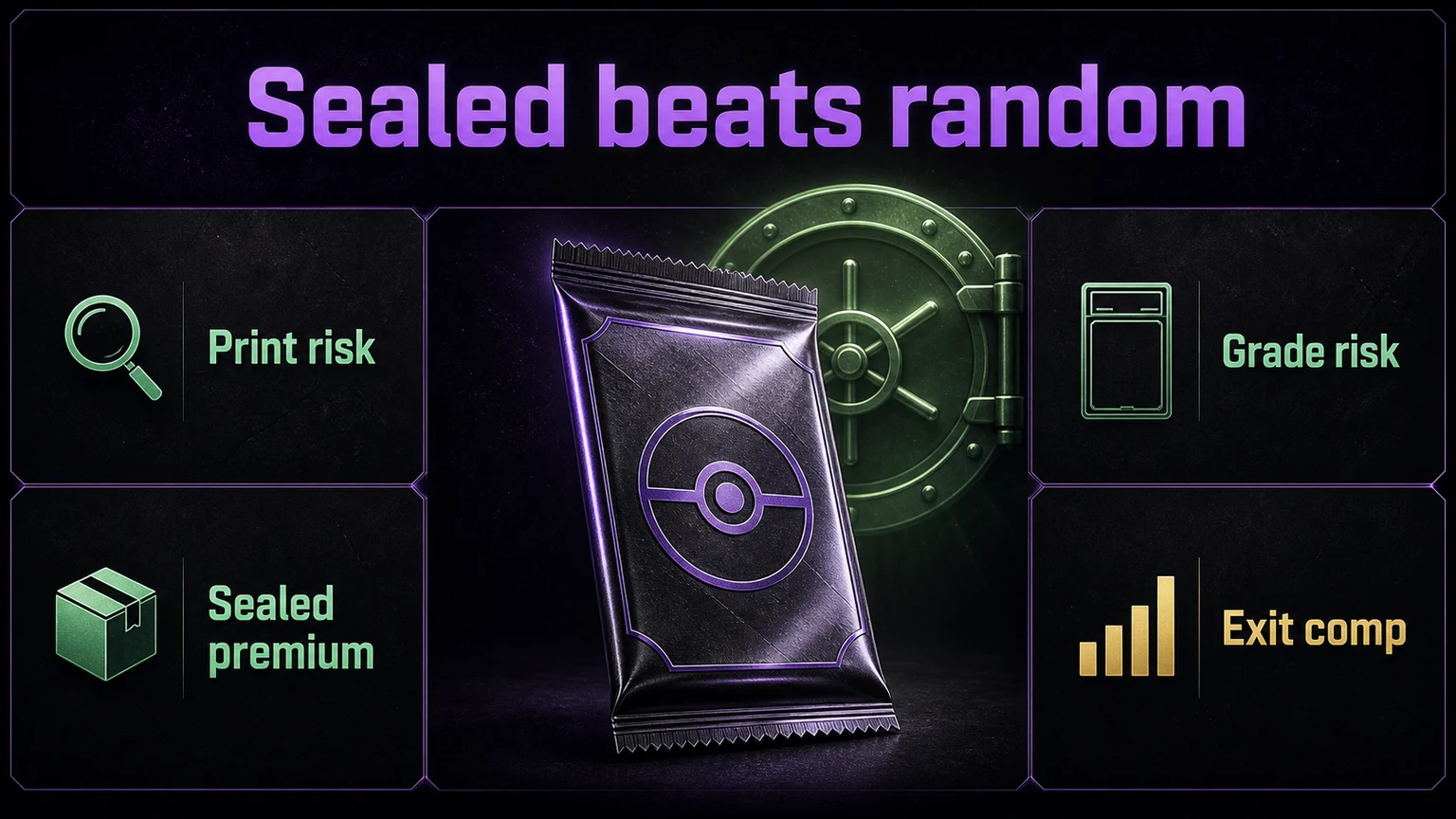
You bought a booster box, cracked it live on your phone, and chased the hit. You got a holo you did not recognize, felt the dopamine, and slid it into a sleeve. Six months later you looked it up. Ninety cents. The three "rares" from that pack? A dollar for the lot. Meanwhile the sealed box you tore open to get them is now worth four times what you paid. You did not lose the lottery. You bought a lottery ticket and then set fire to the thing that was actually appreciating.
That is the whole trap of Pokemon card investing in one paragraph. The belief that sinks people is simple and expensive: "any Pokemon card goes up, so grab whatever looks cool and hold." It does not. Most singles are worthless and stay worthless. The value in this hobby is driven by three levers, and none of them is "it has a cute Pikachu on it." The levers are sealed product, print runs, and grading. Learn those three and you stop gambling. Ignore them and you are a scalper's exit liquidity.
The one lie that empties wallets
Walk into any card shop forum and you will hear it: "Pokemon always goes up." People point at a Base Set Charizard that sells for the price of a car and decide every card is a savings bond with art on it.
It is survivorship bias wearing a costume. You see the winners because winners get posted. You do not see the ten thousand bulk commons rotting in a shoebox in someone's closet, worth roughly a penny each if a buyer will even take them. The Pokemon Company prints billions of cards. Most modern singles trade for less than the cost of the sleeve you put them in. A card being old, holographic, or "rare" in the set's own rarity system tells you almost nothing about whether it holds money.
Here is the fix, stated plainly. Value in Pokemon comes from scarcity that is fixed and demand that grows. Sealed product going out of print is fixed scarcity. Low print runs are fixed scarcity. Graded high-grade singles of iconic cards are fixed scarcity. A random holo from a set they are still cramming onto every Target shelf is the opposite of scarce. Get that backwards and no amount of holding saves you.
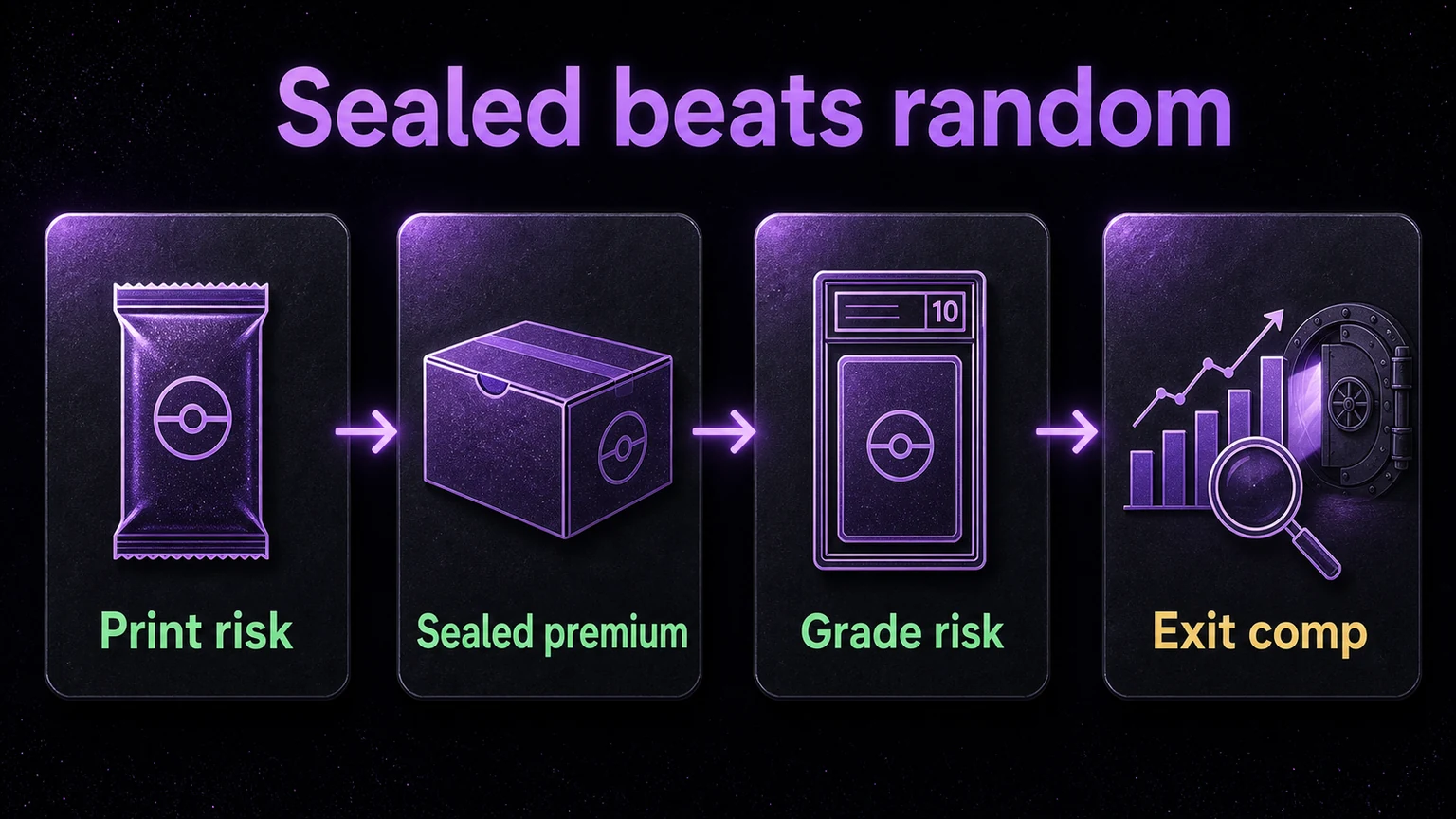
Lever one: sealed product is the asset, singles are the consumable
The cleanest mental model in the hobby: a sealed booster box is closer to an index fund, and a single card is closer to one volatile stock. When you open the box, you convert the asset into consumables and pray the pulls add up. They almost never do, because the box is priced above the expected value of its contents on purpose. That premium you pay for the thrill of opening is exactly the premium you destroy when you open it.
Why does sealed appreciate so reliably once a set stops printing? Supply can only fall from there. Every box streamers rip on camera is gone forever, permanently shrinking the pool. Demand, meanwhile, grows as a whole generation hits peak earning years and starts buying back its childhood. Fixed and falling supply, rising demand. That is the entire thesis.
The catch, and it is a real one: this only works on sets that are actually out of print or clearly heading there, with chase cards people genuinely want. Sealed is not magic. A set stuffed with forgettable chase cards and printed into oblivion can sit flat for years. Sealed avoids the condition risk of singles, but it swaps in reprint risk, storage risk, authenticity risk, and the very human temptation to open the thing. It is not safer. It is a different bet with better base rates when you pick right.
Lever two: print runs decide everything, and modern print runs are enormous
This is the lever beginners never check, and it is the one that separates a hold from a bag.
The Pokemon Company has no reserve list. It reserves the right to reprint anything, and for modern sets it prints heavily to meet demand. That is great for kids who want to play. It is brutal for anyone who bought a modern chase card at the top expecting scarcity that never arrived.
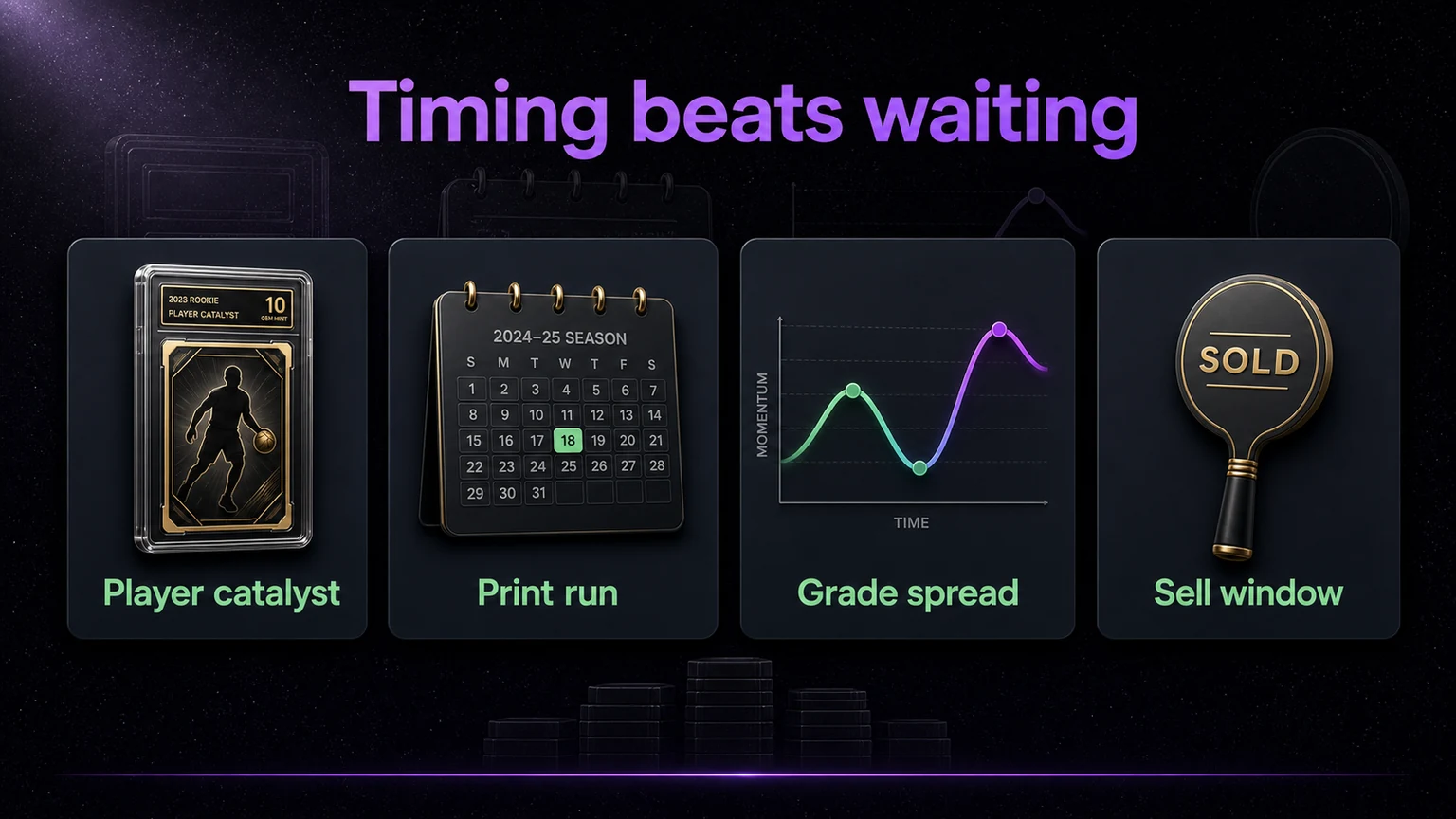
Reprints crush modern prices, often before a single reprinted card ships. When reprint news hit one recent Scarlet and Violet era chase card, a Pikachu ex special illustration rare fell from around $320 to $254, roughly a 21% drop, on the announcement alone. The typical modern decay pattern is ugly and predictable: peak prices in the first few months while initial supply sells out, a 15% to 25% correction when the first reprint wave lands, then a drift to 30% to 40% below peak as more supply arrives, and finally an equilibrium set by real long-term demand years later.
Now the flip side, and it is why vintage behaves differently. Old Wizards of the Coast era product from 1999 to 2003 sits on genuinely fixed supply. First edition print runs were tiny by modern standards, and nobody is reprinting a 1999 first edition. Even nostalgia reprint sets like Evolutions in 2016 and Celebrations in 2021 did not tank the originals, because enough time had passed and the reprints were clearly labeled commemoratives, not the real thing. Base Set 2, itself a reprint set from 2000, later became valuable purely on its own scarcity, with sealed boxes trading in the thousands.
The rule that falls out of this: for modern product, low and finite print run plus a beloved chase card. For vintage, first edition and shadowless originals over unlimited reprints, every time. If you cannot articulate why the supply is capped, you are not investing. You are hoping.
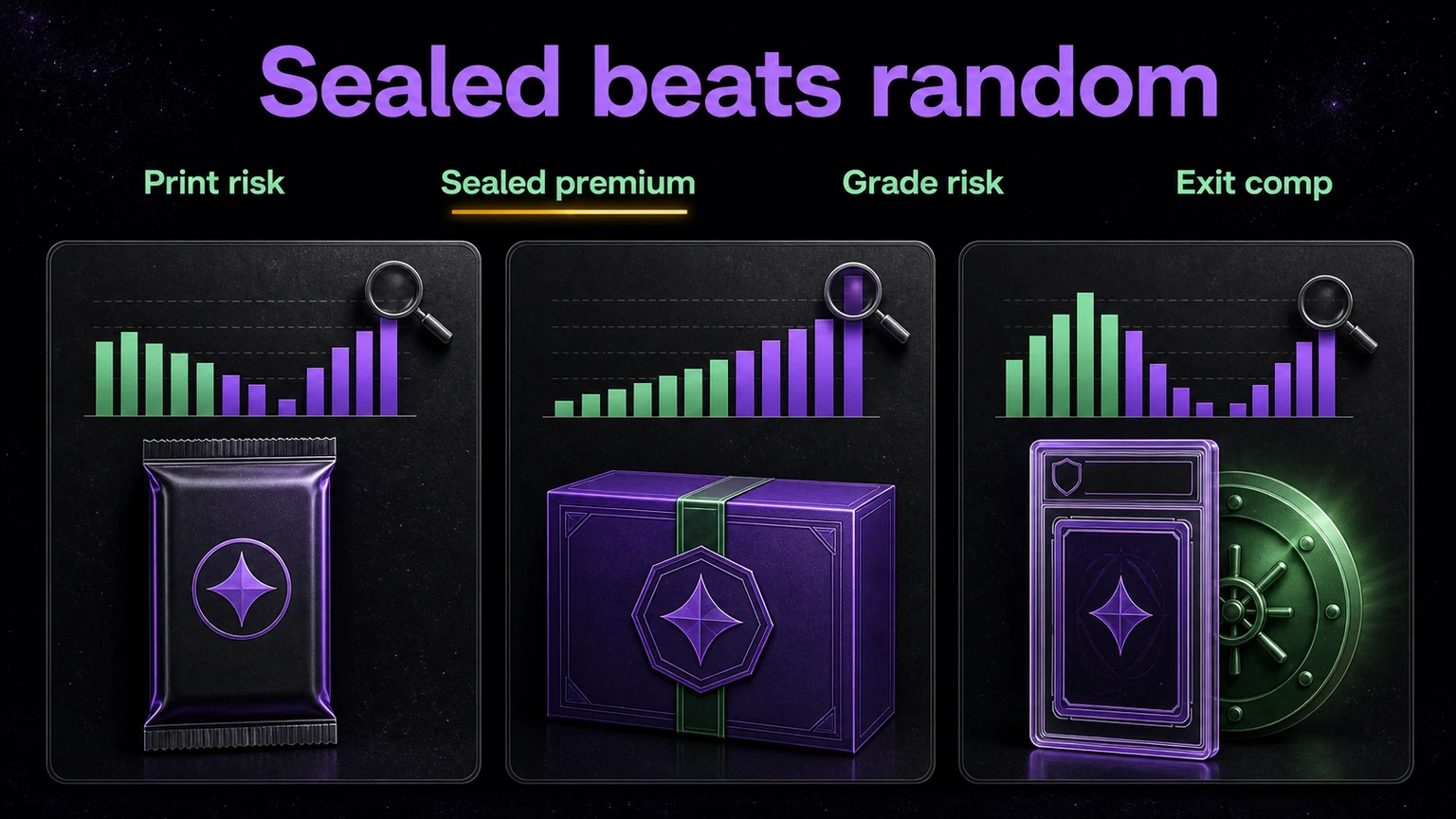
Lever three: grading is a value multiplier, not a value creator
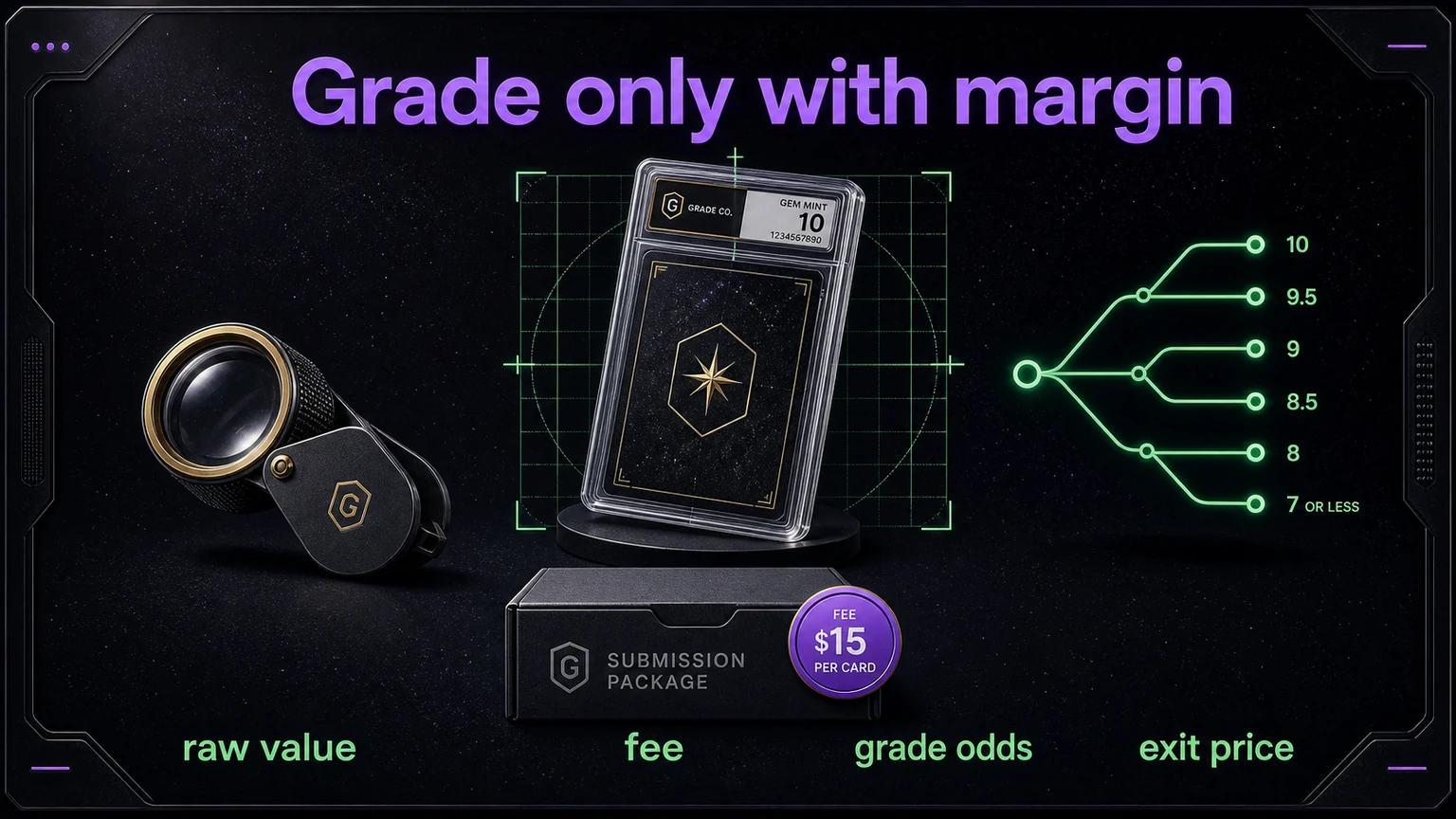
Grading takes a raw card, authenticates it, and locks a condition score behind a tamper-evident slab. A gem mint PSA 10 of an iconic card can sell for multiples of the same card raw, because condition risk is removed and the buyer knows exactly what they are getting.
The trap is thinking grading adds value to everything. It does not. It multiplies value that is already there and costs real money to obtain. If the raw card is worth $8, a PSA 10 might sell for $25, and after grading fees, shipping both ways, and the wait, you have turned a small loss into a smaller loss. Grading only makes sense above a value threshold where the PSA 10 premium clears the total cost with room to spare.
The costs are not trivial. PSA's value bulk tier has hovered around $19 to $25 per card recently, and it requires a paid Collectors Club membership of about $149 per year plus insured shipping in both directions. Factor in everything on a small submission and you are realistically looking at $45 to $55 per card all in, with turnaround measured in weeks or months. Grade a $10 card and you have set money on fire. Grade the right $400 card and you may have doubled it. Know the difference before you ship. For the full breakdown of when the premium clears the cost, see the deeper dive in card grading and PSA explained.
The number: a sealed box versus the single you would have chased
Let us settle this in dollars, because the framework only matters if the math lands.
Take Evolving Skies, one of the clearest modern winners. It launched in August 2021 at a suggested price near $143 a booster box. Through 2022, as print ramped and hype cooled, secondary boxes drifted down to the $90 to $110 range. Some retailers dumped them near $85 on sale. That was the buy window nobody appreciated at the time.
Say you bought one sealed box in 2022 for $110 and left it sealed. By 2025 that box was trading in the $2,400 to $2,700 range across major platforms, driven by chase Eeveelution cards and zero sign of a reprint. Call it $2,400 to be conservative.
Now the two paths, side by side.
| Path | What you did | Cost | Value in 2025 | Result before fees |
|---|---|---|---|---|
| Hold sealed | Bought box at $110, left it sealed | $110 | ~$2,400 | About 22x your money |
| Crack and chase | Opened the same box for the hits | $110 | ~$120 to $180 in singles, most of it in one or two cards | Roughly break-even to a small gain, minus your time |
| Random modern single | Bought a hyped chase card at the top | $320 | ~$200 after a reprint announcement | Down about 37% |
The sealed hold is not a fluke of one set, but it is also not a promise. Plenty of sealed product moves sideways for years. The point is the shape of the bet. Buying a sealed, out-of-print box with real chase demand puts the odds on your side. Cracking that same box converts an appreciating asset into a pile of consumables priced below what you paid for the box. And chasing a hot modern single at the top hands you full reprint risk with no scarcity to protect you.
Now the fees, because sale price is never take-home. Sell that box on eBay and the trading card final value fee runs about 13.25% plus a $0.30 to $0.40 per order fee, charged on the item price plus shipping plus tax. On a $2,400 sale that is roughly $318 in fees before you pay to pack and ship a heavy box with insurance. You still walk with well over $2,000 on a $110 cost. But write the fee down every time, because on thinner flips it is the difference between a win and a wash. The full arithmetic lives in reselling profit margins explained.
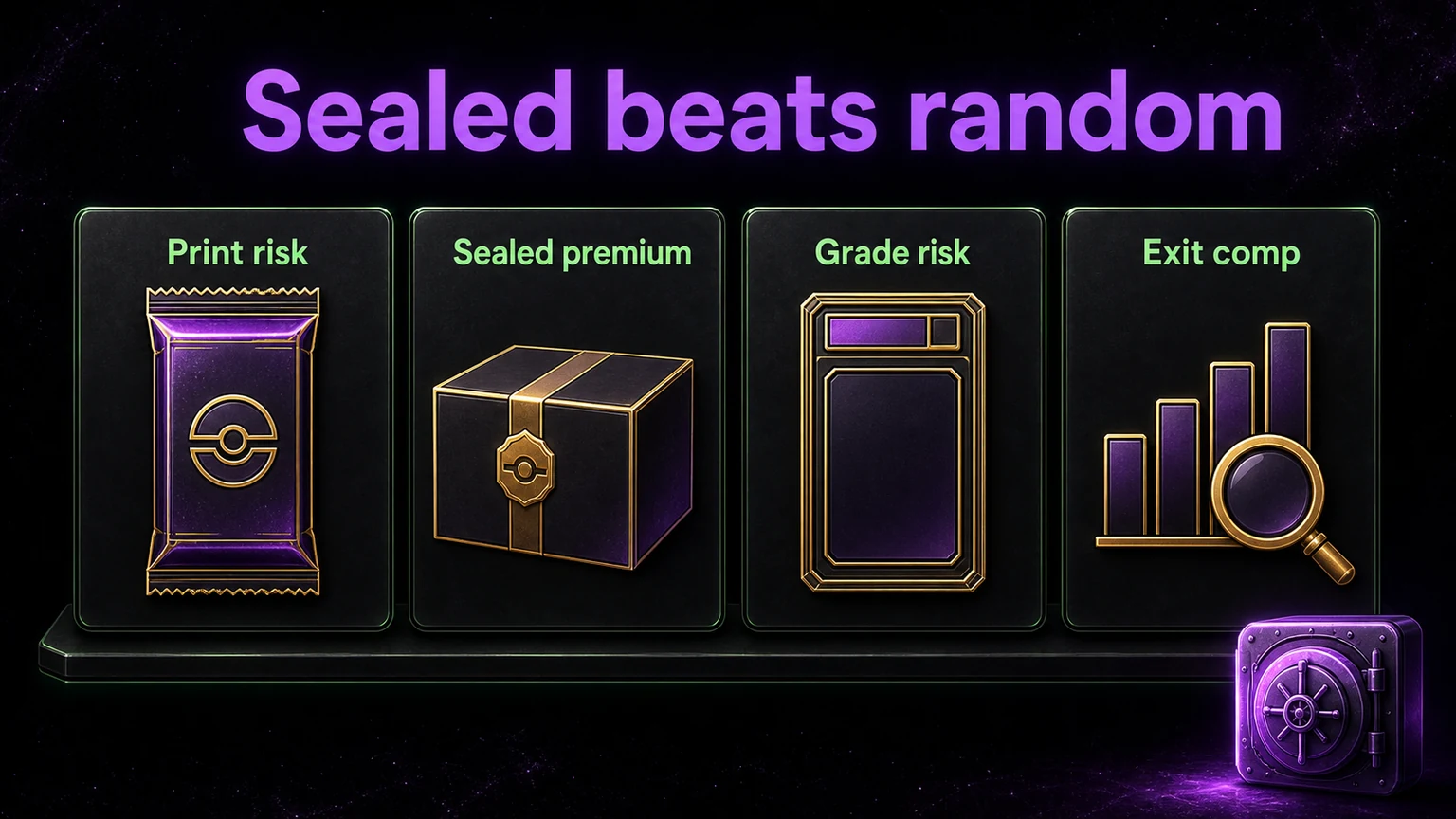
Where the real edge lives: speed and comps, not vibes
Here is the part the "buy and pray" crowd misses. The Evolving Skies box that returned 22x was only that cheap because most people did not recognize the setup while boxes sat at $95. The edge was information and speed, not patience alone. By the time a set is obviously a winner on YouTube, the price already reflects it.
That is where being early and being fast beats being lucky. The resellers who load up on the right sealed product do it during the boring window, right after a set leaves print, before the narrative forms. They watch for print run signals, chase card pull rates, and the quiet moment retailers clear shelf space. They know the comps cold before they buy, so they never overpay and never panic sell.
You can chase this alone with spreadsheets and refresh buttons, and plenty of people do. But it is slow, and slow loses the good buys. A community that runs price monitors and card alerts collapses the research and the speed into one feed. That is the specific job the Divine Cards Pass is built for: card alert monitors, insider tips, and help spotting winning cards early enough to matter. If you want to understand the plumbing behind those pings, how monitors and alerts work breaks it down.
A practical framework for what to actually buy
Rules beat instincts. Here is a starting filter, not gospel.
Prefer sealed over singles for a core hold. Boxes, cases, and elite trainer boxes of sets that are out of print or clearly ending, with chase cards people genuinely love. Store them in a cool, dry, stable place, away from sun and humidity. A crushed corner on the box or a sun-faded shrink wrap kills the premium.
Chase low print runs, not high rarity symbols. A "rare" in a set of two billion cards is not scarce. First edition and shadowless vintage over unlimited. Short-print or one-per-case sealed items over the stuff stacked to the ceiling at every big box store.
Grade only above the threshold. If the PSA 10 premium does not clearly beat the roughly $45 to $55 all-in cost on a small submission, leave it raw. Iconic cards of iconic Pokemon reward grading. Bulk does not.
Buy in the boring window. The best entries are right after a set leaves print and before the market wakes up. That means watching, not scrolling once a year.
Know the comp before you pay. Pull recent sold listings, not asking prices. If you cannot name the number a card actually sold for last week, you are not ready to buy it.
If any of that feels like a lot to track by hand, that is the honest case for tooling and a network. The alerts do the scanning so you can act while the window is open. You can start a Divine trial on Whop and see the card and price monitors for yourself.
Who should skip this
Real talk, because the caveats are the sell.
Skip Pokemon investing if you cannot leave product sealed. If cracking packs is your joy, wonderful, but call it a hobby cost, not an investment. The thesis dies the second you open the box.
Skip it if the money is money you need soon. Sealed boxes are less liquid than a $50 single. Selling a $2,000 box takes longer and reaches a smaller pool of buyers, and you may have to wait for the right one or accept a discount.
Skip it if you will chase every hyped modern single at the top. Reprints will grind those down 20% to 45%, and you will learn the print run lesson the expensive way.
And skip anyone selling you guaranteed returns. There are none. This is a real market with real costs: marketplace fees near 13.25%, shipping, storage, sales tax, unsold inventory tying up cash, and the flat risk that a set you bet on stays cold. For a fuller list of the pitches to run from, read how to avoid reselling scams.
How Pokemon differs from sports cards
Quick note if you also eye the other aisle. Sports cards share the grading and scarcity levers, but the demand driver is different. A Pokemon chase card leans on art, nostalgia, and set iconography that does not expire. A sports rookie card lives and dies on a human being's career, one injury or slump away from a haircut. Different risk, same discipline: print scarcity, condition, and timing. The sports card investing guide covers that side if you want both lanes.
FAQ
Is Pokemon card investing worth it in 2026?
It can be, with discipline, and it is not for everyone. Vintage and out-of-print sealed product with real chase demand has strong base rates, while modern singles are exposed to heavy print runs and reprint corrections. The market cooled from the 2020 to 2021 mania, and modern material has taken real drawdowns, so treat it as a patient, illiquid position, not a quick flip. Profits are never guaranteed.
Should I buy sealed booster boxes or single cards?
For a core long-term hold, sealed usually wins because supply is fixed once a set leaves print and you carry no single-card condition risk. Singles are the higher-skill, higher-volatility play: a graded PSA 10 of an iconic card is liquid and can appreciate hard, but a raw single can lose 30% to 50% on a tiny flaw or a meta shift. Many experienced buyers hold sealed as the base and use singles for surgical bets.
Why are most Pokemon cards worthless?
Because the Pokemon Company prints in enormous volume, most cards are common by design and trade for pennies. Rarity within a set does not equal market scarcity. A card only holds real money when supply is genuinely capped, through low print runs, out-of-print sealed product, or a high grade on a card people actually want.
Does grading a Pokemon card always increase its value?
No. Grading multiplies value that already exists and costs roughly $45 to $55 all in per card on a small submission once you include fees, membership, and shipping both ways. Below a certain card value the PSA 10 premium does not clear that cost, so grading a cheap card loses money. Grade iconic cards above the threshold, leave bulk raw.
How much are eBay fees when I sell a Pokemon card?
The trading card final value fee is about 13.25% on the sale up to $7,500, plus a $0.30 to $0.40 per order fee, charged on item price plus shipping plus tax. On a $100 sale eBay keeps roughly $13.55 before your own shipping and supplies. Always subtract fees before you call a sale a profit.
What made Evolving Skies boxes go up so much?
Fixed and falling supply meeting durable demand. The set has beloved chase cards, notably an alternate art Umbreon VMAX with a pull rate near 1 in 1,500, and the Pokemon Company has shown no intent to reprint the Sword and Shield era set. Every opened box permanently shrinks sealed supply, so prices climbed from near $110 in 2022 to the $2,400 to $2,700 range by 2025. Past performance does not promise a repeat on any other set.
Verdict and next step
The lie is "any card goes up." The truth is that three levers do the work: sealed product on fixed supply, print runs that decide whether scarcity is real, and grading that multiplies value on cards that already have it. Everything else is noise, and most singles are noise.
Buy sealed and out of print. Respect the print run. Grade only above the threshold. Know your comp before you pay, and move in the boring window before the market wakes up. Do that and you are investing instead of gambling.
Speed and information are where the edge actually lives, and that is hard to do alone with a refresh button. If you want the card alerts, price monitors, and reseller network doing the scanning while you decide, join the Divine Cards Pass on Whop.
Realistic expectations: reselling and collectible investing is a business with real costs and real risk. Marketplace fees, shipping, taxes, storage, and unsold inventory all eat into returns, and some sets simply stay cold. Nothing here is guaranteed. Do your own comps, size your bets so a cold hold cannot hurt you, and never invest money you need soon.
Get to the deal first
Divine is the alert network, monitors, and autocheckout built on this exact process. Try Divine Pro free for 5 days.
Reselling is a real business with real costs: marketplace fees, shipping, taxes, and unsold inventory. Profits are never guaranteed. Always check the comps before you buy.