What is retail arbitrage? Buy low, sell at market
What is retail arbitrage? It is buying mispriced retail and reselling at market. See the real edge, a worked net-margin flip after fees, and honest costs.
Turn this into live alerts.
Use the Divine Pro free trial to see sneaker, retail, card, price-error, and autocheckout alerts before you pay.
Start Divine Pro free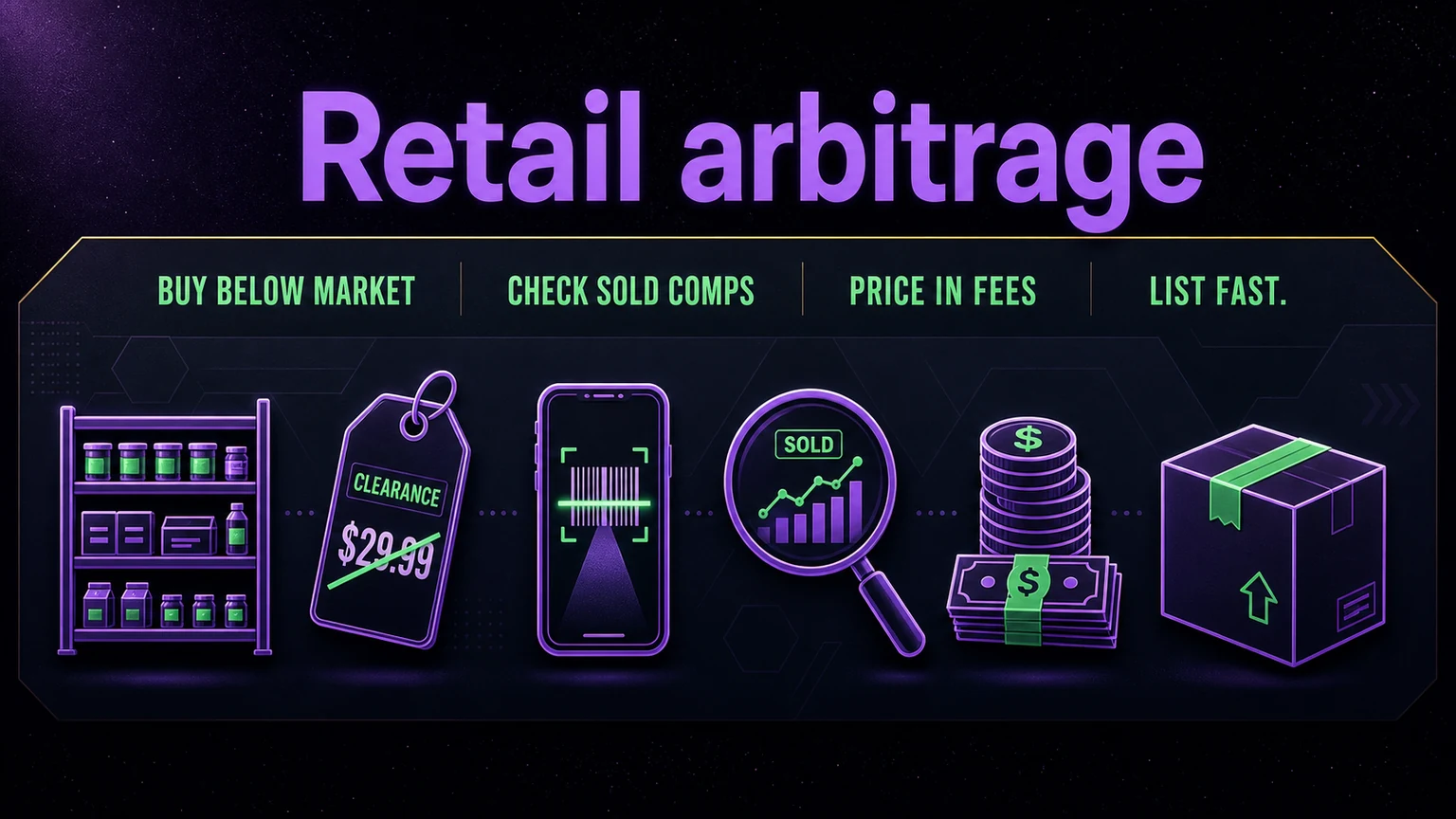
You read a thread about reselling, got a little excited, then hit the same wall everyone hits. Where do I put the inventory? Do I need ten grand to start? A garage? A business license and a forklift? So you closed the tab. The dream died on a logistics question that was never real.
Here is the turn. Retail arbitrage does not need a warehouse. It does not need a fat bankroll. The whole model fits on a shelf in your closet and starts with a hundred dollars if you want it to. What it actually needs is two things almost nobody talks about, and those two things are the entire game.
What retail arbitrage actually is
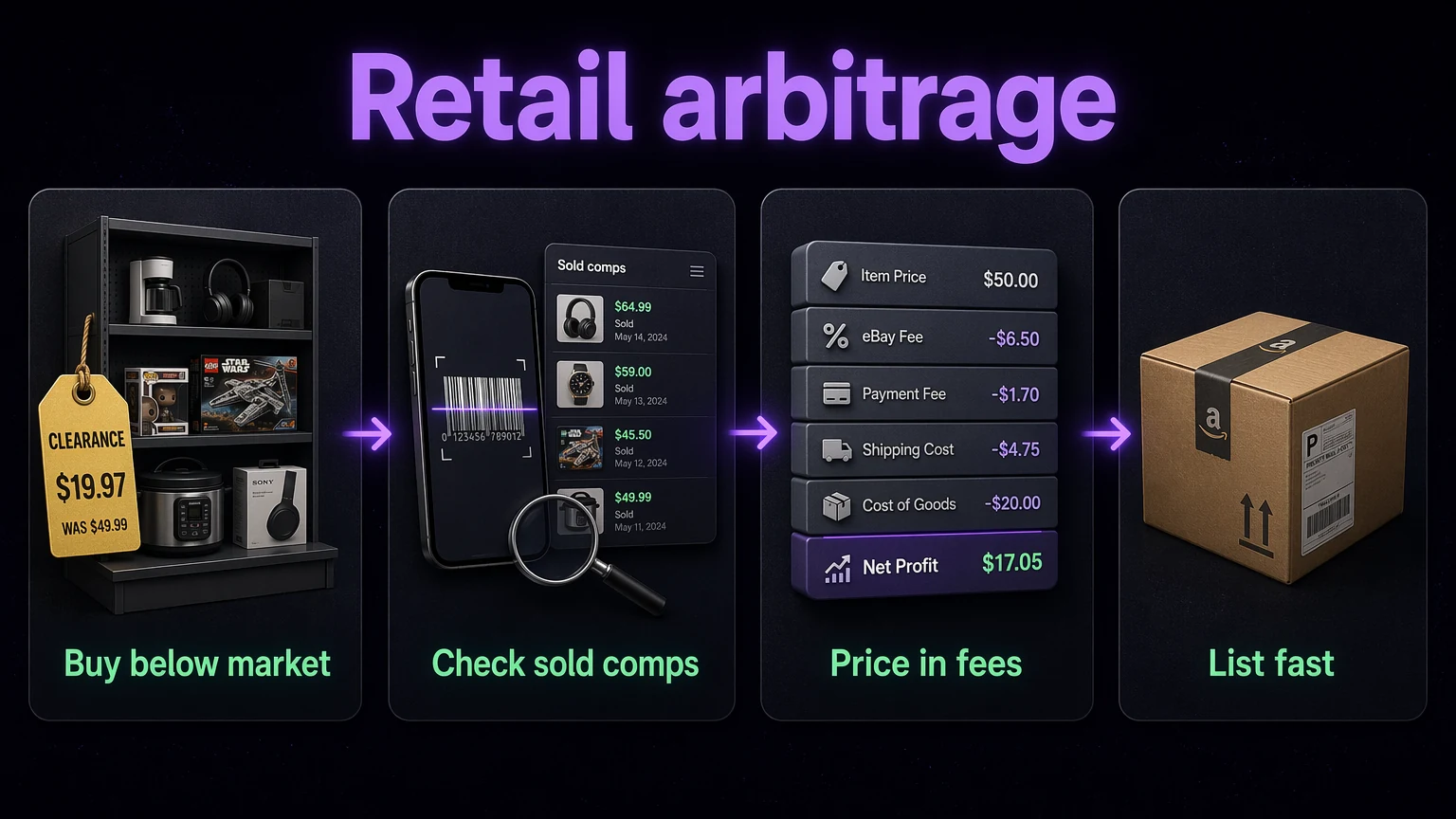
Strip away the noise. Retail arbitrage is buying a product that is mispriced low in one place and selling it at market price in another. That is it. You find a $200 item selling for $110 because it is on clearance, glitched, discontinued, or region locked, you buy it, and you resell it where buyers already pay $200.
The word arbitrage sounds like a hedge fund thing. It just means a price gap between two markets. A pair of sneakers costs $110 at retail and trades at $200 on the resale market the same afternoon. A sealed collectible sits at $40 on a shelf and moves at $70 online. The gap exists because one seller does not know what the other market will pay, or does not care, or is trying to clear stock. You are the bridge. You move the item from the market that underprices it to the market that pays full freight.
This is legal in the United States, the United Kingdom, and most countries under the first-sale doctrine. Once you legally buy a genuine product, you own it and you can resell it. The catch is the word genuine. No counterfeits, no stolen goods, no restricted categories. Some brands limit where their products can be listed, so you check the rules before you commit cash. Reselling a real pair of shoes you bought fair and square is not a loophole. It is how every consignment shop, used bookstore, and pawn shop on earth has always worked.
The lie that kills it before you start
The expensive false belief goes like this: to resell you need a warehouse, capital, and a real operation, so it is only for people who already have money.
That belief keeps more beginners out than any actual barrier. And it is backwards.
You do not need a warehouse because retail arbitrage is high turnover, not high storage. The goal is to buy something and sell it in days or weeks, not to hoard pallets. A profitable flipper working from a spare closet can cycle the same shelf twenty times a year. Space is not the constraint. Turnover is the asset.
You do not need heavy capital because the model scales from the bottom. You can start with $100 to $500, buy one or two well-chosen items, sell them, and roll the proceeds into the next buy. Experienced sellers typically run profit margins in the 15 to 30 percent range on the items they choose well, so the money compounds by doing the loop again, not by front-loading a giant order. Starting small is not a handicap here. It is the correct way to learn without lighting cash on fire.
The real villains are not warehouse rent and startup capital. The real villains are paying full retail when the item is on clearance two aisles over, buying blind without checking what it actually resells for, and being too slow to a deal that sells out in seconds. Those are the things that eat beginners alive. Not the imaginary forklift.
The real edge: sourcing speed and comps
If it is not capital, what is it? Two levers. Both learnable.
Sourcing speed. The good deals do not sit and wait. A clearance markdown, a price error, a limited sneaker drop, a mispriced sealed box: these get found and cleared fast. The reseller who sees it first, confirms it, and buys it wins. The one who sees it an hour later gets an empty page. Speed is not a personality trait. It is infrastructure: knowing which stores mark down when, getting alerted the moment stock or price moves, and having your checkout ready before the crowd shows up.
Comps. A comp is the comparable sold price, what the item has actually sold for recently, not what someone is asking. This is the number that decides whether a deal is a deal. You never buy on the sticker in front of you. You buy on the number the resale market pays. Amateurs guess. Professionals check the last ten sold listings before the item leaves the shelf. Knowing the comp before you buy is the difference between a flip and a mistake you store in your closet for six months.
Everything a serious reselling operation does is in service of those two levers. Faster sourcing, better comps. That is the whole discipline. If you want to see how the tools do the scanning for you, that is what monitors and alerts exist to solve, and it is a core reason people join a reselling community instead of grinding solo.
A worked flip: what you actually keep after fees
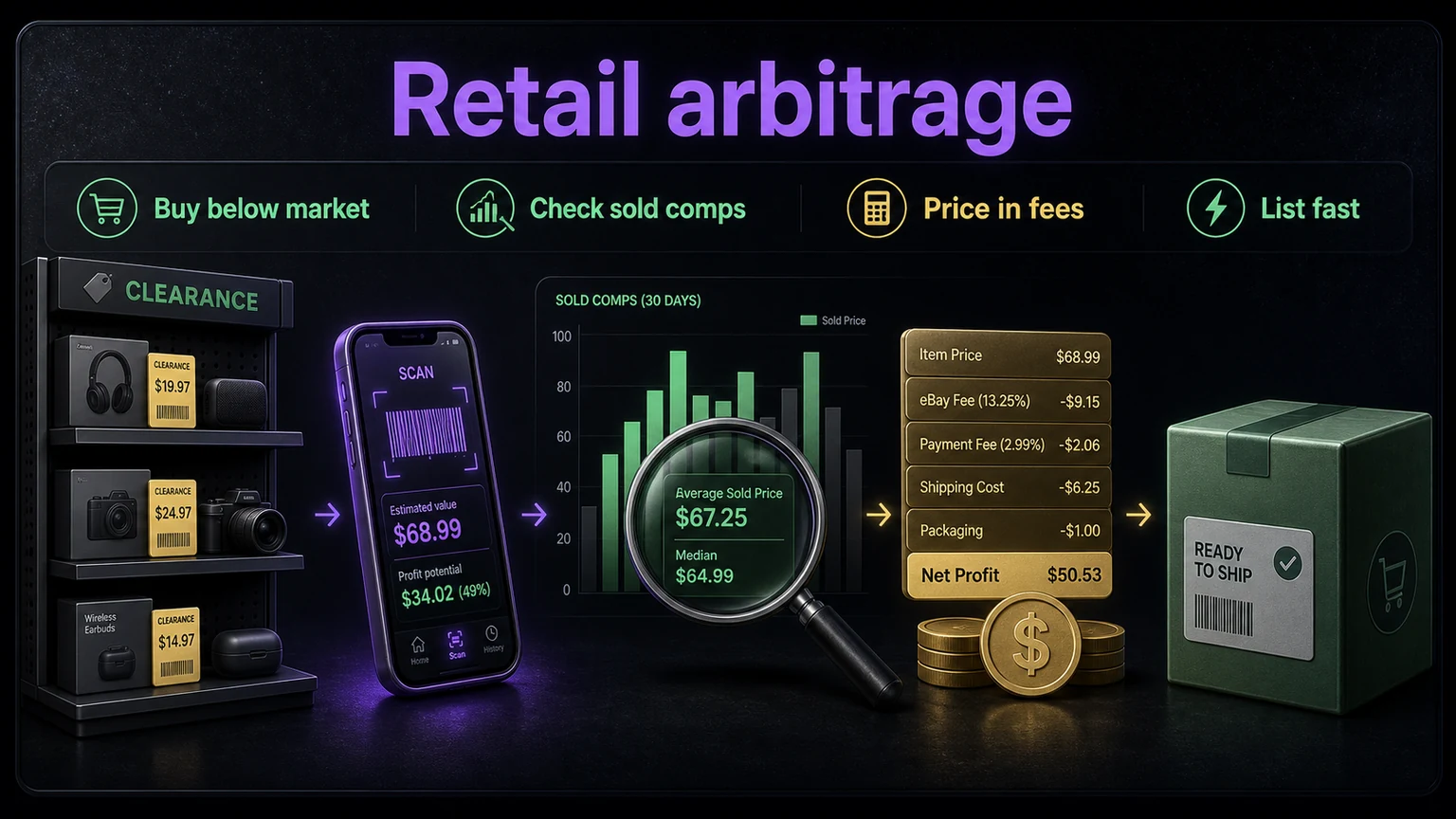
Here is the number, worked all the way through, because sale price is not profit and anyone who tells you otherwise is selling a dream.
Say you source a hyped item. Retail with a discount lands your cost at $110. The resale comp, the price the market actually pays right now, is a clean $200. You list it with free shipping to the buyer at $200 flat.
Now the costs marketplaces do not put on the front page:
| Line item | Amount |
|---|---|
| Resale price (your listing) | $200.00 |
| Cost of the item | -$110.00 |
| Marketplace fee (~13.6% of $200 + $0.40) | -$27.60 |
| Shipping label you cover | -$12.00 |
| Packaging supplies | -$2.00 |
| Net profit | $48.40 |
| Return on the $110 you risked | ~44% |
| Net margin on the sale | ~24% |
That $48.40 is the real number. Not the $90 gap between $110 and $200 that the gurus wave around. The marketplace takes its cut, the carrier takes its cut, the box and tape take a little, and what is left is yours. On many platforms the standard selling fee runs around 13 percent of the total sale, so roughly one dollar in eight walks out the door before you count anything else.
Twenty-four percent net margin and forty-four percent return on the cash you risked is a genuinely good flip. It is also honest. It is not passive, it is not guaranteed, and if the comp drops before you sell, that $48 shrinks fast. That is exactly why the comp check happens before the buy, not after. For the full fee and ROI breakdown across price points, see reselling profit margins explained.
Where the margin actually goes
Fees are the tax on not paying attention. They vary by platform and category, and picking the wrong venue for an item can flip a winner into a wash. A rough map for 2026:
| Platform | Typical seller take | Notes |
|---|---|---|
| eBay (standard category) | ~13.6% + $0.30 to $0.40 per order | Fee applies to item plus shipping plus tax collected |
| StockX (sneakers) | ~12% to 13% for new sellers, plus $13 to $16 auth shipping | Transaction fee drops with volume tiers |
| Poshmark / Mercari / Depop | Varies, often ~10% to 20% | Category and price dependent |
Two traps hide in that table. First, on eBay the percentage is charged on the total the buyer pays, which includes the shipping and sales tax, not just your item price. Second, on authentication platforms the flat shipping fee is a small percentage on a $400 pair and a brutal one on a $90 pair, which is why cheap items and high-fee venues do not mix. Match the item to the venue or the fee eats the flip.
None of this is a reason to quit. It is a reason to run the math before you buy, every time. Fees are predictable. Predictable costs are the easy part. The hard part is the sourcing.
Where resellers actually source
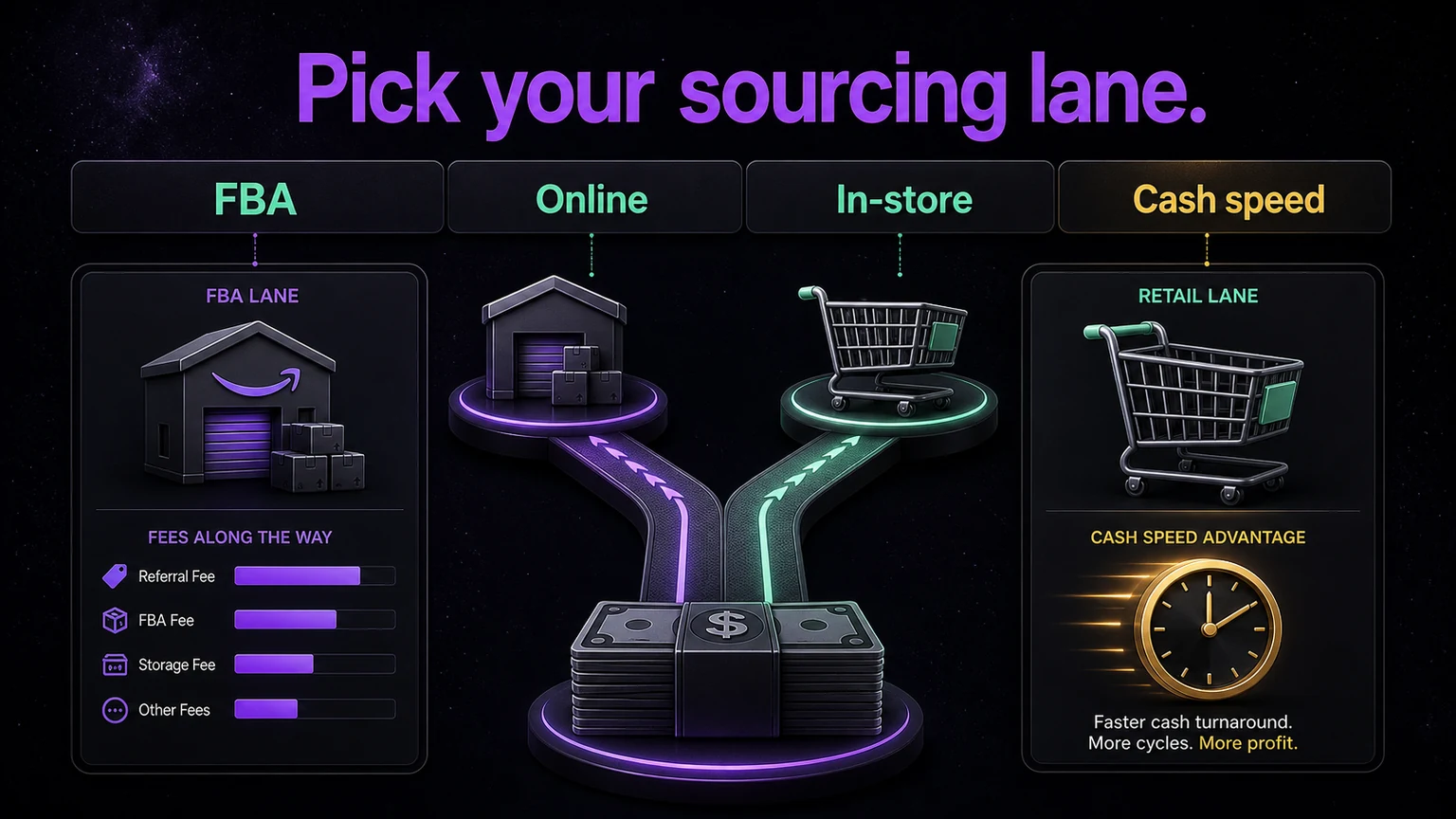
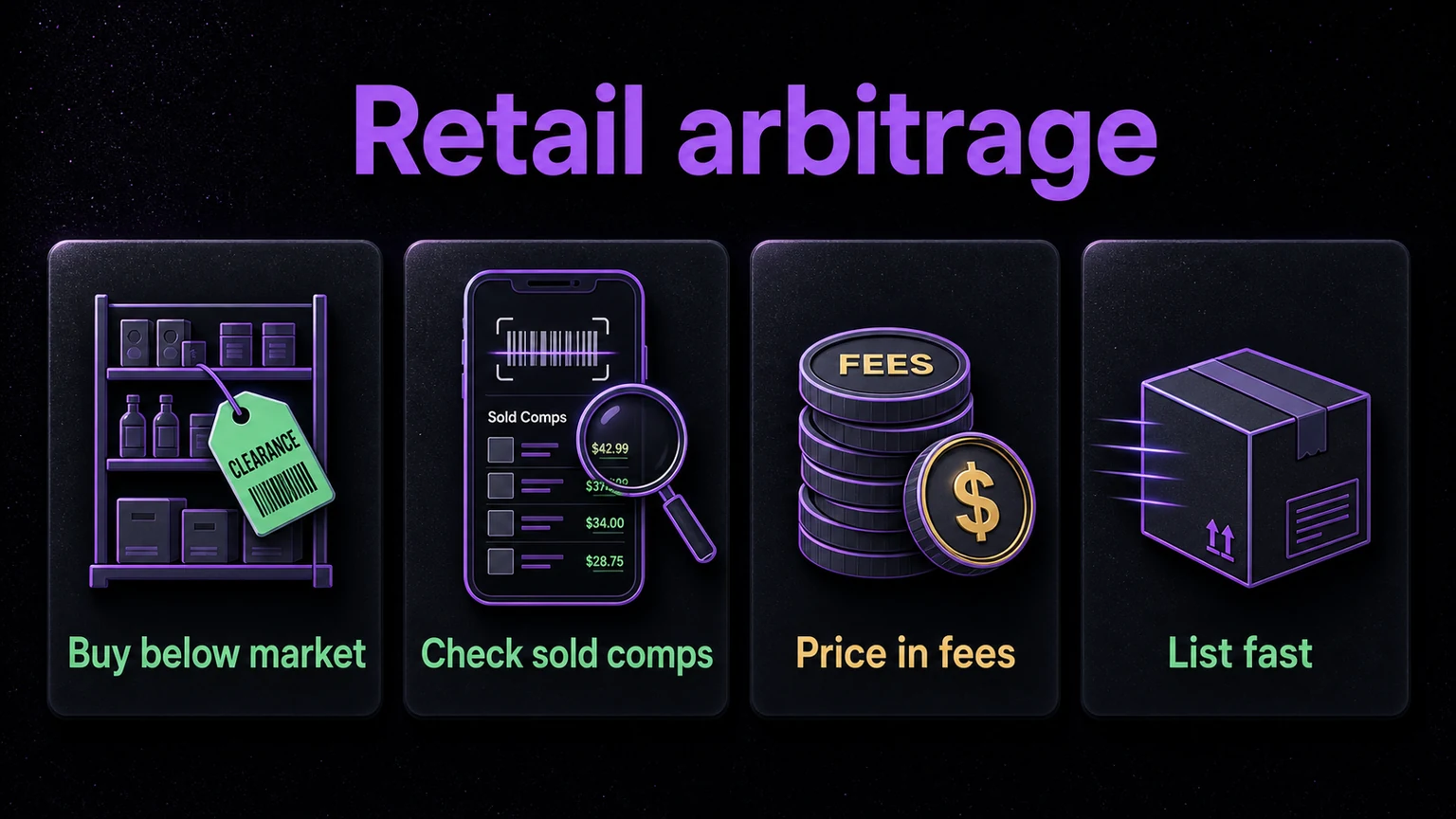
Sourcing splits into three lanes, and most people who last do a mix.
In-person retail arbitrage. You walk stores, hit the clearance racks first, and scan items against their resale comp with a phone app. Post-season is a goldmine: holiday stock in January, pool gear in September, all marked down hard and worth full price when demand comes back around. The cost here is your time and your feet.
Online arbitrage. You source from the couch. Retailer sales, coupon stacks, price errors, and clearance pages, all bought online and resold online. No driving. The tradeoff is that everyone else can see the same deal, so it comes back to speed. This is where price errors and glitches live, and where being alerted first is the whole difference.
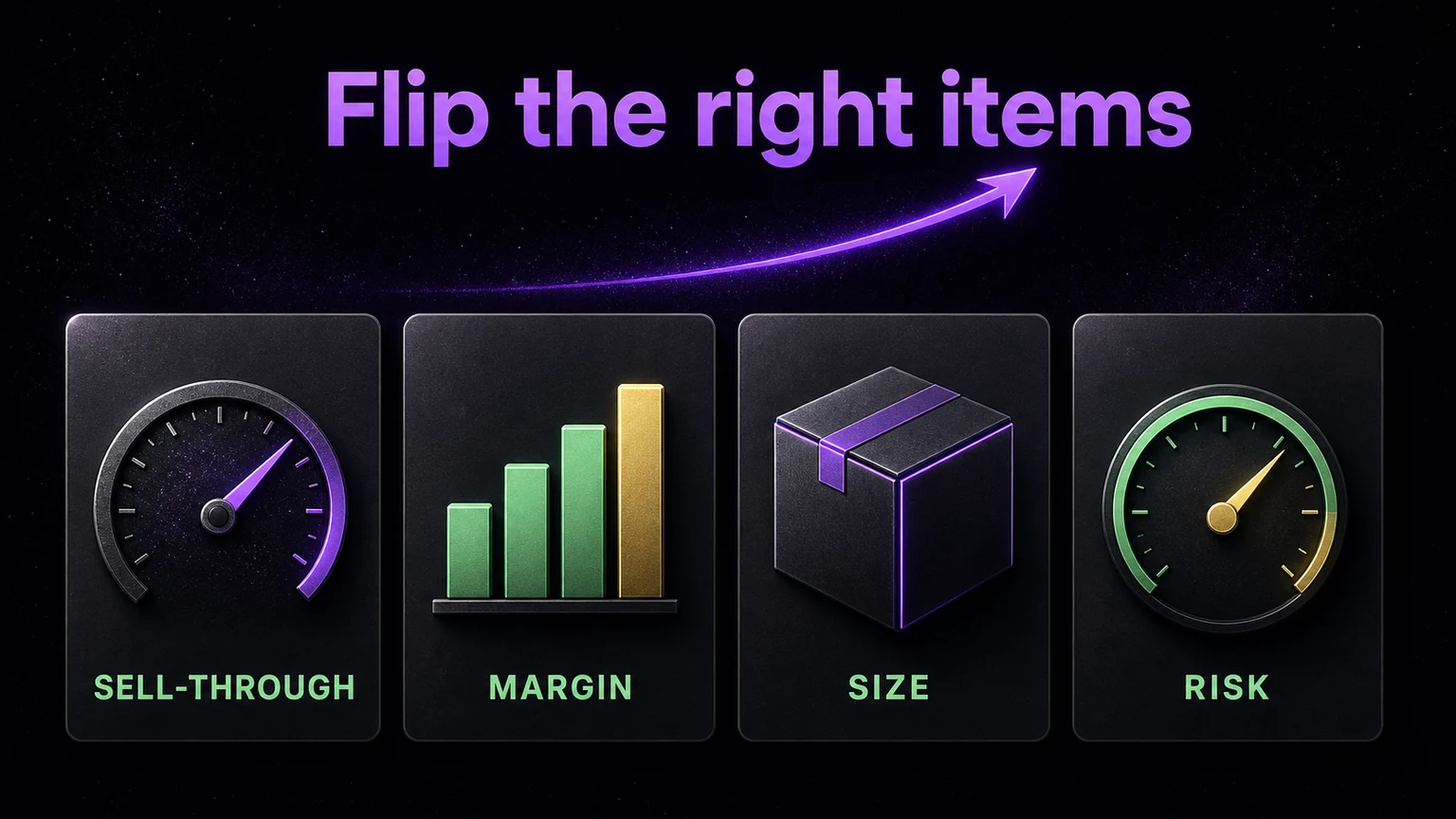
Limited drops. Sneakers, trading cards, and hyped releases that sell out in seconds and trade above retail immediately. The spread can be large and predictable, but only if you can actually check out before the drop is gone. That is the entire reason autocheckout tools exist, and why flipping sneakers is its own discipline. For a broader look at what categories carry good margin at low risk, see best items to flip for profit.
A solo reseller with a good eye and a scanner app does the in-person lane very well. Where solo falls apart is the drops and the price errors, because a human refreshing a page cannot beat a monitor that watches stock twenty-four hours a day and pings the moment something moves. That gap is real, and it is honest to name it.
Speed is the whole game
Say two people spot the same $110 sneaker that comps at $200. One gets an alert the second it drops and checks out in the first minute. The other finds it forty minutes later. The first person made $48. The second person made a screenshot of a sold-out page. Same knowledge, same market, same item. The only variable was speed.
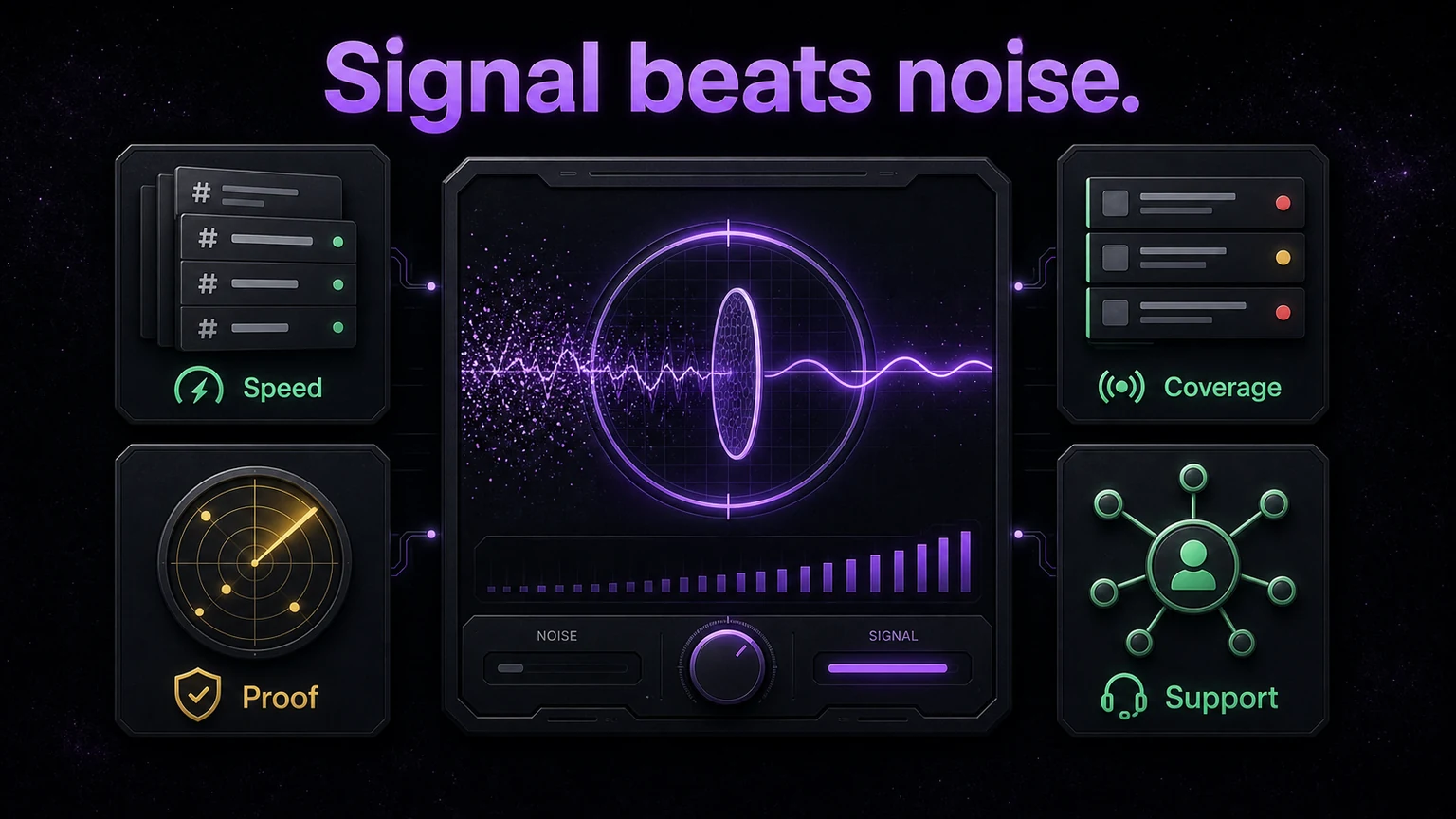
This is why serious resellers stop refreshing pages by hand. Release alerts tell you what is dropping and when. Price and stock monitors watch inventory around the clock and ping in real time. Autocheckout software fills the form faster than you can find your card. None of it is magic and none of it guarantees a win. It just closes the gap between seeing a deal and owning it, which on a drop that sells out in seconds is the only gap that matters.
That infrastructure is exactly what a good community bundles. Sneaker release alerts, card pricing, price-error and clearance alerts, autocheckout for limited drops, and a room full of experienced resellers calling out live deals. If you would rather plug into that than build it alone, join Divine on Whop and take the free trial before you pay for anything.
Who should skip this
Honesty is the sell here, so read this part twice.
Skip retail arbitrage if you need guaranteed money this month. It is a business, and businesses have bad weeks. A comp can drop before your item sells. A hyped card or sneaker can cool off and leave you holding stock worth less than you paid. Unsold inventory ties up your cash, sometimes for months, and that cash is not earning while it sits in a box.
Skip it if you will not check comps. The single fastest way to lose money in reselling is buying on the sticker and hoping. Hope is not a comp.
Skip it if you hate admin. Resale income is taxable whether or not a marketplace sends you a form, and you track costs, receipts, and fees to know your real number. The federal 1099-K reporting threshold sits at over $20,000 and 200 transactions for 2026, but the reporting rule is not the tax rule: you owe on profit from dollar one. The details are worth reading in flipping taxes and fees before your first big year.
And skip anyone selling you a get-rich-quick version of this. The person with the rented Lamborghini promising easy passive income is the villain in this story, not the model. Real reselling is a grind of small, repeatable, honest margins. The people who win treat it like the business it is.
If none of that scares you off, and you like the idea of a stack of $48 flips that compound, you are exactly who this is for. Compare the sourcing models honestly in Amazon FBA vs retail arbitrage so you pick the lane that fits your life.
Realistic expectations
Retail arbitrage is a real business with real costs and real risk. Marketplace fees run around 13 percent, shipping and supplies are on you, inventory can sit unsold, prices move, and profits are never guaranteed. Nobody can promise you a return, and anyone who does is lying. Do your own comps, start small, and treat every number in this article as an illustration of how the math works, not a forecast of what you will make. What the model can give you is a repeatable edge if you get faster at sourcing and disciplined about comps. The rest is on you.
FAQ
Is retail arbitrage legal?
Yes, in the United States, the United Kingdom, and most countries, under the first-sale doctrine. Once you legally buy a genuine product, you can resell it. The limits are real though: no counterfeits, no restricted or prohibited items, and some brands cap which platforms you can list on. Check the product and platform rules before you commit money.
How much money do I need to start?
You can start with $100 to $500. The model scales from the bottom because it runs on turnover, not on a big upfront order. Buy one or two well-chosen items, sell them, and roll the proceeds into the next buy. Starting small is the smart way to learn the sourcing and comps discipline before you risk more.
Do I need a warehouse or a lot of storage?
No. Retail arbitrage is high turnover, not high storage. The goal is to sell items in days or weeks, so a closet shelf handles a surprising amount of volume. If you find yourself needing a warehouse, you are probably holding inventory too long, which usually means the comps or the pricing were off.
What is a comp and why does it matter so much?
A comp is the comparable sold price, what an item has actually sold for recently, not the asking price. It is the number that tells you whether a deal is real. You check comps before you buy, every time, because the sticker in front of you is the cost and the comp is the revenue. Buy on the comp, never on hope.
How much can I realistically make per flip?
It depends entirely on the item, the fees, and the comp. In the worked example above, a $110 buy that resells at $200 nets about $48 after roughly 13 percent marketplace fees, shipping, and supplies, which is around a 44 percent return on the cash risked. Experienced sellers often run 15 to 30 percent margins on the items they choose well. Some flips lose money. The average across many flips is what matters, not any single win.
What tools do serious resellers use?
Release alerts for what is dropping and when, price and stock monitors that watch inventory around the clock, comp-checking apps, and autocheckout software for drops that sell out in seconds. The point of all of it is speed, closing the gap between spotting a deal and owning it. A community like Divine bundles those alerts and tools in one place, which is why many resellers plug in rather than build it alone.
Verdict and next step
Retail arbitrage is not a warehouse business and it is not a rich person's game. It is buying mispriced retail and reselling at market, and the entire edge lives in two learnable skills: sourcing faster than the crowd and knowing the comp before you buy. Get those right and the fees, the shipping, and the admin become the manageable cost of a repeatable $48 flip. Get them wrong and no amount of capital saves you.
If you want the alerts, the comps, and the autocheckout that turn speed from luck into infrastructure, the fastest start is to try Divine on Whop with the free trial and see the live deals before you commit a dollar. If your focus is cards specifically, the Divine Cards Pass is built for that lane.
Just remember the frame every serious reseller lives by. Reselling is a real business with real costs and real risk. Profits are never guaranteed, fees and shipping are always there, inventory can sit, and you do your own comps. Start small, stay honest with the math, and let the small repeatable wins compound.
Get to the deal first
Divine is the alert network, monitors, and autocheckout built on this exact process. Try Divine Pro free for 5 days.
Reselling is a real business with real costs: marketplace fees, shipping, taxes, and unsold inventory. Profits are never guaranteed. Always check the comps before you buy.