How to flip sneakers for profit without relying on luck
Learn how to flip sneakers for profit with real resale math, StockX and GOAT fees, and a repeatable system built on limited releases, not luck.
Turn this into live alerts.
Use the Divine Pro free trial to see sneaker, retail, card, price-error, and autocheckout alerts before you pay.
Start Divine Pro free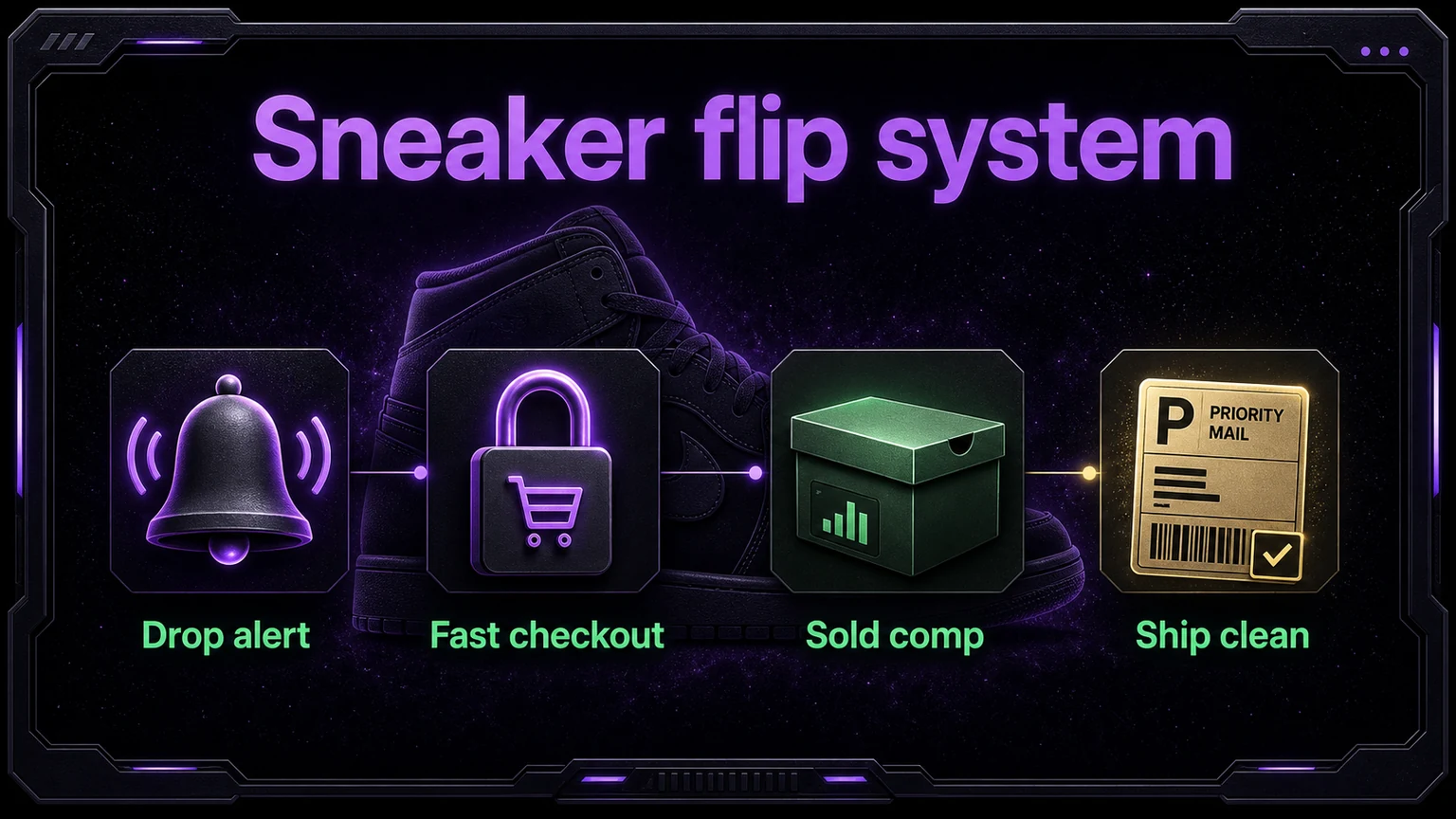
You watched a pair sell out in nine seconds. You had the shoe in your cart. You blinked, hit checkout, and got the dead gray screen: sold out. Two hours later that same pair was live on resale for double retail, and a stranger with a faster setup was cashing the spread you almost had.
So you told yourself the story everyone tells: flipping sneakers is luck. Right place, right bot, right day, and the rest of us just miss. That story is comfortable. It is also the single most expensive thing you believe about this game, because it stops you from building the one thing that actually prints: a system.
Here is the turn. The people who flip sneakers for profit month after month are not luckier than you. They are earlier, faster, and better informed. They know the release calendar before you do. They know which shoe holds a premium and which one dumps below retail in a week. They check the current resale comp before they ever try to buy. Luck is what you call someone else's preparation when you cannot see it.
The lie that keeps you paying retail
The lie is "you need luck." Its evil twin is "you need money and connections." Both keep you frozen. Both are wrong.
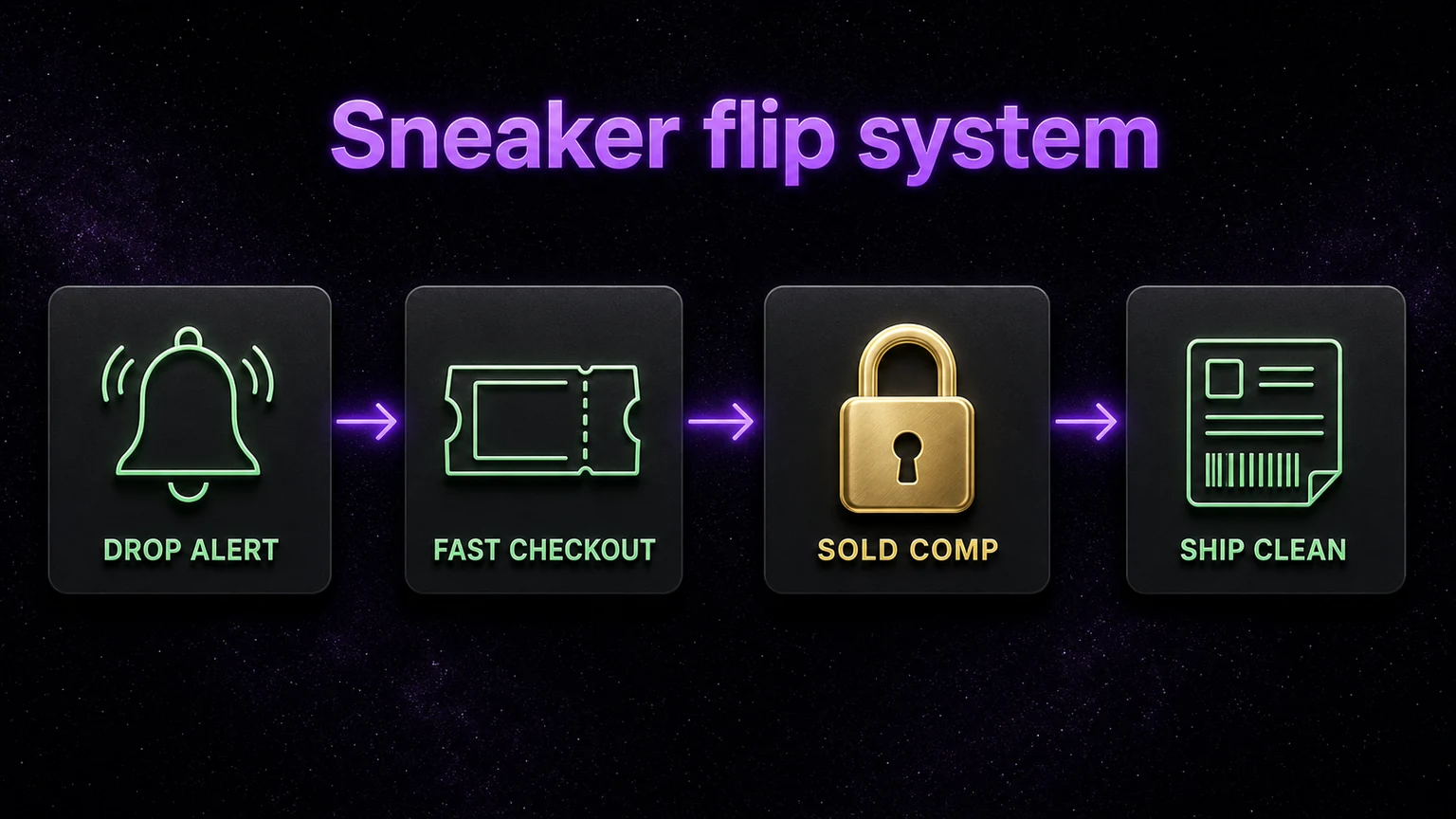
Sneaker resale is not a lottery. It is a spread business. A limited shoe releases at a fixed retail price to a fixed, small supply. Demand for that shoe is far larger than supply. The gap between what it costs at retail and what buyers will pay on the secondary market is the spread. Your job is not to get lucky. Your job is to (1) know which releases will carry a spread, (2) actually secure a pair at retail, and (3) sell it before the premium fades, all while keeping fees from eating you alive.
None of those three steps is luck. Every one of them is a skill you can drill, or a tool you can point at the problem. That is the whole fix, and the rest of this guide is how each piece works.
Why limited releases create a predictable spread
Nike, Jordan Brand, and their collaborators are not confused about pricing. When they drop a Travis Scott collab or a no-retro grail, they know they could charge triple and still sell out. They keep retail low on purpose. Low retail plus artificial scarcity plus a marketing machine equals a manufactured shortage, and a shortage is where resale value comes from.
That is why the spread is predictable in direction even when it is not guaranteed in size. Look at the pattern:
- The Travis Scott x Air Jordan 1 Low line has retailed around $150 for years. The "Medium Olive" colorway retailed at $150 in 2024 and was averaging about $535 on StockX before it even released, according to StockX sales data. The 2025 "Shy Pink" pair retailed at $155 and logged 1,648 sales on release at an average of $459.
- The three-way Travis Scott x Fragment Air Jordan 1 Low "Sail Military Blue" retailed at $150 and traded at a reported premium north of 1,000 percent, with release-day sales averaging around $1,763.
Those are not lottery tickets. They are the same brand, the same silhouette, the same collaborator, printing a spread release after release because the scarcity is engineered.
Now the honest half. Not every shoe does this, and the ones that do not can bury you. Jordan Brand released more than fifteen different Air Jordan 4 colorways in a single recent year, roughly one a month. When you flood the market, the premium collapses. StockX's own year-end report showed the average resale premium on non-collab Jordan 4s falling from about 80 percent in 2021 to about 25 percent in 2025, and plenty of general releases now sit below their $220 retail. Recent examples have shown lowest asks like $166 and even $131 on shoes that cost $220 new.
Read that twice. Buying a hyped-looking general release and hoping is not flipping. It is gambling with extra steps. The edge is not the brand logo. The edge is knowing, before you buy, which specific release is scarce enough to hold a premium. That is comps, and comps are the difference between a business and a hobby that loses money.
The three levers that turn a drop into a profit
Every profitable flip pulls at least one of these three levers. The best flips pull all three.
Lever 1: information, so you know what will hold
You cannot flip a spread you did not see coming. The winners know the release calendar weeks out, they know the SKU, they know the historical resale on comparable colorways, and they know the print run signals. This is why serious resellers live inside alert feeds instead of scrolling Instagram. A reselling community built on real monitors and alerts turns "I heard about it after it sold out" into "I had the SKU, the retail price, and the resale comp three weeks early."
Lever 2: speed, so you actually secure a pair
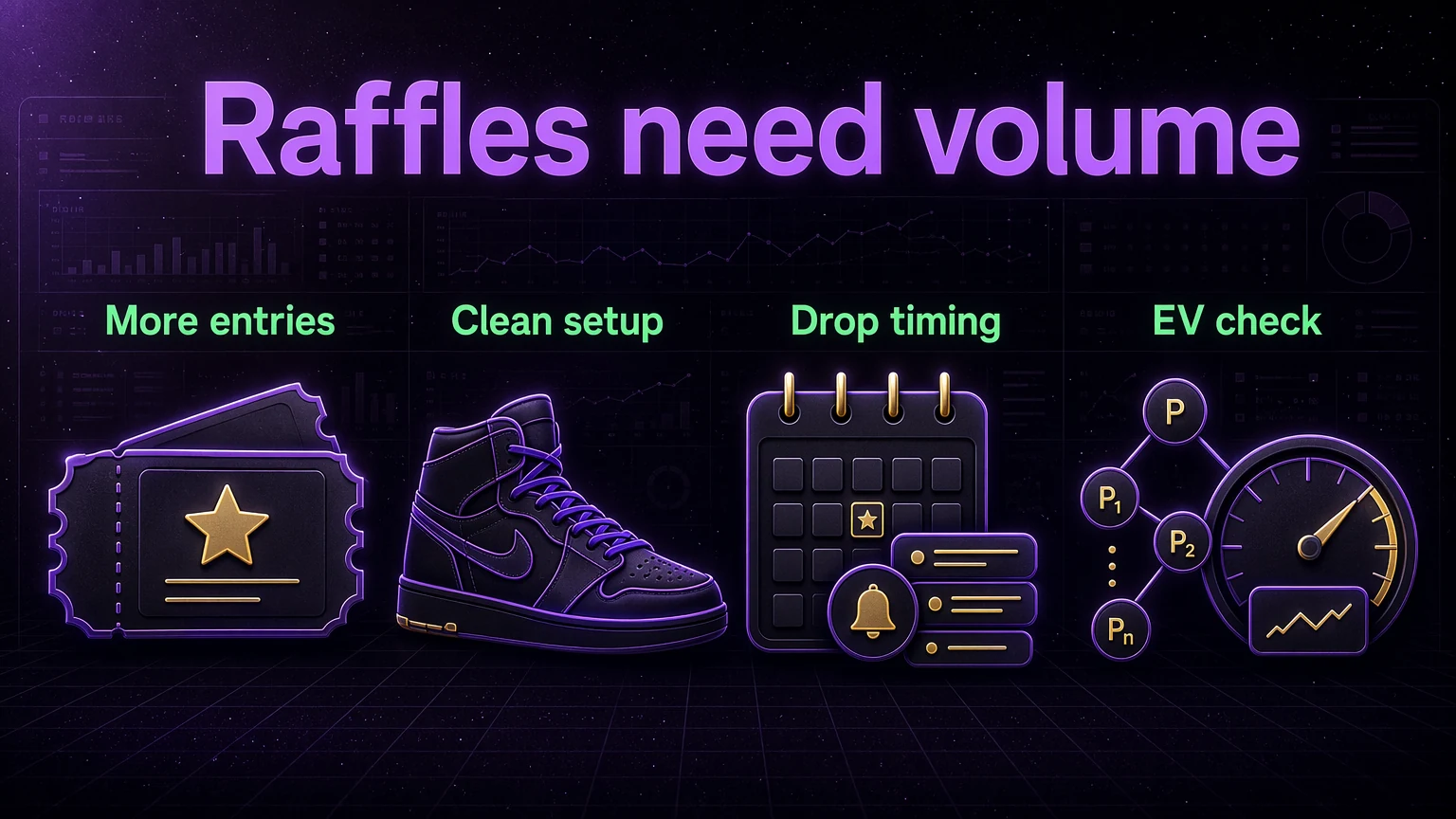
A hyped drop can sell out in seconds. Manual checkout with a saved card is not fast enough for the marquee releases, full stop. This is where autocheckout software earns its keep: it fills your info and submits the order in milliseconds while you are still reading the product page. It is not cheating. It is buying a public product faster than a human hand can move. For draw-style releases, the equivalent lever is entering more raffles across more retailers, which raises your hit rate the same way more shots on goal raise your odds.
Lever 3: math, so the spread survives fees
This is where most beginners quietly lose. They see "$150 retail, $460 resale" and think the profit is $310. It is not. Marketplace fees, cash-out fees, shipping, and taxes all take a bite before you keep a dollar. If you do not run the full margin and ROI math before you buy, you are flying blind. We will run it in full below.
What the resale platforms actually charge you
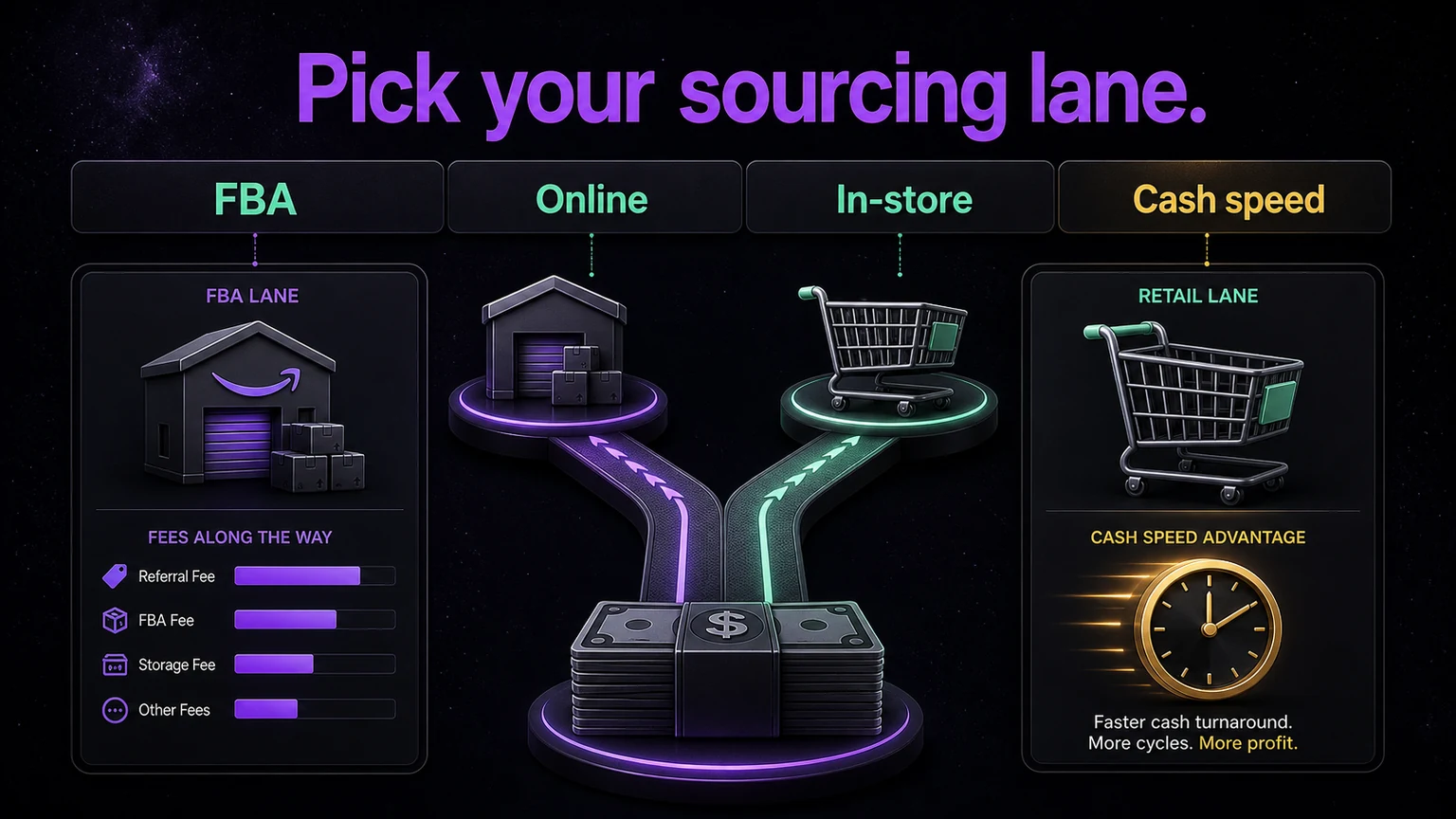
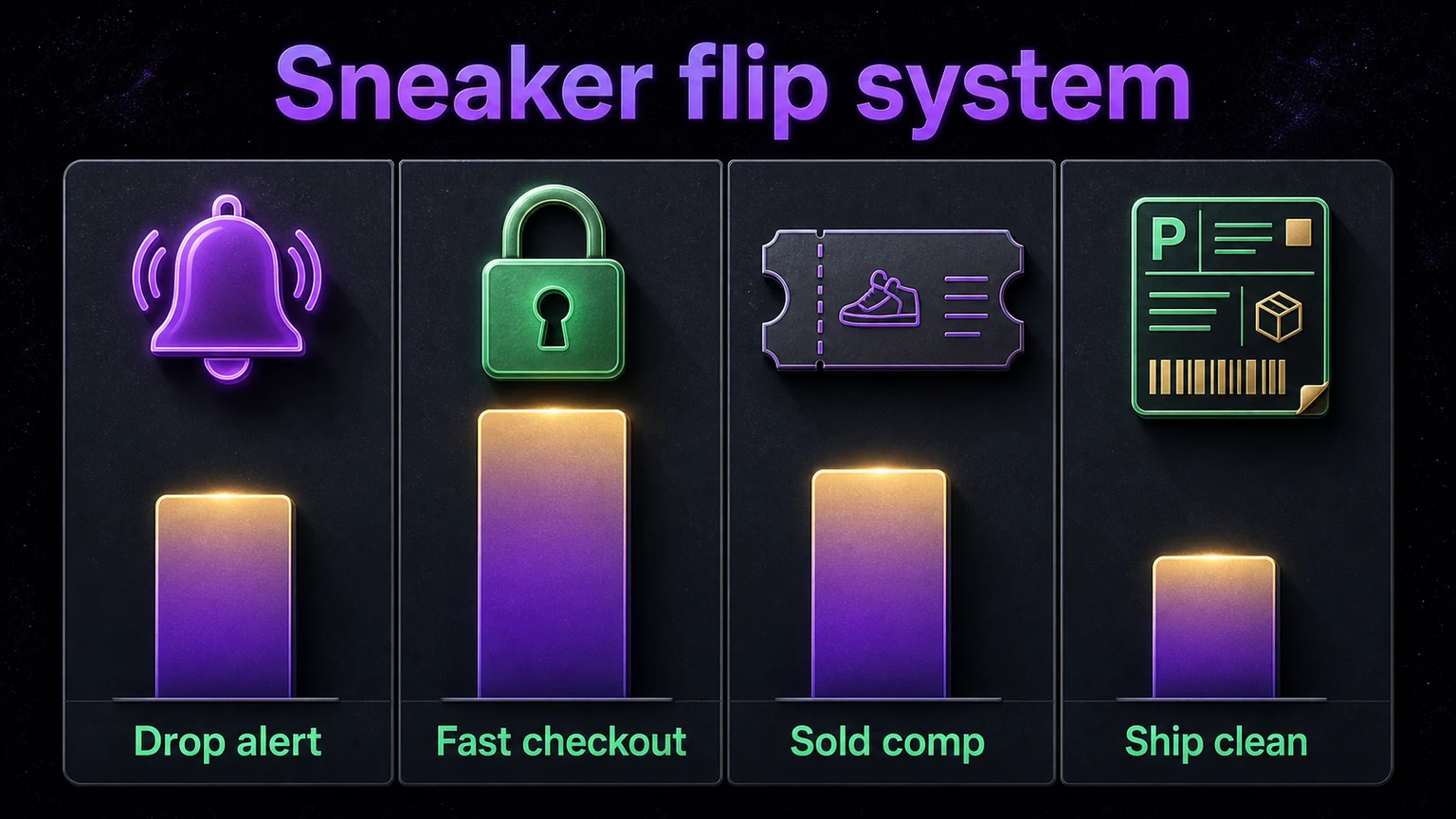
Before any worked example, you need the fee reality, because fees are the villain hiding inside every "easy" flip. Here is a comparison of the main sneaker resale channels, using publicly listed 2026 fee structures. Treat these as approximate and always confirm your own current rate, since seller tiers and promotions move these numbers.
| Platform | Core seller fee | Extra fees | Rough all-in take | Notes |
|---|---|---|---|---|
| StockX | Transaction fee about 9% at entry level, dropping toward 7% at the top seller tier | 3% payment processing (waived under a limited-time promo at time of writing), about $5 seller shipping fee, $5 minimum fee | Roughly 9% to 12% plus shipping | Authenticated, price set by bids and asks, fast payout |
| GOAT | 9.5% commission at the top seller rating, climbing sharply if your rating drops | 2.9% cash-out fee on the sale price, plus a seller fee near $5, plus shipping | Roughly 12.4% plus shipping | Cash-out fee is charged on the full sale price, not the post-commission amount |
| eBay | About 13.25% final value fee in many sneaker categories | Roughly $0.30 to $0.40 per order | Roughly 13% to 14% | Sneakers over $150 can qualify for authentication; wider buyer pool |
The takeaway is blunt. Plan on roughly 10 to 14 percent of your sale price vanishing to fees before shipping, and a few more dollars after. On a $460 sale that is somewhere around $50 to $65 gone. If you priced your flip assuming you keep the full spread, you priced it wrong.
The worked example: retail vs resale minus fees
Let us settle this in real dollars. We will use a realistic hyped release: a Travis Scott x Air Jordan 1 Low at $150 retail, resold on StockX at a $460 average, which is squarely in line with the recent "Shy Pink" and comparable colorway data.
The sale on StockX (entry seller level, promo processing fee off):
- Sale price: $460.00
- Transaction fee at about 9%: minus $41.40
- Payment processing at 3%: minus $13.80
- Seller shipping fee: minus $5.00
- Total fees: minus $60.20
- Payout: $399.80
Now the profit:
- Payout: $399.80
- Your cost (retail plus sales tax, say $150 plus about $12 tax): minus $162.00
- Net profit before income tax: about $237.80
- Return on the $162 you laid out: about 147%
That is a genuinely strong flip. It is also not the average flip, and pretending otherwise is how gurus sell dreams. So let us run the other side of the ledger, the one nobody posts.
The flip that goes wrong (a general release that dumps):
- You buy a hyped-looking Jordan 4 general release at $220 plus about $18 tax, so $238 out the door.
- The market floods with colorways. The lowest ask slides to $190 while you are still waiting to sell.
- You list at $200 to move it. Sale price $200, fees around 11% plus shipping, so roughly minus $27.
- Payout: about $173.
- Net result: a loss of about $65 on that pair, plus the weeks your cash sat frozen in a box.
Both of those are real outcomes from the same market. The difference between them was not luck. It was comps. The winner checked resale demand before buying and only chased a genuinely scarce release. The loser bought hype and hoped. If you internalize one thing from this guide, make it that.
Want the whole edge stacked in one place, the alerts, the checkout software, and the reseller network that tells you which of those two shoes you are actually holding? That is exactly what Divine on Whop is built to do.
Reading resale demand before you buy
Comps are your entire risk control. Here is the checklist a disciplined flipper runs before spending a dollar:
- Pull the current resale comp. Search the exact SKU on StockX and GOAT. Look at the actual last-sale prices and the number of recent sales, not the wishful asking prices.
- Check the sales velocity. A shoe that logged thousands of sales on release day has real, liquid demand. A shoe with a high ask and almost no sales is a trap. You can list at $400 all day; if nobody buys, that number is fiction.
- Judge the supply signal. Is this a one-time collab, or the fifteenth colorway of a silhouette this year? More supply means a thinner premium. Rising sales volume alongside a falling average price is a classic sign of more supply, not stronger demand.
- Subtract the fees first. Do the payout math before you buy, not after. If the spread does not survive roughly 12 percent in fees plus shipping plus your tax, it is not a flip.
- Mind the clock. Premiums on hyped shoes are highest at and just after release, then often fade. The plan is to sell into the launch window, not to marry the shoe.
Run that list every time and you convert flipping from a bet into a decision. Speed gets you the pair. Comps tell you whether the pair is worth getting.
Where the real costs and risks live
The caveats are the sell here, because a clear-eyed flipper beats an excited one every time. These are the costs that turn paper spreads into real losses:
- Fees eat margin. Ten to fourteen percent gone on every sale, before shipping. High sale price is not high profit.
- Unsold inventory ties up cash. Every pair sitting in your closet is money you cannot deploy on the next drop. General releases can sit for weeks.
- Prices fade. The resale premium on a hyped shoe is usually highest near launch and drifts down as more supply lands. Hold too long and the spread evaporates.
- Drops sell out in seconds. Without speed, you will lose the marquee releases to people who have it. Being early and fast is not optional on the big ones.
- Fakes and failed deals exist. Selling through an authenticated marketplace protects you, but it also charges you. Selling peer to peer saves fees and adds risk.
- Flips are taxable. Resale income is income. Marketplaces issue 1099-K forms, and the thresholds are real. Budget for it. We cover this in flipping taxes and fees.
Say it plainly: sneaker flipping is a real business with real costs, real risk, and no guaranteed outcome. Anyone promising you can't-lose profit is selling you the dream, not the shoe. This niche has more than its share of fake gurus, which is why knowing how to avoid reselling scams matters as much as knowing how to flip.
Who should skip this
Flipping sneakers is not for everyone, and pretending it is would be dishonest.
Skip it if you cannot afford to have a pair or two sit unsold for a month without stress, because inventory risk is real. Skip it if you want a truly passive income; this is active work of watching drops, securing pairs, listing, shipping, and tracking comps. Skip it if you refuse to do the math, because the flippers who ignore fees are the ones who quietly lose money while feeling busy. And skip it if you were hoping to buy random hyped-looking shoes and get rich; the data on flooded general releases says that road ends below retail.
If, on the other hand, you like a clear system, you can move fast, and you are willing to check comps before every buy, this is one of the most beginner-accessible corners of retail arbitrage there is. The barrier is not capital. It is information and speed.
Your first ten flips, step by step
- Pick a lane. Start with one brand and one silhouette you can learn cold, like Jordan 1 Lows or a specific collab line. Depth beats breadth early.
- Get on the calendar. Know every relevant release date, SKU, and retail price weeks ahead. This is where alerts replace luck.
- Comp before you commit. For each upcoming drop, pull the resale comp on similar colorways. Only chase the ones with a real spread after fees.
- Solve for speed. Set up autocheckout for the fast drops and stack raffle entries for the draw-style ones. Both raise your hit rate.
- Secure at retail. Buy only pairs where the math already worked on paper.
- List fast, price to sell. Sell into the launch window on an authenticated marketplace. Price at or just under the live comp to actually move it.
- Record everything. Cost, fees, shipping, sale price, days held. Your ledger is how you learn which lanes pay.
- Reinvest deliberately. Roll profit into the next high-confidence drop, not into every shiny release.
Do that ten times and you will have more real reselling knowledge than any highlight-reel guru. If you would rather not build the calendar, the comps, and the checkout stack alone, a community like Divine hands you the alerts, the free autocheckout software, and a network of experienced resellers, with a 5-day free trial so you can test it before you commit.
FAQ
How much money do I need to start flipping sneakers?
Enough to buy at least one pair at retail plus tax, plus a buffer in case it sits unsold. A single Jordan 1 Low collab is around $150 to $170 all in. You do not need a warehouse or thousands in capital. You need enough to secure a pair or two and the discipline to only buy flips where the comp already clears fees. Start small, keep a ledger, and scale from real results.
Is using an autocheckout bot to buy sneakers legal?
Autocheckout software automates buying a publicly available product faster than you could by hand. It is a speed tool, not a hack, and it is widely used across the reselling world. Individual retailers set their own terms of service, and some try to limit automated purchases, so read the rules of the site you are buying from. The tool itself is about milliseconds, not deception. We go deeper in what are autocheckout bots.
Which platform is best for selling sneakers, StockX or GOAT?
Both authenticate and both take roughly 10 to 13 percent all in, so it often comes down to which one shows the better live price for your exact shoe and size on the day you sell. StockX uses a live bid-ask system and its transaction fee drops as your seller tier rises. GOAT charges a commission plus a 2.9 percent cash-out fee on the full sale price. Check the current payout on both before you list, and remember eBay reaches a wider buyer pool at a slightly higher fee.
How do I know if a sneaker will actually resell above retail?
Check the comps, not the hype. Pull the exact SKU on StockX and GOAT, look at recent last-sale prices and how many pairs are actually selling, and weigh the supply. Limited collabs and no-retro grails hold premiums. General releases with a dozen colorways a year often sink below retail. If the spread does not survive fees, shipping, and tax on paper, it will not survive them in real life.
Do I have to pay taxes on money I make flipping sneakers?
Yes. Resale profit is taxable income, and marketplaces report your sales to tax authorities through 1099-K forms once you cross the reporting threshold. Keep records of every cost and every sale so you can report net profit accurately and deduct legitimate business expenses. Treating flips as invisible cash is a fast way to a nasty surprise. See flipping taxes and fees for the details.
Can beginners really compete with resellers who have bots and groups?
You can, but not by trying to out-hustle them with a saved credit card and a browser refresh. You compete by getting the same two advantages they have: early information and fast checkout. That is the entire reason reselling communities and autocheckout tools exist. The gap between a beginner and a pro is rarely talent. It is access to the calendar, the comps, and the speed.
The verdict
Flipping sneakers for profit is not luck and never was. It is a spread business with three moving parts: information that tells you what will hold, speed that gets you the pair, and math that keeps fees from eating the profit. Manufactured scarcity creates the spread. Comps tell you which spread is real. Fees decide what you actually keep. Master those and the "lucky" flippers stop looking lucky and start looking like people who simply prepared better than you did.
Start with one lane. Check the comp before every buy. Run the fee math before you fall in love with a sale price. If you want the alerts, the free autocheckout software, and a network of experienced resellers in one place, start a free trial of Divine on Whop and put the system to work on the next drop.
Realistic expectations: reselling is a real business with real costs, marketplace fees, shipping, taxes, unsold inventory, and time. Profits are not guaranteed, prices can fall below retail, and no tool or community can promise a return. Always run your own comps and buy only what the math supports.
Get to the deal first
Divine is the alert network, monitors, and autocheckout built on this exact process. Try Divine Pro free for 5 days.
Reselling is a real business with real costs: marketplace fees, shipping, taxes, and unsold inventory. Profits are never guaranteed. Always check the comps before you buy.