How to avoid reselling scams and spot a real community
Not every reselling group is a scam, and not every guru with a Lambo is legit. Learn to spot fake flipping gurus, real margins, and a transparent community.
Turn this into live alerts.
Use the Divine Pro free trial to see sneaker, retail, card, price-error, and autocheckout alerts before you pay.
Start Divine Pro free
A guy on your feed is leaning on a rented McLaren. The caption says he made $40,000 last month flipping sneakers from his phone, and for $997 he will teach you the "system." The comments are full of fire emojis. Somewhere in there is a screenshot of a bank balance with more zeros than you have ever seen in one place.
You almost clicked. Maybe you did click. Maybe you paid, joined a Discord that turned out to be a graveyard of pinned hype and dead links, asked one real question, and got ignored.
That sting has a name. It is the cost of trusting the loudest voice in the room instead of the most transparent one. And it splits people into two equally expensive mistakes. Some get burned once and decide every reselling group on earth is a scam, so they walk away from a real edge forever. Others believe any guru with a supercar must be legit, so they keep paying dreamers until the money runs out.
Both beliefs cost you. Here is the truth this post installs: reselling is a real business with real, boring, single-digit-to-thirty-percent margins, and a small number of communities genuinely help you hit them with tools and transparency. The rest sell a fantasy. Your only job is to tell them apart before you pay. This is exactly how you do that.
The two lies that empty your wallet
Most people who lose money to reselling scams got there by believing one of two things. They are opposites, and both are traps.
Lie one: "all reselling groups are scams, so I should never pay for one." This one feels safe. It even feels smart, because you have seen the fake gurus and you refuse to be their next mark. But it throws out the baby with the bathwater. A monitor that pings you the second a limited pair restocks is not a scam. A shared network of resellers posting real comps before you buy is not a scam. Refusing all of it because some of it is rotten means you pay full retail forever while people with better information eat the spread. Skepticism is a tool, not a strategy.
Lie two: "any guru with a Lambo is legit, because look at the results." This is the expensive one. The car, the watch, the bank screenshot, the "student who made $10k in his first week" testimonial. None of it is proof of anything except that the person is good at marketing. The reselling world runs on flashy screenshots, paid promos, and fabricated success stories designed to make you trust a stranger before you ask a single hard question. A supercar in a video is not evidence that the method works. It is evidence that someone spent money on props.
The fix sits between the two lies. You do not trust everyone, and you do not trust no one. You separate hype merchants from documented, tool-backed, transparent communities using a checklist you control. The villain here is never you for almost falling for it. The villains are the fake flipping gurus who manufacture a dream, sell it at $997 a seat, and disappear when the questions get real.
What real reselling margins actually look like
The fastest way to spot a scam is to know the real numbers cold. Because the fantasy always sells the same fiction: buy low, sell high, keep the whole difference, quit your job by Friday. Real reselling does not work like that. Real reselling has costs, and the costs are large enough that "sale price minus what I paid" is a lie by omission.
Here is what actually eats a flip:
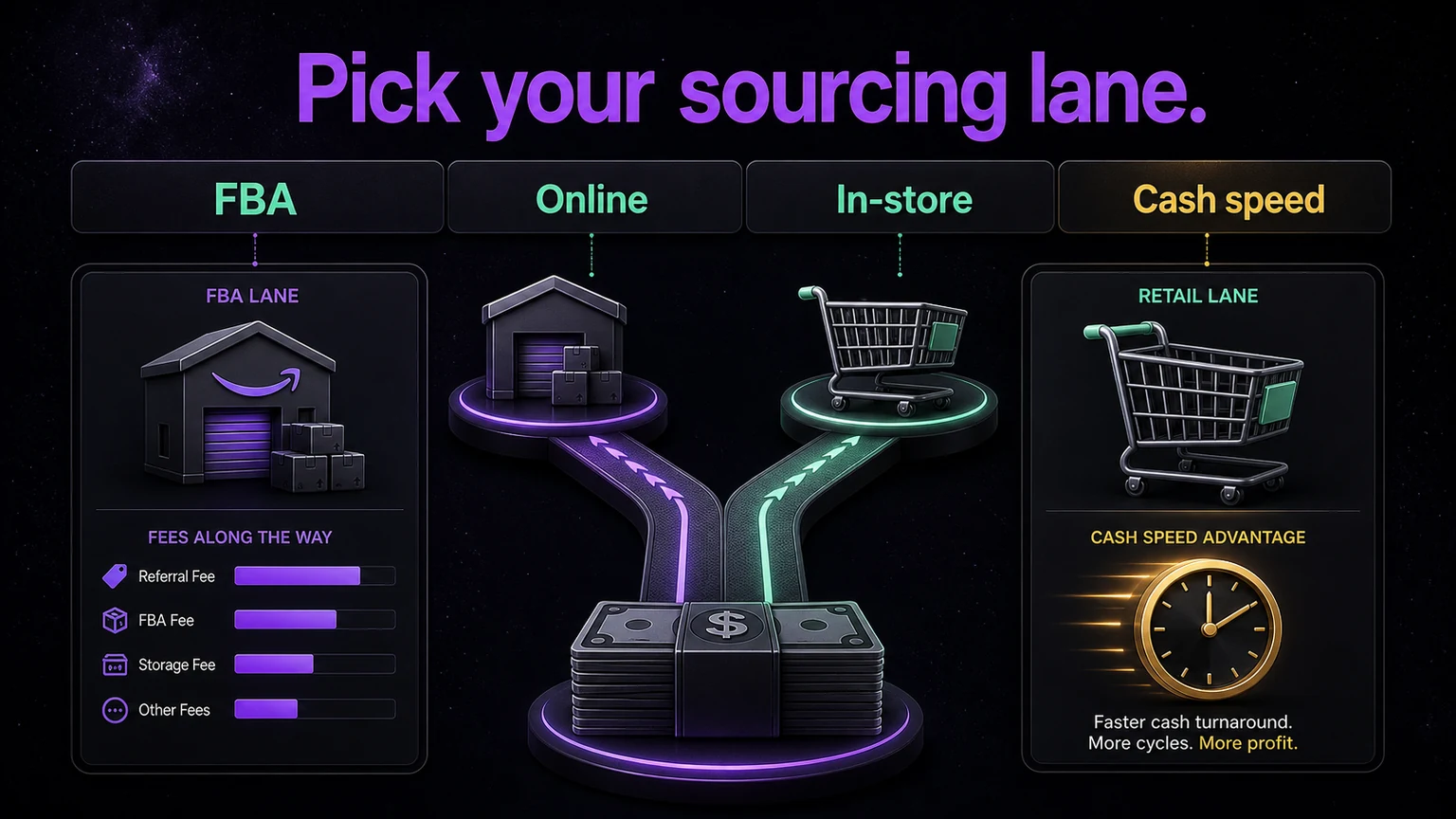
- Marketplace fees. On eBay in 2026 the standard final value fee for most categories runs about 13.6% of the total sale, plus a per order fee of $0.30 on orders of $10 or less or $0.40 on orders over $10. That percentage applies to the shipping and tax the buyer pays too, not just the item price. Some categories differ. Sneakers over $100 run around 8%, media runs higher near 15.3%. Confirm your category before you source.
- Shipping and packaging. The box, the label, the tape, the time at the counter. On small items this can be 15% to 30% of the sale price all by itself.
- Returns and dead inventory. Some items come back. Some never sell and tie up cash for months. A returns reserve is not pessimism, it is accounting.
- Taxes and your time. Resale income is taxable, and self-employment tax alone runs about 15.3% on net profit for a US sole proprietor before any income tax. Your hours sourcing, listing, and shipping are real too. We break the tax reality down in flipping taxes and fees.
Stack all that up and the honest benchmark for eBay-style reselling lands around 20% to 35% net margin after fees, shipping, and a returns reserve, with 15% to 25% being a very common real-world average and 30%-plus marking strong, top-tier performers, not the default. Cheap-to-source, light-to-ship items can post higher ROI on the money you put in, but net margin on the sale price still lives in that band for most people.
Sit with that for a second. The dream sold online is 300% and a Lambo. The reality is closer to a fifth to a third of the sale, before your time, on items you sourced well and sold fast. That gap between fantasy and fact is the exact space every scam lives in. When someone promises you the fantasy number as a floor, you have already found your red flag.
Green flags versus red flags: the community audit table
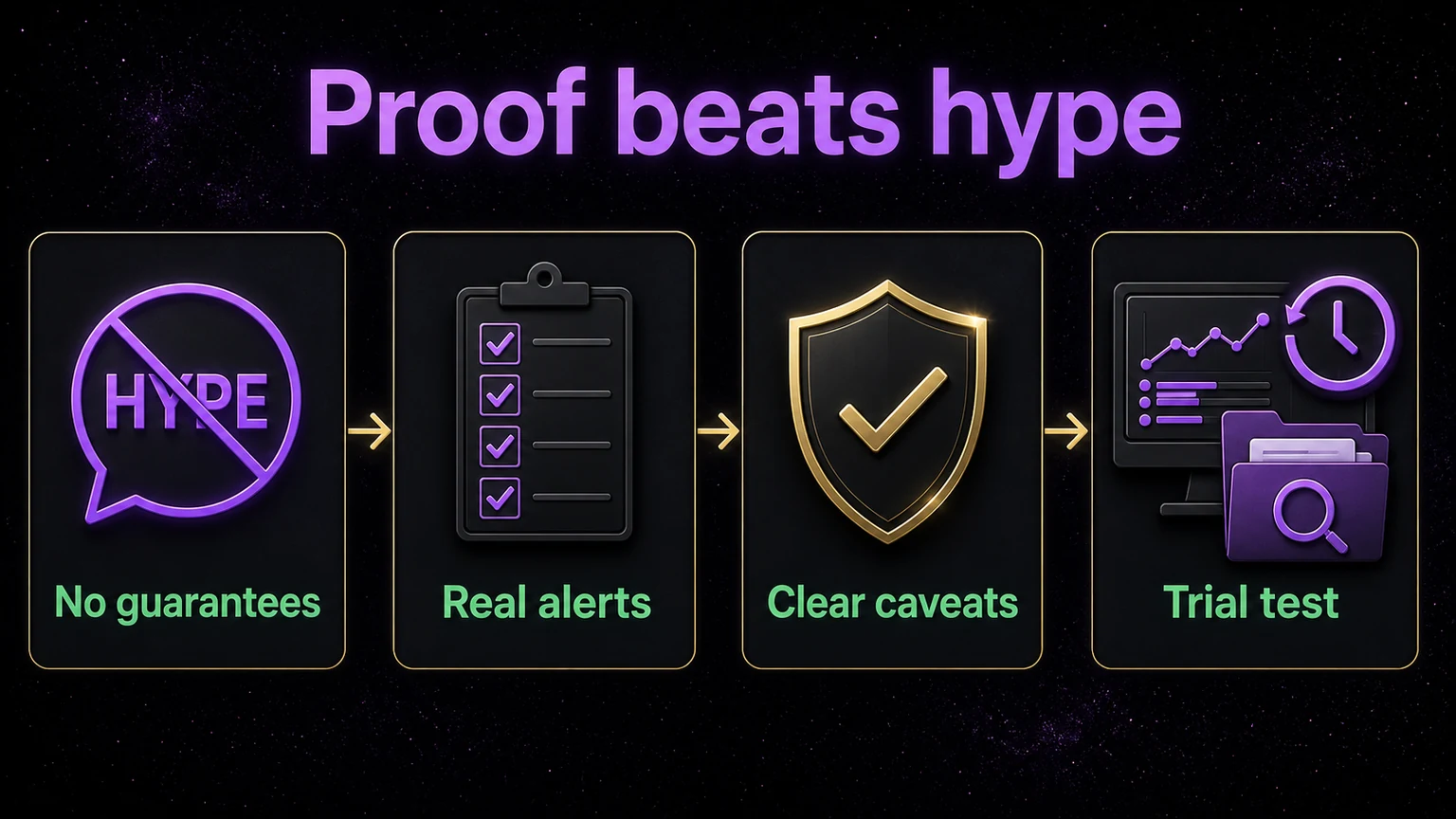
You do not need to be a genius to vet a reselling community. You need a checklist, and you need to run it before your card comes out, not after. Here is the one I use.
| Signal | Green flag (real community) | Red flag (hype merchant) |
|---|---|---|
| Proof of value | Shows the actual tools and feeds, lets you see recent alerts and coverage | Shows lifestyle: cars, watches, bank balances, vacations |
| Trial or preview | Free trial or a public channel so you can verify before paying | Pay first, "trust me," no way to see inside |
| Success stories | A mix of real wins and honest misses, members talk openly | Only cherry-picked screenshots, no losses ever mentioned |
| The pitch | Talks about fees, cancellations, unsold stock, real margins | "Guaranteed," "passive," "can't lose," "easy money" |
| Pressure | Same deal tomorrow, no countdown timers | "Spots close in 10 minutes," FOMO, discount if you buy NOW |
| Transparency | Named tools, clear coverage, responsive to hard questions | Vague "secret system," dodges specifics, buzzwords |
| Track record | Has weathered multiple release cycles, longevity | Appeared last month during a hype spike |
| Refunds and reviews | Clear refund terms, negative reviews exist and get answered | No refund policy, or suppresses and hides complaints |
| Payment | Pay through the platform, on-platform support | "DM me on Telegram," crypto only, off-platform |
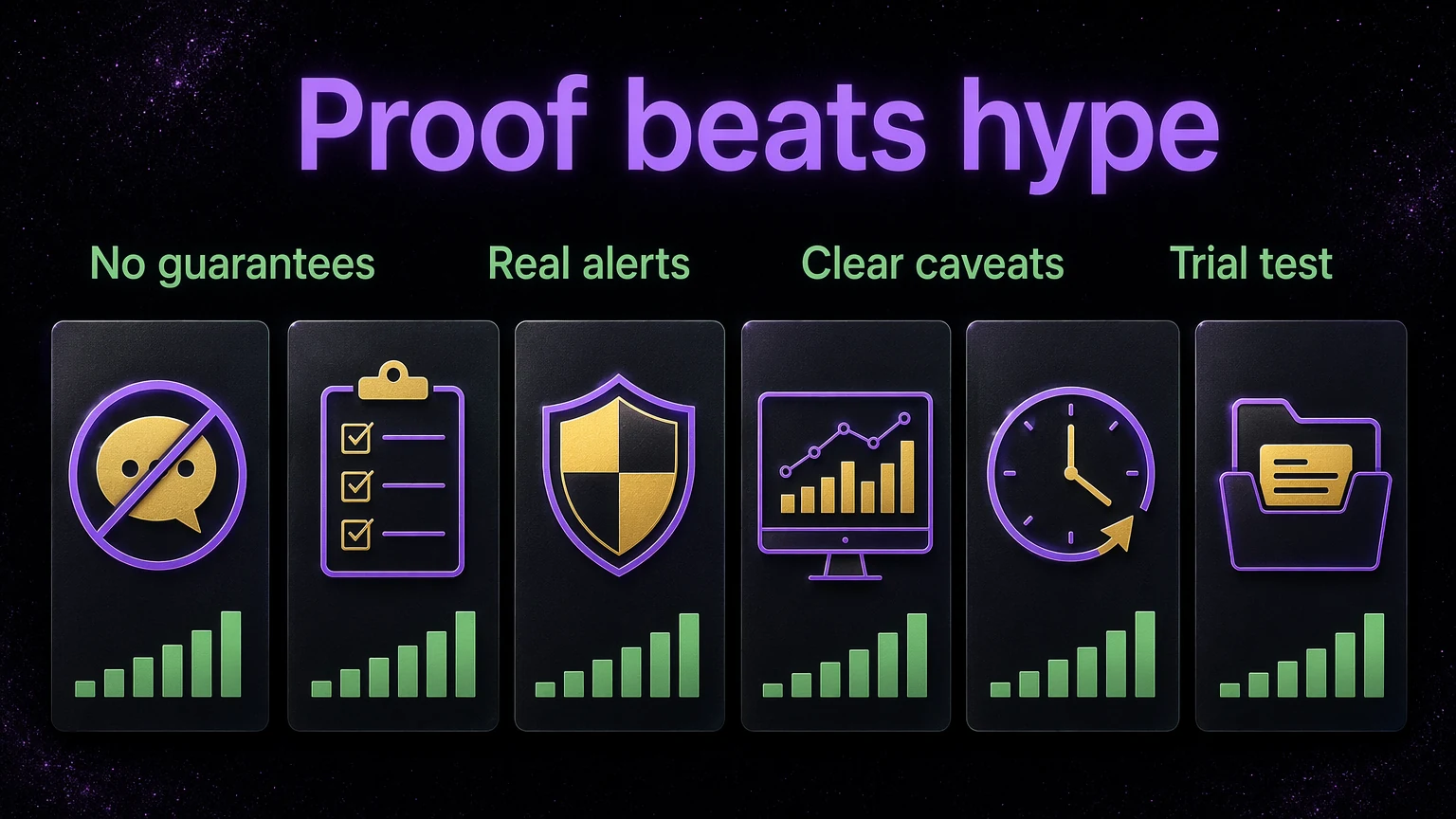
Print it. Screenshot it. The rule is simple: a community that sells the tool is usually real, a community that sells the dream is usually not. When someone shows you a McLaren instead of a monitor, they are telling you what they are actually selling. It is not reselling. It is the feeling of being about to get rich, and that feeling has a $997 price tag and no refund.
The scam playbook, so you see it coming
Fake gurus are not creative. They run a script, and once you have seen the script you cannot unsee it. The regulators have documented it in case after case. The FTC has pulled millions back from operations pitching bogus money-making and coaching programs, and the pattern is always the same shape.
Step one, the authority illusion. They build the look before they build anything real. The car, the confidence, the story about going from broke to rich. A few edited screenshots and a flashy lifestyle are all it takes to look like an expert overnight. None of it is a track record. It is set dressing.
Step two, the free webinar. You get in for nothing. It feels generous. It is a sales funnel. The whole event exists to move you to the next, pricier thing.
Step three, the upsell ladder. The cheap course is the "beginner" version. Then comes "advanced training," then "one-on-one coaching," each more expensive than the last. In one FTC case, presenters upsold consumers products and services costing as much as $41,297 after telling them the first workshop was just the start. The ladder never ends because the ladder is the product.
Step four, the manufactured urgency. Spots are closing. The discount expires at midnight. Buy now or miss out forever. Real deals do not evaporate if you sleep on them. If it is a great deal during the webinar, it is a great deal tomorrow. Urgency is how they stop you from thinking.
Step five, the exit. For the worst of them, once enough money is in, the group goes quiet. Support tickets stop getting answered. The website goes down. The Discord fills with angry members who cannot get a refund or a reply. The crowd usually spots this before any one person does, so souring community sentiment on independent review sites is one of the loudest warning bells there is.
You beat the whole script by refusing step four. Never buy under a countdown. Sleep on it. Run the audit table. A real community is still there in the morning, and it will let you look inside before you pay.
A worked example: the fantasy versus the flip
Numbers settle arguments. Let us run the same sneaker flip two ways, the way a scammer pitches it and the way it actually cashes out.
The pitch you saw online: "Buy the pair at $110 retail, resell at $200. That's a $90 profit per pair, and if you move ten pairs that's $900 a week doing nothing." Sounds like the Lambo is loading.
The real math: you buy a hyped pair at $110. It resells at a $200 comp. Here is the honest breakdown on a single pair, sold on a marketplace where sneakers over $100 carry roughly an 8% final value fee:
- Sale price: $200.00
- Marketplace fee at about 8%: minus $16.00
- Shipping (a sturdy double box, tracked): minus $15.00
- Cost of the pair: minus $110.00
- Net profit before tax: $59.00
That is a real, solid flip. Fifty-nine dollars net on a $200 sale is roughly a 29.5% net margin, right in the strong band. On the $110 you risked, that is about a 54% ROI, which is genuinely good for reselling. But notice what happened. The pitch said $90. Reality said $59, and that is before you set aside anything for self-employment tax or the hours you spent entering raffles, checking out, packing, and shipping. After tax the take-home slides toward the mid-forties. Still worth it. Nowhere near the fantasy.
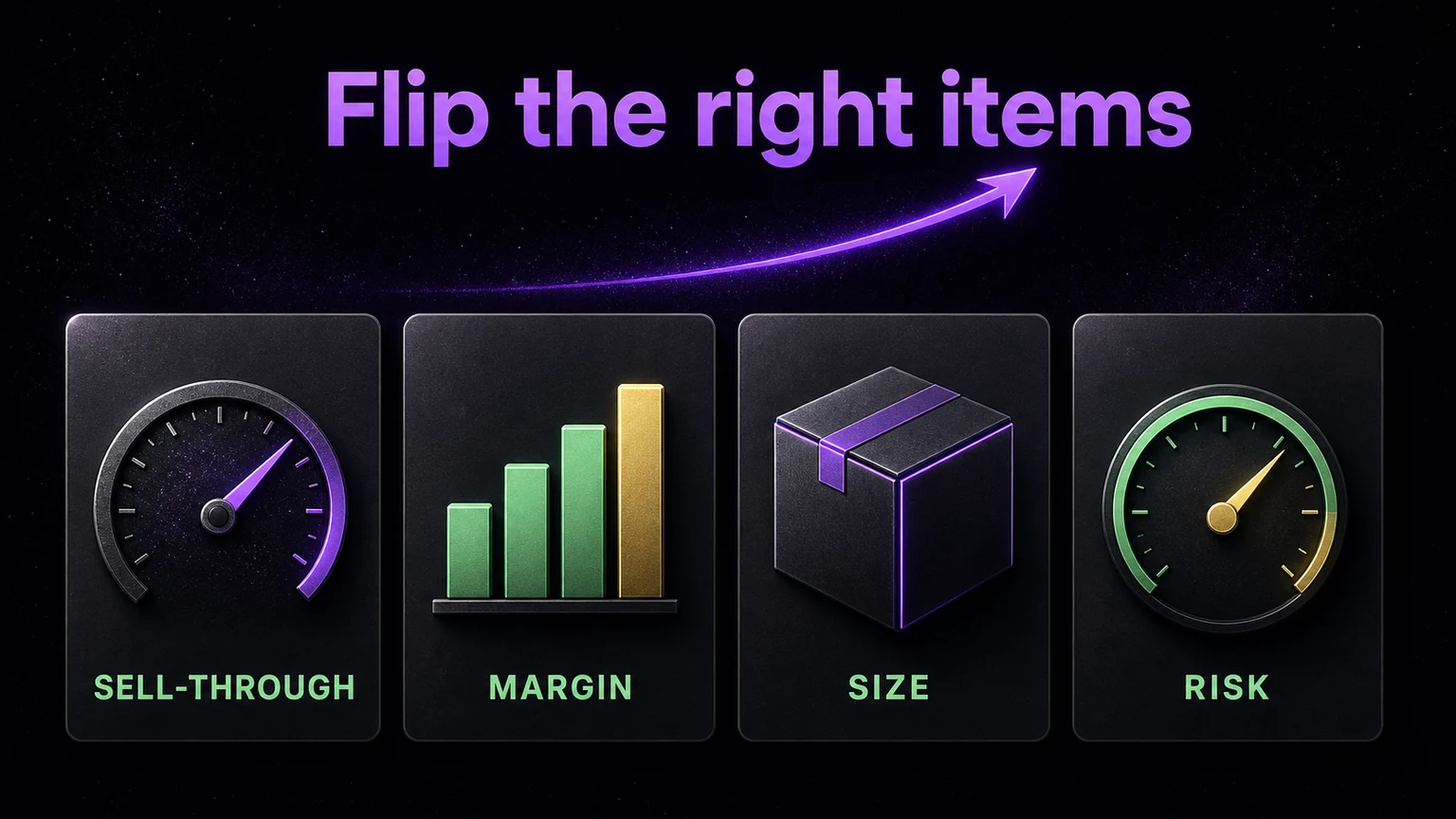
Now scale the lie. The guru's "ten pairs, $900 a week" becomes ten pairs at $59, or $590, minus tax, minus the reality that you will not win ten pairs of a limited release every single week, minus the pairs that sell slower than the comp and drift down in price while they sit. The dream number was inflated on every single axis: the margin, the hit rate, the sell-through, and the speed. That is not one lie. It is four stacked lies wearing a supercar.
Understanding this margin math is the whole game, and it is worth going deeper. We lay out the full fee and ROI breakdown in reselling profit margins explained, and the sourcing foundation in what is retail arbitrage. A real community teaches you these numbers. A scam hides them behind a rented engine.
What a real, tool-backed community actually looks like
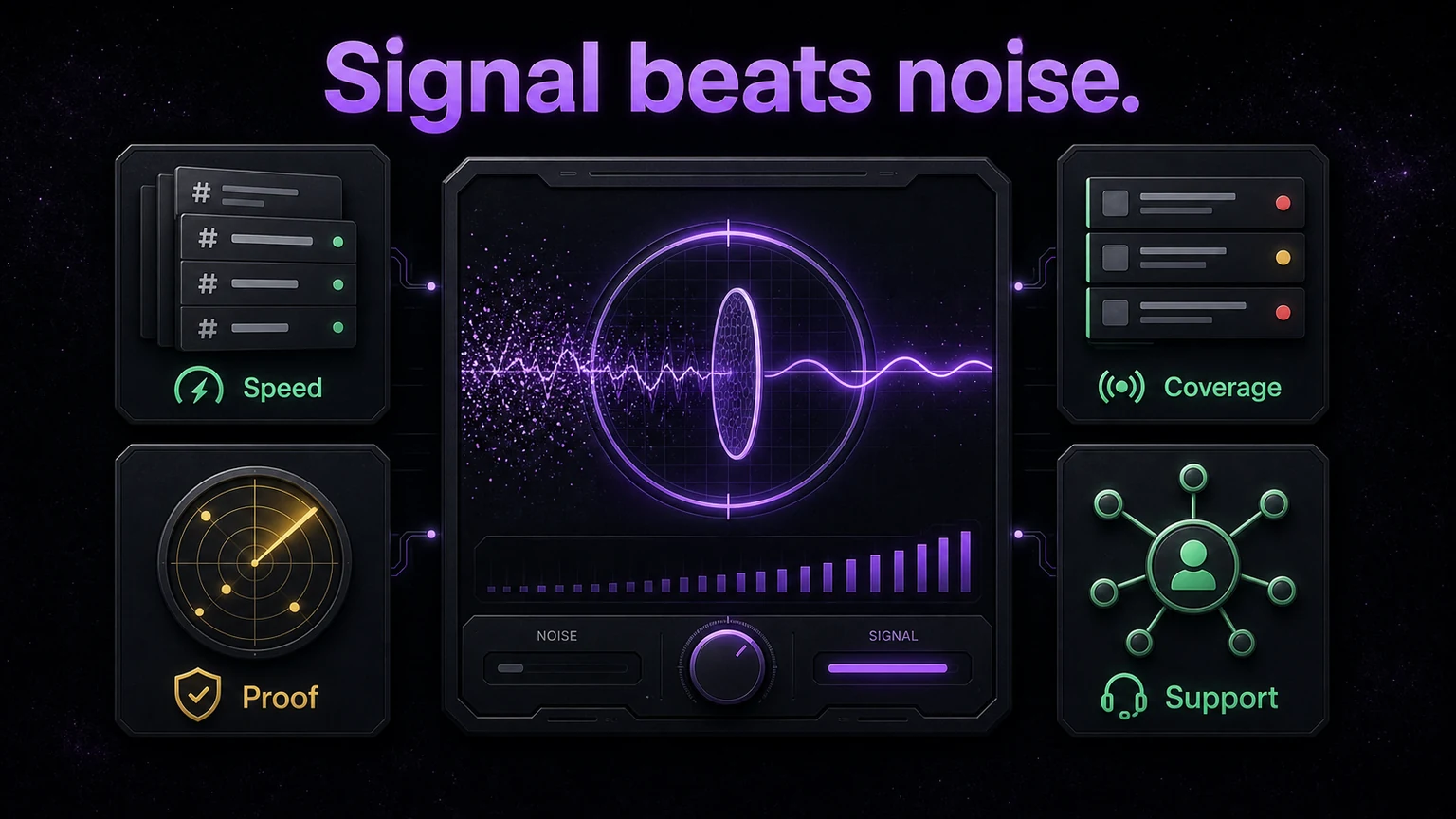
So if the Lambo is a red flag, what does a green-flag community sell instead? It sells speed, coverage, and information you could not assemble alone. Concretely, that means a few unglamorous things that actually move money.
It gives you alerts and monitors that watch stock and price around the clock, so you are not refreshing pages hoping to catch a restock. Software does the scanning and pings you the moment something moves. We break down that machinery in how monitors and alerts work.
It gives you checkout speed for public drops that sell out in seconds, through legitimate autocheckout tools that help you complete a purchase faster than a human can type. These are speed tools for public releases, not a cheat code, and we cover what they are and are not in what are autocheckout bots.
It gives you comps and a network of experienced resellers who post the actual resale price before you buy, so you never source blind on a hype item that is about to crash.
Divine is one honest example of this shape. Divine Pro is $74.99 a month with a 5-day free trial, and what you are renting is real: sneaker release alerts, Pokemon and trading card pricing, price-error and clearance alerts, free autocheckout software for limited drops, and a network of experienced resellers. There is also a Divine Cards Pass at $35 a month for the sports and trading card side, with card alert monitors and help spotting winning cards early.
Notice what that pitch does and does not do. It names the tools. It gives you a free trial so you can look inside before you pay, which is the single biggest green flag on the audit table. It does not promise you a supercar, a guaranteed income, or a number. If you want to run the audit table against a real community, start the free trial at Divine on Whop and check the alerts, the coverage, and how people talk before your trial ends. That is the whole point of a trial. Use it to verify, not to hope.
Who should skip this, honestly
A real community will tell you when it is not for you. So here is the honest version.
Skip paid reselling communities if you are hoping for passive income. Nothing here is passive. You still source, list, pack, ship, handle returns, and do your own comps. The tools cut the time and the effort, they do not remove them.
Skip if you cannot float inventory. Reselling ties up cash. Some items sit unsold for months. If the money you would spend on a membership plus your first buys is money you need next week, this is not the season for it.
Skip if the drops-in-seconds pace stresses you out more than it excites you. Limited releases sell out fast and price errors get patched in minutes. If that speed is misery rather than a game, a slower sourcing model may fit you better.
And skip any community, including a good one, if you have not run the audit table yet. Even a legitimate group is a bad buy if you joined it on hype instead of evidence. The discipline is the point.
FAQ
How can I tell a fake reselling guru from a real one fast?
Look at what they show you. A real operator shows the tools, the alerts, and the coverage, and lets you see inside through a free trial or a public channel. A fake one shows lifestyle: cars, watches, and bank screenshots. Screenshots and supercars are trivial to fake. Tools and transparency are not. If the pitch is the dream and not the mechanism, walk.
Are all sneaker cook groups and reselling Discords scams?
No, and believing that costs you real edge. Plenty are legitimate tool-and-community services that give you monitors, alerts, and comps. The scams are the ones that sell fabricated success screenshots, run countdown-timer FOMO, hide their fees and cancellations, and have no way to look inside before you pay. Judge each one on the audit table, not on a blanket rule.
What profit margin should I actually expect from reselling?
For most eBay-style flips, plan on roughly 20% to 35% net margin after marketplace fees, shipping, and a returns reserve, with 15% to 25% being a common average and 30%-plus being strong rather than normal. Cheap-to-source items can post higher ROI on the cash you risk, but the net margin on the sale still lives in that band. Anyone promising the fantasy numbers as a baseline is selling a dream, not a business.
Is autocheckout software a scam or is it cheating?
Neither. Autocheckout tools are speed software for public drops. They help you complete a purchase faster on releases that sell out in seconds, and the edge is milliseconds, not some secret backdoor. A legitimate community, Divine included, provides them as one tool among alerts and comps. Read what are autocheckout bots for the honest limits.
A community charges a monthly fee. Does that alone make it a scam?
No. Monitors, coverage, and a network of experienced resellers cost money to run, so a fair monthly fee is normal. The scam signal is not the fee, it is the shape of the pitch. Green-flag groups let you trial before you commit, name their tools, and answer hard questions. Red-flag groups demand payment first, sell a lifestyle, and use urgency to stop you thinking. We go deeper on evaluating the spend in are reselling communities worth it.
I already got burned once. Should I give up on reselling?
Getting scammed once does not mean the whole thing is a scam. It means you paid for hype instead of evidence, which everyone does at least once. The fix is not quitting, it is the audit table. Next time, demand proof of tools, use the free trial, sleep on the decision, and never buy under a countdown. The edge is real. The dream sellers are just loud.
The verdict
Two beliefs will empty your wallet in reselling: that every group is a scam, or that any guru with a supercar is legit. Both are lazy. The truth is narrower and more useful. A small number of communities genuinely help you hit real, boring, 20-to-35-percent margins with tools and transparency, and a lot of hype merchants sell you a fantasy that does not survive contact with a fee calculator.
Your defense is a checklist, not a vibe. Does it show you the tools or the toys? Can you look inside before you pay? Does it talk about costs and cancellations, or only wins? Does it give you time to think, or a countdown? Run the audit table, use the free trial to verify, and never let a rented Lambo do your due diligence for you.
If you want to see what a tool-backed, transparent community looks like from the inside, start the 5-day free trial at Divine on Whop and judge it against every green flag in this post before your trial ends.
Realistic expectations: reselling is a business with real costs, marketplace fees, shipping, taxes, unsold inventory, and your time. Profits are not guaranteed, results vary, and no tool or community changes that. Always run your own comps and the full fee math on every item before you buy.
Get to the deal first
Divine is the alert network, monitors, and autocheckout built on this exact process. Try Divine Pro free for 5 days.
Reselling is a real business with real costs: marketplace fees, shipping, taxes, and unsold inventory. Profits are never guaranteed. Always check the comps before you buy.